The EU–India free trade agreement cuts tariffs and reshapes access, but entering the world’s largest market is neither easy nor politically neutral.
India, with a population exceeding 1.43 billion, is emerging as one of the most critical geo-economic players of the coming decade. For the European Union – and by extension Greece – the forthcoming EU–India free trade agreement (FTA) represents a rare opportunity to gain access to a vast market that has long remained effectively closed due to high tariffs, regulatory complexity and protectionist policies.
Behind the optimistic projections, however, lies a more nuanced reality: for Greek food and beverage producers, India is simultaneously a high-potential opportunity and a high-risk market.
The big picture: why India matters strategically to the EU
The renewed momentum in EU–India trade talks is no coincidence. Europe is actively rebalancing its external economic relations as:
- trade relations with China become more complex,
- the US pursues a more selective and strategic trade policy,
- and global competition for food markets intensifies.
With a food and beverage market worth more than $500 billion, India is seen in Brussels not merely as a commercial partner, but as a long-term geopolitical and geo-economic anchor. Reducing Indian tariffs is therefore not just about exports; it is a strategic investment in diversification and influence.
Greece’s starting point: small numbers, big expectations
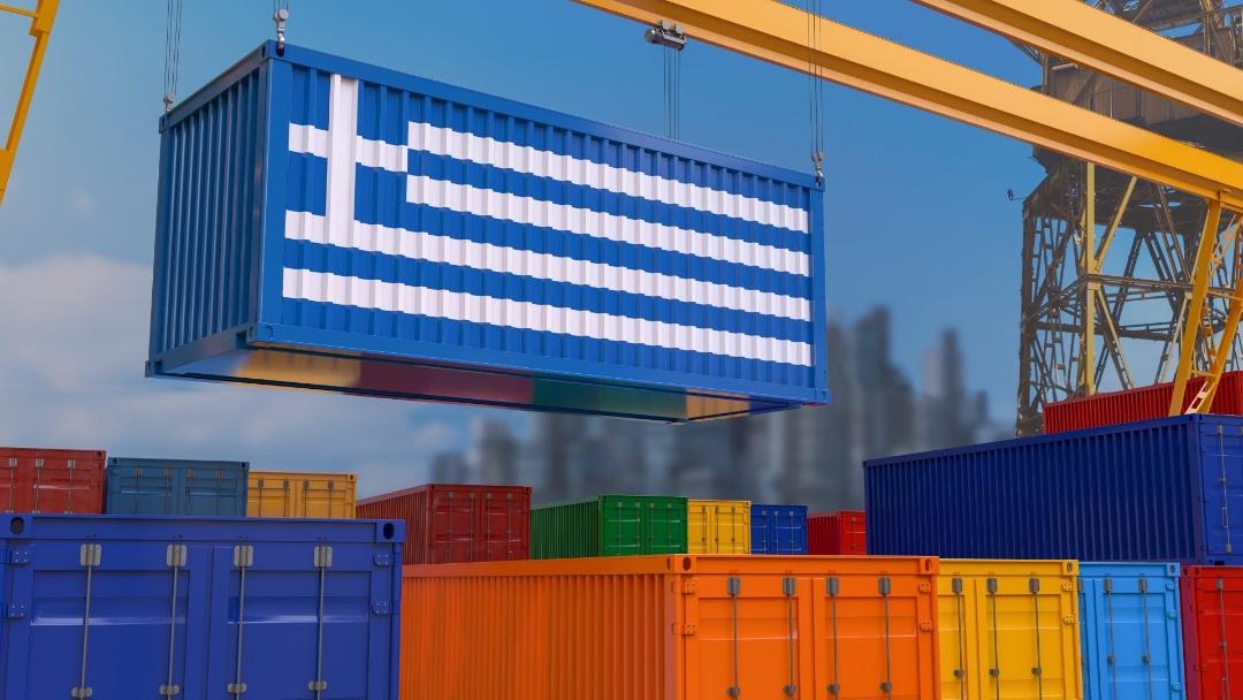
Greece enters this new landscape from a very low base. Greek food and beverage exports to India amounted to $21.05 million in 2024–25, representing growth of just 2.3% year-on-year. This figure corresponds to less than 0.005% of India’s total food imports.
The number illustrates both the scale of untapped potential and the structural gap Greek exporters must bridge in order to gain meaningful traction.
What Greek products stand to gain from the agreement
The EU–India FTA foresees substantial tariff reductions:
- Wine: from 150% to around 20% over time
- Olive oil: tariffs eliminated within five years
- Kiwifruit: reduction from 33% to 10%
- Processed foods and confectionery: significant cuts
At the retail level, import costs are expected to fall by 20–40%, making European products far more competitive.
For Greece, this creates a clear opening for export-ready products such as kiwifruit, while also improving conditions for high-value, branded goods like wine and olive oil.
Where the risks begin
Lower tariffs do not automatically translate into market access. India remains:
- a highly fragmented market, with different rules across states,
- burdened by bureaucracy and compliance requirements,
- heavily dependent on local distributors and partners,
- and marked by wide income disparities.
As a result, Greek products primarily target a still-limited but rapidly growing urban middle and upper class, concentrated in major metropolitan areas. Entering the market requires capital, patience and long-term commitment, not opportunistic exports.
Kiwifruit, wine and olive oil: three products, three strategies
Kiwifruit offers the most immediate upside. Greece is among the world’s leading exporters, and lower tariffs improve competitiveness against suppliers such as Iran. Success, however, hinges on logistics reliability and stable distribution partnerships.
Wine is not a volume story but a positioning play. With tariffs falling and affluent Indian consumers becoming more familiar with European wine culture—often through travel—there is scope for premium, niche placements, rather than mass penetration.
Olive oil, despite benefiting from full tariff elimination, faces strong headwinds from cheaper vegetable oils and low consumer awareness. Without sustained investment in consumer education and branding, price competition could quickly erode margins.
Table olives and the political dimension
Table olives are where trade policy turns explicitly political. It remains unclear whether they will be fully included in tariff elimination, with current duties reaching up to 36%. For a sector already under pressure from declining US exports, access to India is seen as strategically critical.
Here, the issue goes beyond market forces and into EU-level bargaining power: which products are prioritised, which are traded off, and which member states exert influence in the final text. Greece’s diplomatic engagement will be decisive.
opportunity with conditions
A market of 1.4 billion consumers does not guarantee success. It represents a long-term political-economic bet.
The EU–India agreement offers Greek food producers access, not assurance. Companies that approach India with strategy, investment and endurance may build a durable presence. Those seeking quick wins are likely to be disappointed.
At a national level, the challenge is broader: without a coordinated export strategy, strong branding and diplomatic backing, Greece risks remaining a marginal player in one of the few global markets with genuine long-term demand growth.
India is opening—but it will not wait, and it will not accommodate unprepared entrants.
Source: pagenews.gr
Διαβάστε όλες τις τελευταίες Ειδήσεις από την Ελλάδα και τον Κόσμο