
The first sign that sailing through Greece with a Greek-owned cruise company would feel different appeared on a nearly empty beach, where a grandfather was drinking ouzo at 10 in the morning.
I had swum ashore from Panorama, a three-masted motor sailer carrying no more than 49 passengers, and only noticed the family once I reached the sand of the otherwise barren beach on the island of Kalymnos. There were no rows of sunbeds, no beach club soundtrack, and no server approaching with a laminated cocktail menu. In fact, nobody appeared to be selling anything at all.
In a small fishing boat sat a grandmother, unpacking food from a cooler, her adult grandchildren enjoying the early morning rays, and, of course, the grandfather drinking from his cup. I looked at the cloudy drink in the grandfather’s glass and asked whether it was coffee.
“No,” he said, smiling. “Ouzo.”
He answered with the pleasant certainty of a man who could not imagine why anyone would drink something else at that particular moment. He had nowhere he needed to be, no interest in explaining himself, and no idea that a stranger might spend the rest of the week thinking about him.
That encounter is the memory I return to whenever someone asks why this Greek island cruise felt so different from my previous visits. I had already watched the sunset over Santorini’s caldera, wandered through the whitewashed lanes of Mykonos, and eaten seafood beside water so blue it hardly looked real. I thought I understood the Greek islands, or at least the version travelers are usually encouraged to see first.
Then I boarded Panorama, operated by Variety Cruises, a Greek-owned, family-run company founded in 1949. Unlike an international cruise brand that simply adds Greece to a worldwide schedule, Variety was built in these waters. The Aegean is not merely another seasonal destination in its portfolio; it is where the company’s story began.
And this was not my first rodeo with Variety Cruises. In January of this year, I sailed aboard Variety’s Harmony V yacht through Senegal and The Gambia. As a travel writer who experiences many different ships and itineraries, choosing to sail with the same company twice within six months gave me an unusual opportunity to compare how its small-ship approach worked in two very different regions.
I was sailing on the company’s Unexplored Greece itinerary, a route that bypasses Santorini and Mykonos in favor of islands such as Kalymnos, Patmos, Amorgos, and Serifos. Variety offers other Greek itineraries, including voyages that visit some of the country’s most famous islands, but this particular route was designed to reveal places many international travelers overlook.
At first, Panorama’s 49-passenger capacity sounded like a technical detail. By the end of the week, I understood that it influenced nearly everything I loved about the trip: the ports we could enter, the beaches we could reach, the way the crew adjusted to the weather, the restaurants onshore where we spent our evenings, and the relationships that formed onboard.
A ship of this size changes how you experience a destination–and it’s what everyone is talking about in 2026!
Here are the 10 reasons this Greek-owned small-ship cruise made me rethink what a Greek island vacation could be, and why I would choose it again.
1. A 49-passenger ship can visit Greek islands without overwhelming them

Guests unwind on Panorama’s spacious outdoor deck while cruising between lesser-known Greek islands on Variety Cruises’ Unexplored Greece itinerary.
(Variety Cruises)
The most important fact about Panorama is not that it has three masts, polished wood, or a generous outdoor deck. It is that the entire ship carries fewer people than many city buses.
Forty-nine travelers arriving in a harbor create a completely different atmosphere than thousands of passengers disembarking at once, a la one of those mega cruise ships that could be floating cities. No color-coded groups were gathering on the dock, no long lines for tenders, and no sense that the town had been required to rearrange itself around our arrival. We walked ashore and entered places that continued moving at their own pace, largely undisturbed by our arrival.
That distinction changed what I noticed.
In several ports, men remained seated beneath café awnings, shopkeepers adjusted their displays, and cats stretched across warm doorsteps without appearing remotely interested in us. Families carried groceries home, fishing boats returned to the harbor, and restaurant owners prepared their tables for the evening. The towns did not feel deserted, but neither did they feel as though every person and business was waiting for cruise passengers to appear.
The ordinary rhythm of island life remained visible because our group was not large enough to obscure it.
On a ship carrying thousands of passengers, arrival itself becomes an event. Streets become crowded, restaurants fill simultaneously, and the destination can begin to feel like an attraction being activated for a temporary audience. On Panorama, we remained visitors rather than becoming an event the town had to absorb.
That allowed the islands to retain their proportions. Narrow lanes still felt intimate rather than congested, waterfronts felt like functioning harbors instead of transportation hubs, a small shop could be entered without 20 people waiting behind you, and a quiet square could remain quiet even after we stepped into it.
The experience also felt more respectful because we were not arriving in numbers large enough to dictate how the destination should function, and instead had to adapt to the island rather than expecting it to adapt to us.
This matters because many of the Greek towns travelers most want to see are physically small. Their appeal comes partly from their scale: compact harbors, narrow lanes, hillside villages, and family-run businesses. Once too many people enter at the same time, the qualities that made the place attractive can become difficult to experience.
Panorama’s size did not guarantee that every port would be empty, nor did it transform inhabited islands into private playgrounds, but it simply meant that our ship was unlikely to become the dominant presence wherever we went. The towns did not have to change just because we arrived, which gave us a better chance to understand what they were actually like.
2. This itinerary looks beyond Santorini and Mykonos

The Unexplored Greece itinerary does not visit Santorini or Mykonos, which may initially seem like a disadvantage for anyone planning their first trip to the Greek islands.
I understand the hesitation. Santorini’s caldera is genuinely spectacular, and there is a reason its white villages, blue domes, and dramatic sunsets appear in nearly every visual shorthand for Greece. Mykonos also offers beautiful architecture, celebrated beaches, and an energy that attracts travelers from around the world.
This cruise did not convince me that those islands are undeserving of their reputations; instead, it showed me how much of Greece gets left out of the frame when they dominate every itinerary.
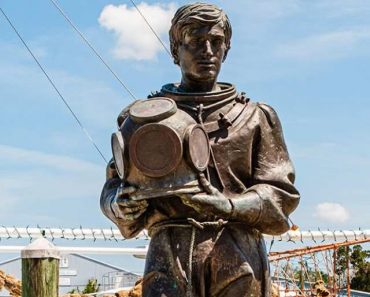
In Kalymnos, I learned how generations of sponge divers shaped the island’s economy, traditions, and identity. Patmos combined one of Christianity’s most important pilgrimage sites with an elegant Chora that still felt connected to monastic life. We were lucky to arrive on Sunday morning, which meant we could be a part of the service in the monastery. Amorgos appeared more dramatic and austere, rising sharply from the Aegean with a white monastery embedded high in a cliff.
Serifos offered an entirely different personality, with a port below and a hillside Chora that seemed to climb toward the sky. Poros felt greener and softer, its waterfront busy enough to feel lively without losing its sense of place.
While none of these islands felt like substitutes for somewhere more important, they felt like distinct destinations that had been sitting outside my mental map of Greece because I had allowed the country’s most recognizable places to stand in for the entire archipelago.
The trip also exposed how misleading the phrase “Greek islands” can be. From a distance, it suggests a collection of destinations offering variations on the same formula: blue water, white houses, seafood restaurants, and small chapels.
Up close, the islands were shaped by very different forces. Some were defined by religion, others by maritime labor, agriculture, geology, trade, or their strategic positions in the Aegean. One could feel severe and windswept, while the next appeared sheltered and lush. Some towns faced the sea openly; others had been built above the port or concealed within the landscape for protection.
For travelers who have already visited Greece’s famous islands, the appeal is obvious: this route offers a reason to return without repeating the same trip. For first-time visitors, it offers something equally valuable: the chance to encounter Greece before deciding that its most photographed places are its only essential ones.
3. Sailing with a Greek-owned cruise company changed the experience

The welcoming Panorama lobby showcases the boutique atmosphere and personalized service that define a Variety Cruises sailing experience in Greece.
(Variety Cruises)
Variety Cruises was founded in Greece in 1949 and remains Greek-owned and family-run. That matters because Greece is not simply one destination in the company’s worldwide portfolio. These are its home waters.
The difference could be felt in the choices that shaped the voyage: which smaller ports were worth visiting, how long we were given ashore, where the ship could stop for a swim, and how the crew responded when weather changed the route. The islands were not treated as interchangeable Mediterranean backdrops, but presented as individual places with their own histories, personalities, and relationships with the sea.
The crew’s familiarity with the region appeared in ways that were not always dramatic enough to be advertised. It was there in the pacing of a day, the understanding of how the wind might affect a harbor, and the confidence with which an alternative destination was selected.
There is an important difference between having information about a place and having context.
Information can tell you when a monastery was built or how many people live on an island. Context explains why a settlement developed where it did, why one harbor works in certain conditions, and why two neighboring islands can feel completely different.
That context also prevented the trip from feeling overproduced. Nobody seemed determined to constantly announce that we were having an “authentic” experience. The islands were not presented as hidden secrets discovered for our benefit, nor were ordinary aspects of Greek life turned into staged cultural performances.
The crew brought us to these places, explained what mattered, and then allowed us enough freedom to form our own relationship with them.
There was also reassurance in knowing that people were making itinerary decisions with longstanding experience in the region. Small ships are more affected by changing sea conditions than floating cities, and flexibility is an unavoidable part of the experience. When the route shifted, it did not feel as though the company was improvising without direction. It felt like local judgment being applied to circumstances the crew understood.
4. The itinerary treated every Greek island as more than a pretty stop

Panorama at Amorgos, one of the highlights of Variety Cruises’ Unexplored Greece itinerary, showcasing the beauty of the lesser-visited Greek islands.
(Variety Cruises)
Some cruise itineraries appear to have been assembled by connecting the most recognizable names on a map. This one felt as though it had been designed by people with strong opinions about which Greek islands deserve attention and why.
Every stop contributed something different.
Kalymnos was included not simply because its harbor was attractive, but because the island’s relationship with sponge diving created a maritime culture unlike anywhere else on the route. Patmos offered religious history, fortified architecture, and the Cave of the Apocalypse. Amorgos brought dramatic geography and one of the most improbable monasteries I had ever seen.
The result was an itinerary with an argument: Greek islands are not interchangeable, and understanding their differences is more rewarding than simply collecting photographs of what they have in common.
That may sound obvious, but while the travel industry frequently markets the islands through a narrow visual vocabulary, this voyage pushed beyond that comparison.
On one island, the story centered on men who had spent generations descending into the sea for sponges. On another island, the landscape had been shaped by a monastery and centuries of pilgrimage. Elsewhere, defensive architecture explained why the main town had been built high above the port and arranged in a maze of narrow streets.
Even the quieter stops had a reason to be there. Not every island needed a world-famous monument. Sometimes the appeal was the chance to spend an evening in a harbor that had never become famous enough to reorganize itself around international tourism.
By the fourth or fifth day of many island-hopping trips, beauty can begin to blur. Another whitewashed village appears, followed by another chapel, another harbor, and another dinner beside the water. Without context, the islands can merge into one pleasant impression.
Here, each stop added another layer to my understanding of Greece. By the end of the week, the country felt more complicated than it had at the beginning, which is one of the best outcomes travel can produce.
5. Half-board dining pushed me into local Greek tavernas

Guests can enjoy meals aboard the Variety Cruises Panorama before exploring authentic Greek tavernas and local cuisine throughout the Greek islands.
(Variety Cruises)
Our Panorama sailing operated on a half-board basis, meaning not all meals were included in the fare. Travelers accustomed to fully inclusive ships may see that as a limitation.
I came to view it as one of the itinerary’s greatest strengths.
When every breakfast, lunch, dinner, snack, and specialty meal has already been paid for onboard, eating ashore begins to feel financially irrational. A passenger may walk through a port, take photographs, and browse the shops, but the promise of an included dinner can pull them back to the ship before the destination’s evening has properly begun.
Half-board removes that pressure.
Some nights, instead of returning to Panorama for dinner, we stayed ashore. We looked for a taverna, strolling along the waterfront as the heat softened, reading handwritten menus, and debating whether to choose a busy restaurant beside the harbor or follow a narrow lane toward somewhere quieter.
Small observations rather than online rankings often influenced the choice. We noticed which place had local families eating, which kitchen appeared to be grilling fresh fish, and which table had just received a plate we immediately wanted to order.
Once seated, the evening developed at the pace of the meal. Tomato salad, grilled vegetables, bread, dips, cheese, seafood, and local wine arrived gradually rather than all at once. The light changed over the harbor, boats returned, and the town moved from afternoon into night around us.
These dinners accomplished more than simply providing variety: they ensured that passengers spent money in the destinations we visited.
A table of travelers can make a direct difference to a family-owned restaurant on a small island. The same is true of buying coffee, ordering dessert, or stopping for a drink before returning to the ship. Tourism revenue does not remain concentrated within the cruise operation; at least part of it enters the local economy in the most straightforward way possible. One of my favorite evenings was sharing stuffed vine leaves and octopus with new friends in the harbor of Poros well past midnight.
The half-board format also created a healthier relationship between the ship and the islands. Panorama provided comfort, service, and good food, but it did not attempt to become the only place passengers needed to eat, drink, or spend their evenings.
6. The onboard food was genuinely good—even for a mostly vegetarian traveler

The dining hall aboard the Variety Cruises Panorama offers a relaxed onboard dining experience inspired by Mediterranean hospitality and Greek travel.
(Variety Cruises)
Meals aboard Panorama were relaxed, generous, and more varied than I expected from a ship carrying fewer than 50 passengers.
As someone who does not eat much meat, I am accustomed to “vegetarian options” consisting of side dishes piled onto a plate after the main component has been removed. Here, there was consistently something substantial and appealing to eat, and the onboard meals felt considered without becoming overly formal.
The dining room also had a communal energy that suited the ship. Passengers moved between tables, conversations expanded naturally, and meals often lasted longer because nobody seemed eager to force the evening into a rigid sequence.
Still, the food experience worked best because meals onboard did not attempt to replace the food ashore.
Greek cuisine is often praised for its simplicity, but that simplicity depends on ingredients carrying much of the weight. A tomato salad becomes memorable when the tomatoes are deeply sweet, the cheese is salty, and the olive oil tastes grassy and peppery. Grilled octopus requires little embellishment when it arrives tender and lightly charred. Bread, dips, vegetables, and seafood can sustain an entire evening when nobody is rushing to turn the tables.
The onboard meals provided consistency and comfort. The tavernas provided a sense of discovery. Neither experience undermined the other because the cruise left enough space for both.
Instead of trying to persuade passengers that the best meal was always waiting onboard, Panorama allowed Greece itself to remain the main culinary attraction.
7. Regular swim stops turned the Aegean Sea into part of the itinerary

On many Greek vacations, the sea remains a background. Travelers cross it by ferry, admire it from a viewpoint, or photograph it from a restaurant terrace, but the itinerary is still organized primarily around what happens on land.
On Panorama, the Aegean became one of the destinations.
Many days included a swim stop, either with the ship anchored offshore and its swimming platform lowered into the water or with a Zodiac transporting us closer to a beach. There was no elaborate production around it. The ship stopped, the sea was clear, and anyone who wanted to swim could get in.
That simplicity became one of the greatest luxuries of the trip.
There were no beach club reservations, no competition for sunbeds, and no need to plan a separate excursion around swimming. The ship carried snorkeling equipment and noodles, making the water available for exploration and relaxation.
The Aegean changed color constantly, appearing dark navy where the water was deep, electric blue near rocky coastlines, and almost transparent in the shallows. From the deck, those colors were beautiful. In the water, they became physical.
Floating between the ship and the coastline transformed the geography of the trip. The sea was no longer the space separating one destination from another, but the element connecting them.
Some of my clearest memories from the week are not attached to an island name or historical site. They are memories of temperature and movement: swimming toward a quiet beach, looking back at Panorama from the water, and floating in the middle of the Aegean with nothing required of me for the next hour.
Those moments also demonstrated why a smaller ship mattered. Panorama could pause in places where swimming felt natural and spontaneous rather than transporting hundreds of passengers to the same commercial beach. The itinerary showed us Greece’s history on land, but the swim stops reminded me why the country’s relationship with the sea remains central to nearly everything.
8. The excursions gave every island a story instead of just a view

The greatest risk of a multi-island itinerary is that beauty eventually loses its impact.
After several days of white houses, hillside chapels, blue water, and harbor restaurants, another beautiful town can begin to register as a variation on something you have already seen. You take the photograph, but may not understand why the place in front of you is fundamentally different from the previous stop.
The excursions on this sailing helped prevent that by giving each island a story.
Before visiting Kalymnos, I understood natural sponges mainly as objects sold in coastal shops. After learning about the island’s diving history, they carried an entirely different meaning.
For generations, Kalymnian men descended into the sea under dangerous conditions to collect sponges. The work shaped the island’s economy, family life, and identity while exposing divers to extraordinary physical risk. Once I understood that history, the sponges hanging outside shops no longer looked like generic souvenirs. They became evidence of a culture built around skill, endurance, and the sea’s uncertainty.
Patmos offered a completely different kind of depth. The Cave of the Apocalypse, where tradition holds that Saint John received the visions recorded in the Book of Revelation, sits below the Monastery of Saint John. Together, the cave, monastery, and Chora reveal how religious significance influenced the island’s physical and social development.
Amorgos gave us the Monastery of Panagia Hozoviotissa, a white structure built into a cliff high above the water. Reaching it required a climb, and the effort changed the experience. By the time the monastery appeared against the rock, it felt like an arrival rather than a quick stop for sightseeing.
The voyage also changed the way I understood the word Chora, commonly used to refer to the principal town on a Greek island.
Before this trip, I often viewed Choras mainly as attractive hilltop settlements with whitewashed houses, winding lanes, and panoramic views. Over the course of the week, I began to understand the practical and defensive logic behind them.
Many were constructed above the port, where they were less visible from the sea and less vulnerable to raiders. Their narrow, maze-like streets could make navigation difficult for outsiders, while tightly clustered houses offered protection and reinforced a sense of community.
The lanes had not been designed as picturesque backdrops for visitors. Their beauty emerged from decisions about survival, defense, and geography.
Once someone explained that context, I saw the villages differently. The same streets remained beautiful, but they also became intelligent responses to the dangers and limitations of island life.
That is what a worthwhile excursion should do. It should not merely deliver travelers to the best viewpoint. It should change what they see after the guide has stopped speaking.
9. The small ship made solo travel social without making it feel forced

Comfortable sun loungers aboard the Variety Cruises Panorama provide sweeping views of Greece’s picturesque harbors and island landscapes.
(Variety Cruises)
I boarded Panorama alone and was aware that, as a traveler in my early thirties, I might be younger than much of the ship’s typical demographic.
During the first hour, I quietly wondered whether I would spend the week feeling out of place.
Instead, the people on board became one of the most memorable parts of the journey.
A vessel carrying fewer than 50 passengers creates a social environment that is almost impossible to reproduce on a ship with thousands of guests. You see the same people each day, but the group remains small enough for those repeated encounters to develop into genuine familiarity.
Within a short time, I knew who woke early for coffee on the bow, who wanted to be first in the water, and who had visited Greece many times. I learned who preferred to wander alone, who was always looking for company at dinner, and who could turn a simple question into a fascinating conversation.
That familiarity developed without organized icebreakers or forced social activities. It came naturally from sharing the same deck, dining room, excursions, and swim stops.
Because the seating at meals shifted, passengers did not immediately divide into permanent groups. I ate with different people throughout the week and found myself in conversations I never would have planned for myself.
One of those passengers was Rose, a British woman who had lived on the island of Poros for 11 years.
Throughout the voyage, Rose spoke about the island with the specificity of someone describing a former home. She mentioned particular streets, familiar viewpoints, local relationships, and the changing quality of the light at different times of year.
Poros was not on our original itinerary, and at first it existed for the rest of us only through her stories.
That is the advantage of traveling on a ship this small. Other passengers do not remain anonymous faces encountered once in a corridor. Their memories, personalities, and histories begin to shape your own experience of the journey.
For solo travelers, this may be one of the most convincing reasons to choose a small ship. I never felt trapped in constant group activity, but I also rarely felt alone unless I chose to be.
10. A weather-related route change gave us the trip’s most meaningful surprise

Small ships sail on actual seas, and actual seas do not reorganize themselves around a printed itinerary.
During our voyage, weather conditions forced a change in route. We missed Ikaria, an island I had been excited to visit, and the news initially landed with the predictable disappointment of losing something I had already begun imagining.
Travelers often start visiting a destination before they physically arrive. We look at photographs, read descriptions, and build expectations about what the experience will feel like. When a stop disappears from the schedule, it can feel as though part of the trip has been taken away.
This voyage changed how I think about those alterations.
A rigid trip may deliver exactly what it promises. A flexible trip, when operated by people with deep knowledge of the region, can sometimes produce something more meaningful than the original plan.
Variety Cruises has spent decades navigating Greek waters. When the route changed, the crew was not selecting an alternative without context. They understood which harbors could accommodate the ship, which islands offered shelter, and which substitution would preserve the spirit of the voyage.
In our case, missing Ikaria brought us to Poros.
Near the end of the sailing, the island Rose had described all week suddenly appeared ahead of us. She recognized the shoreline before we docked and began pointing out familiar places once we went ashore.
For the rest of us, Poros was a beautiful Greek island we had not expected to visit. For Rose, it was somewhere she had known and loved for more than a decade, now being revisited alongside people she had met only days earlier.
Watching the island come to life after hearing her stories gave the visit an emotional dimension no scheduled excursion could have created.
The detour became one of the most moving parts of the sailing precisely because it had not been manufactured in advance. It could not have appeared in marketing material, been sold as an excursion, or been reproduced for the next group of passengers.
It belonged to that particular week, that particular change of route, and that particular group of people.
Travelers who need every stop to unfold exactly as printed may find the uncertainty of small-ship travel frustrating. Sea conditions can change, and flexibility is part of the experience.
For travelers willing to release a little control, however, a changed route does not necessarily mean a diminished trip. It may mean seeing an island you had never researched, eating somewhere you had not bookmarked, or becoming part of a story that could never have been scheduled.
Sometimes the unexpected destination becomes the one you remember most.
This cruise showed me the Greece I had not known to look for

An aerial view of the Variety Cruises Panorama yacht highlights the freedom and flexibility of small-ship cruising through the Greek islands.
(Variety Cruises)
By the end of the sailing, I understood the name Unexplored Greece differently than I had at the beginning.
These islands are not undiscovered. People have lived, worked, traded, worshipped, and raised families on them for centuries. Greek travelers know them, returning visitors love them, and many become busy during the summer.
What remained unexplored was my own understanding of the country.
I had built a mental map of Greece around its most photographed places and then mistaken that map for the whole territory. Santorini and Mykonos had become more than destinations; they had become symbols, standing in for hundreds of inhabited islands with their own histories, landscapes, and traditions.
This cruise did not make me appreciate Greece’s famous islands any less. It expanded my understanding of the country beyond them.
It showed me that a Chora is more than a photogenic hilltop town, that a natural sponge can carry generations of history, and that an altered itinerary can produce the most meaningful afternoon of a voyage. It reminded me that the Aegean should be entered rather than merely photographed and that the best encounters often happen before anyone has had time to package them as experiences.
Most of all, the sailing showed me what can happen when a Greek-owned company knows a destination as home, and its ship arrives quietly enough that the destination need not perform.
Somewhere on a nearly empty beach, a grandfather was drinking ouzo at 10 in the morning while his family sat nearby. He was not waiting for travelers, demonstrating a tradition, or participating in anybody’s itinerary.
He was simply living his day. Because we had arrived in the right way, I was able to see it.