
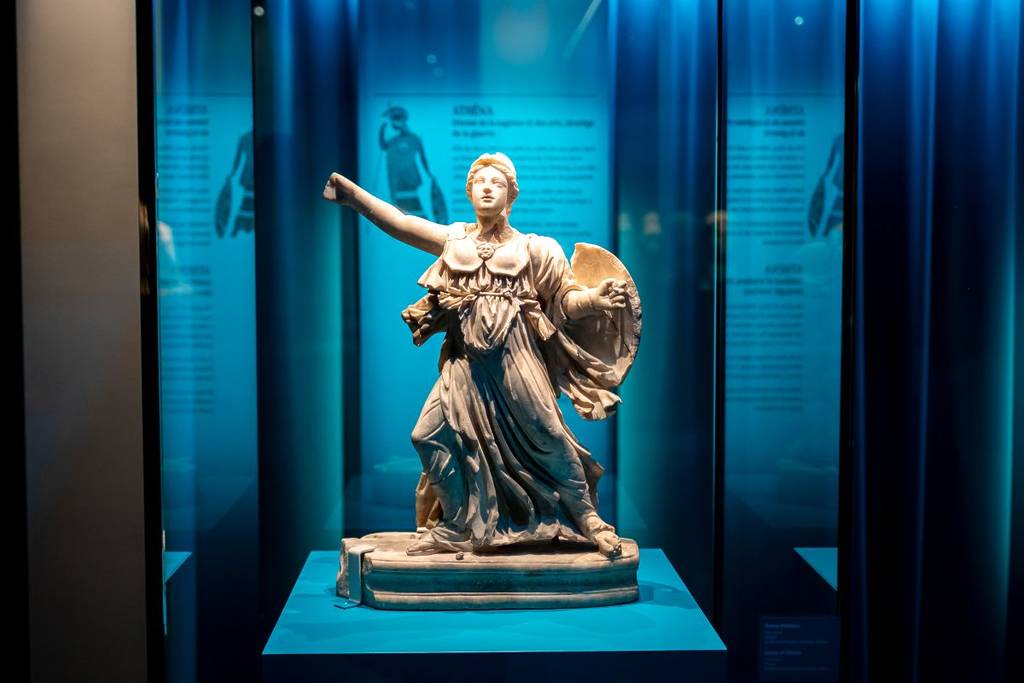

We’re familiar with the Iliad, Homer’s iconic poem that we read in high school and sometimes confused with children’s versions or teen series inspired by the exploits and heroes of Ancient Greece. We’ve confused the story with the legendary Odyssey, adapted for the big screen by Christopher Nolan in a film set to be released later this year.
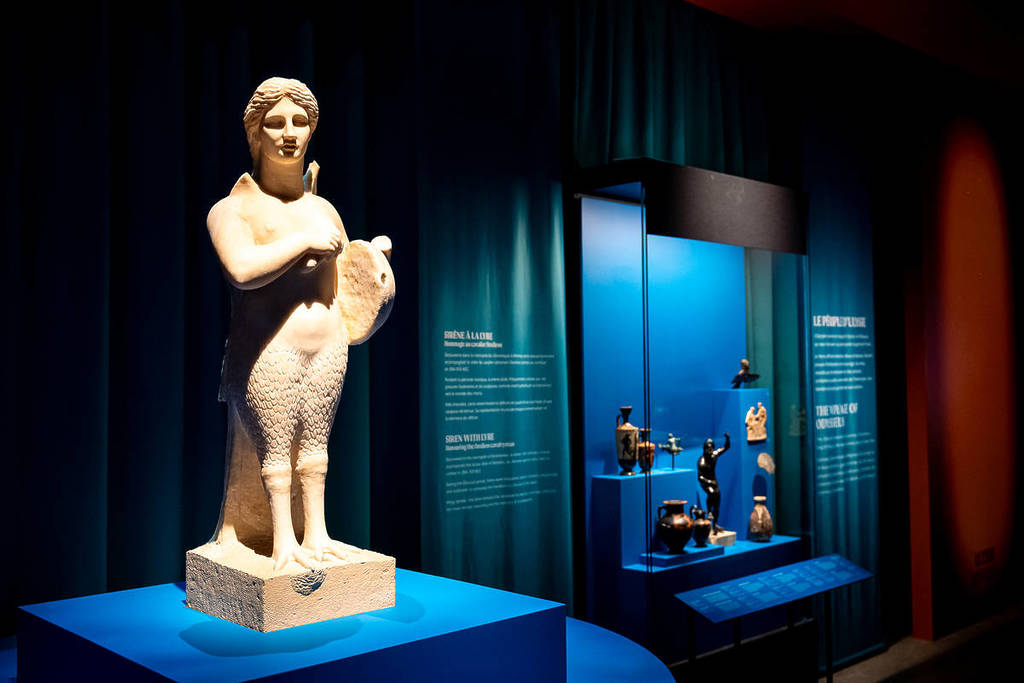
At the Pointe-à-Callière Museum, the great Greek era that inspired Homer’s poem on the Trojan War is explored through 400 artifacts. And then, following the almost supernatural success of his work, its impact on Greek cosmogony—Olympus and its gods.
The exhibition is a collaboration between the Montreal Museum of Archaeology and History and the Ministry of Culture of the Hellenic Republic (Greece), and opens today, June 4, 2026.
Greece of Heroes – In the Time of Troy
It was very hot yesterday morning for the press tour of “Greece of the Heroes.” The Old Port was nearly empty; the tourists were still asleep. The air smelled of lilacs in the sun, gasoline, and dust. And coffee. In Ancient Greece, there was no coffee.
Ancient Greece seems far, far, far away. It even seems, at times, as though it existed only in books. And that Homer’s poems—so iconic they’ve created heroes we know and continue to see in books and films— Achilles, Odysseus, Paris. And then, what we know about them is also Brad Pitt’s abs in Troy ( 2004).
Through 400 objects, mostly from tombs and burial sites, the exhibition places history in its proper context and the myths in their origins.
- The Mycenaean period (16th–12th centuries BCE), the Bronze Age, an era of glory and opulence, of great battles, of the King of Kings Agamemnon, and the setting for Homer’s Trojan War
- The Iron Age (11th–8th century BCE), the era in which Homer lived, a transitional period following the collapse of the Mycenaean Empire, during which agriculture, the alphabet, and the power of Greek warlords developed
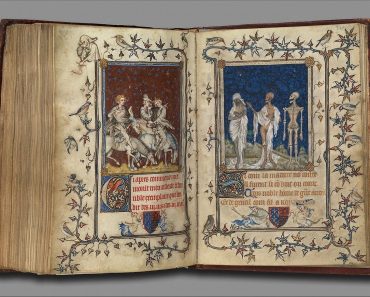
- Early manuscripts of Homer’s Iliad, an epic poem originally transmitted orally, dating from the 6th century (660–650 BCE)
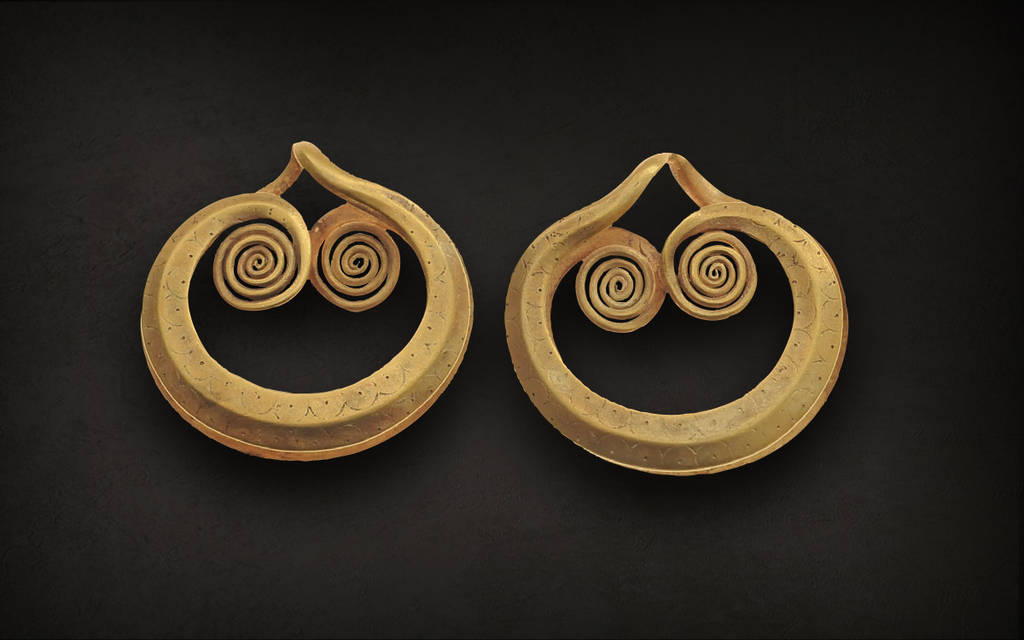
Olympus, the heroes, and the cosmogony of Greek morality
The gods, their adventures, and their human interests are also found in Homer’s poems. Athena, Zeus, Aphrodite. Greek cosmogony existed before the poet’s works (whose very existence we are still not certain of), but he wrote them to almost bring them to life.
His influence can be seen at Argilos, one of the oldest Greek colonies (655 BCE) studied by an archaeological mission. On a stone block is inscribed “DIOS KATAIVATOU,” meaning “Zeus who hurls lightning.”
Ancient Greece remains as mysterious and glorious as ever, and its heroes and tales are as thrilling as ever.
Practical Information
Where? Pointe-à-Callière Museum, 350 Place Royale
When? June 4, 2026, through March 7, 2027
Thursday through Friday / 10 a.m. to 5 p.m.
Saturday and Sunday / 11 a.m. to 5 p.m.
How much? Adultticket $30, child ticket (ages 5–12) $10 / for more information, click here