
It turns out that one of the most intriguing stories of Alexander the Great and his time in Cyprus is simply fake ancient news. Even more surprising is how this story evolved. It truly reveals something about the dynamics of power, propaganda, and the complexity in distinguishing between what is historical truth and merely fabricated.
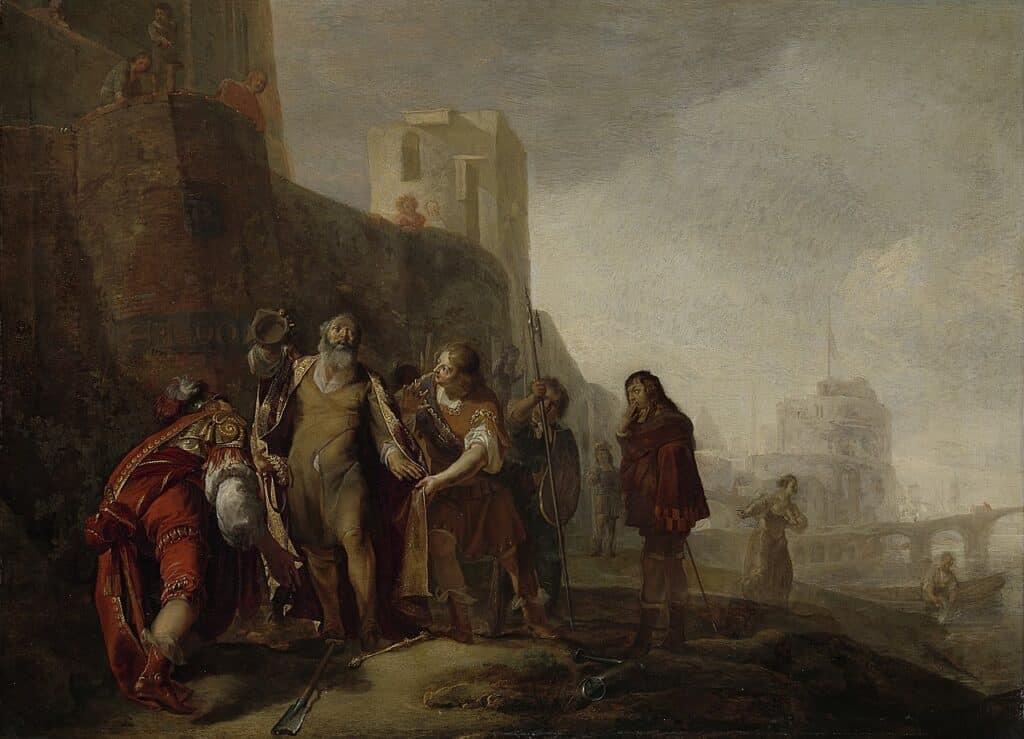
It all started with a picture described by ancient Greek biographer Plutarch centuries ago: Macedonian soldiers, bronzed and battle-hardened, marching not into combat but into a quiet garden in the ancient city of Paphos. Their mission was to find a man in rags hauling water. According to Plutarch’s De Fortuna Alexandri, Alexander had just deposed the corrupt tyrant of Paphos and wished to restore the island’s ancient royal bloodline, the Cinyradae.
The last surviving heir, he was told, was a pauper named Abdalonymus, reduced to a troubled man working the soil. In a moment worthy of Hollywood, the soldiers draped the stunned gardener in royal purple, the Ancient Greek porphyra, and Alexander crowned him king. Plutarch loved this story precisely because it served a moral purpose and signified that the great Greek conqueror from Macedonia possessed something close to divine judgment, able to recognize noble character even beneath layers of garden dirt.
We have to admit it is a genuinely moving story. The one problem, however, is that it almost certainly never happened.
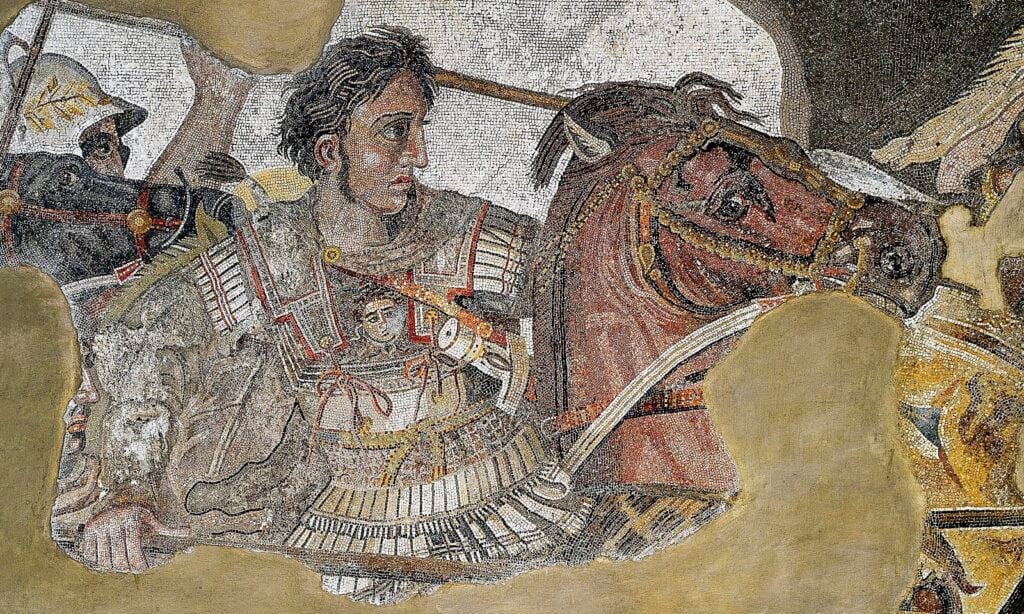
Alexander the Great, the conqueror of Cyprus who never set foot on it
Modern scholars are in broad agreement on this disconcerting point. For all the glory attached to the legend of Alexander the Great in Cyprus and his personal role in reestablishing the old royal authority on the island, the man himself never set foot on the island.
The Cypriot kingdoms did submit to him voluntarily and contributed an impressive fleet of one hundred and twenty ships to support his grueling Siege of Tyre. That much is historically documented and impossible to deny. Nevertheless, Alexander personally bypassed Cyprus entirely, driving his forces south from Anatolia along the Levantine coast toward Egypt and securing the Mediterranean littoral as he proceeded. Plutarch’s vivid scene in Cyprus’s ancient city of Paphos, so compelling as literature, is geographically and historically impossible.
That leaves an obvious and fascinating question. How did one of antiquity’s most respected biographers get it so spectacularly wrong, and, more importantly, why would he lie about Alexander’s role in Cyprus?
The Sidonian gardener
The answer begins with the name Abdalonymus. To anyone familiar with Semitic linguistics, something is immediately off. This is not a Greek Cypriot name. The suffix -us sounds Greek, as this is the Latin transliteration of the Greek suffix -os. Nonetheless, to those who know a few things about Semitic languages, it is distinctly Phoenician, rooted in the words Abd or Ebed, meaning “Servant of the Gods.” This was a naming convention native to the Levantine coast rather than the Aegean Greek world. Roman historian Quintus Curtius Rufus narrates an almost identical story to that of Plutarch but places it exactly where the linguistic evidence points: in Sidon in what is today Lebanon.
The real history, based on wide consensus among historians, is this. Alexander deposed Straton II, the pro-Persian king of Sidon, and searched for a replacement from the old Phoenician royal line. He found his man, Abdalonymus, working as a destitute gardener. The purple robe, the soldiers, the cinematic reversal of fortune—all of it happened but in Phoenicia. It did not actually happen in Cyprus. Somewhere in the centuries between the event and Plutarch’s retelling, the story migrated across the Mediterranean and took root in Paphos instead.
It is, as classical scholars have pointed out, ancient misinformation operating by exactly the same mechanics as the viral fake news rooted in real events we deal with today.

Political propaganda older than democracy
How does a Phoenician story become a Cypriot one, you might ask? Two theories dominate the scholarly debate. The first is the simplest: honest error. Plutarch wrote centuries after Alexander’s campaigns, relying on sources that themselves came into existence only generations after the actual historical events of the Macedonian king’s life. Geography gets muddled. Coastal cities get blurred together. A Phoenician Sidon and a Mediterranean Cyprus are not so difficult to confuse when you are working from fragmentary oral tradition. They are not that far anyway.
The second theory is considerably more interesting. Cyprus spent quite a long time under the control of the Ptolemaic dynasty, the Greek rulers of Egypt who inherited a slice of Alexander’s fractured empire. The Ptolemies had every political incentive to tie their Cypriot territories to the Alexander legend to legitimize their claim on this strategic island. If the people of Paphos believed the great Macedonian conqueror had personally visited their city, handpicked their king, and blessed their royal line, that made Ptolemaic rule over the island feel rather more legitimate, didn’t it? It is political myth-making in its purest form, and it worked well enough that the story survived for millennia.
The parallel to the present is hard to miss. Governments and strongmen have always understood that controlling how history is told is as valuable as controlling territory. Ancient rulers were no different. They shaped the Alexander legend the same way modern state media shapes the news—carefully, purposefully, meticulously, and with a clear audience in mind.
None of this diminishes the pleasure of reading Plutarch or his significance as a source of historical events. If anything, knowing the story is wrong makes it richer because now we are reading two texts at once: the ostensible biography of Alexander and, right beneath it, the political machinations of the world that produced it.
The story of a humiliated man-turned-king resonated with audiences so much because it speaks to our desire to believe that virtue will eventually be recognized and that a man pouring water in a muddy garden might one day wear a crown. That urge is genuinely Greek in the deepest cultural sense and also deeply human. In the end, the story of Alexander the Great in Cyprus is really a masterclass in how legends are constructed, with the aim of weaponizing the past to the advantage of the present.