
A major Greek–Jewish choral performance intended to raise funds for the families of victims of the Bondi tragedy has been cancelled, after divisions within the Greek choir led to the event being scrapped.
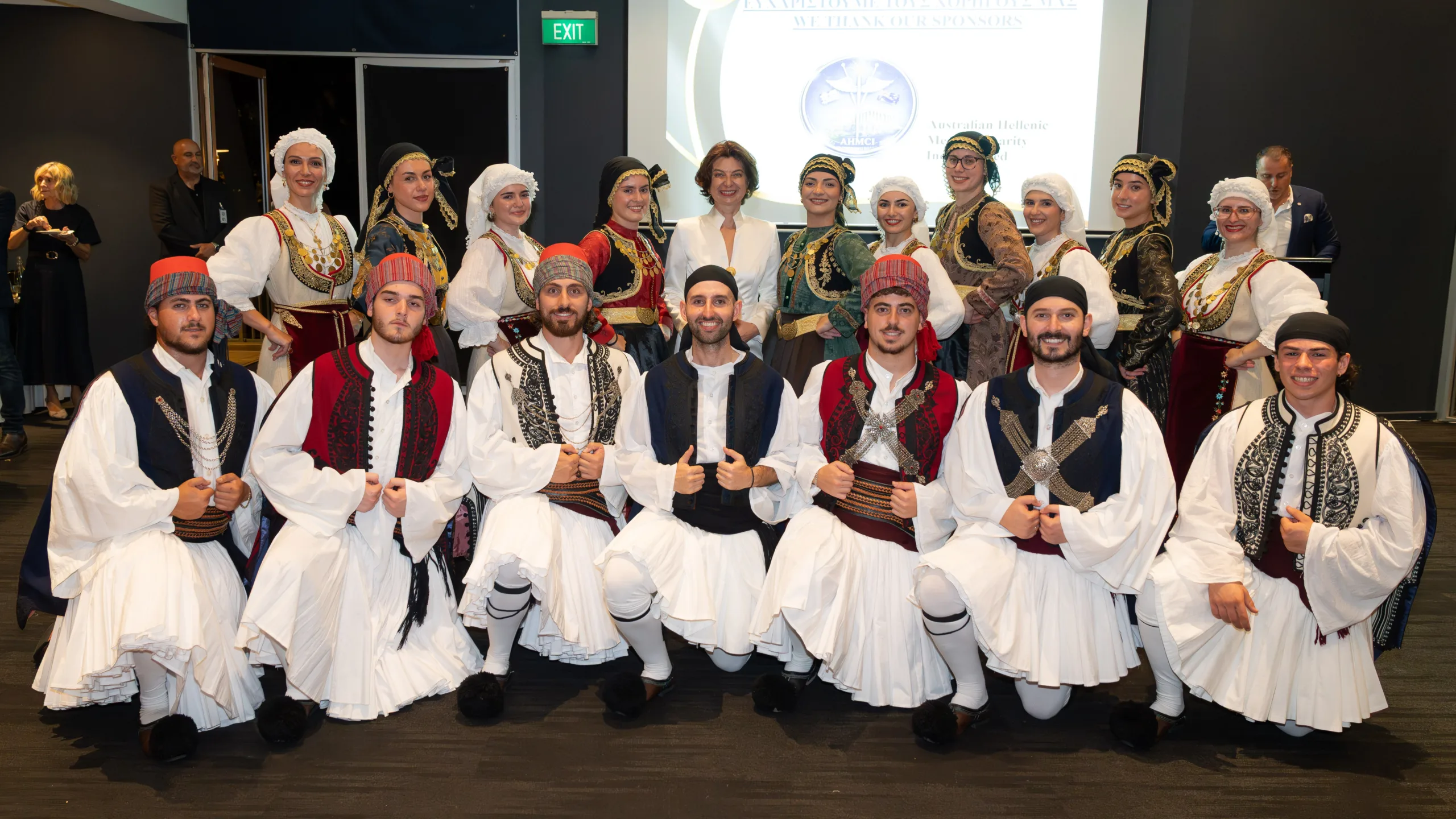
The Concert for Hope and Unity was set to bring together the Australian Hellenic Choir, the Sydney Jewish Choral Society and a leading Australian choir for a two-hour performance at Sydney Town Hall on June 28.
However, the concert fell through after a vote at a rehearsal meeting last Monday, where more than half of the Hellenic choir members “politically objected” to performing alongside a Jewish choir. Some members also expressed fears for their personal safety, citing concerns about a potential attack.
In a letter to members, Sydney Jewish Choral Society chairwoman Anne Spira confirmed the outcome, writing that the Hellenic Choir was “pulling out of the concert, which will be cancelled”.
She has since made a submission to the Royal Commission on Antisemitism and Social Cohesion, with several choir members also lodging personal submissions anonymously.
“It’s not hard to imagine how we’re all feeling,” one said.
Australian Hellenic Choir president James Tsolakis said the decision came as a shock, particularly given the event had recently secured $15,000 in NSW government funding and a confirmed Town Hall booking.
“Every cent was to be dispersed to a charity to support the families of the victims of the Bondi terror attack,” he said.
Tsolakis expressed concern at the reaction within sections of the community.
“There’s a bit of antisemitism in the Greek community; I didn’t realise the extent of it. Unfortunately, we have a lot of people in the community blaming the Jewish community for what’s happening in Israel, Palestine … that’s not correct.
“You want to hate (Israeli Prime Minister Benjamin) Netanyahu? Hate Netanyahu, but what have the Jewish people done to you? The whole antisemitism thing has got be wound back.”
He said a mix of factors contributed to the decision, including anxiety about the current political climate and concerns about safety.
“This is all about bringing people together using music. This whole gig was mine, I initiated it but I’ve got no choice but to shut it down,” he said.
“I’m extremely disappointed. I was not expecting this to happen at all as we’d performed with the Jewish choir without any problems in 2022.
“It would have been a sterling performance.”
The concert was expected to attract an audience of up to 2,000 people and feature a program centred on themes of love, peace and unity.
At its heart was to be The Ballad of Mauthausen, with music by Mikis Theodorakis and lyrics by Iakovos Kambanellis — a powerful work telling the story of love between a Greek prisoner and a Jewish prisoner in a Nazi concentration camp.
Ms Spira praised Tsolakis’s efforts and recalled the success of a previous joint performance.
“We shared a stage together in 2022, performing The Ballad of Mauthausen, a musical work deeply meaningful to both communities. The Mauthausen Trilogy—also known as The Ballad of Mauthausen or the Mauthausen Cantata—is a powerful cycle of four arias that brings together the poetry of Holocaust survivor Iakovos Kambanellis and the music of composer Mikis Theodorakis, widely regarded as one of the most moving musical works inspired by the Holocaust.
First performed at the Mauthausen concentration camp in Austria in May 1988 before tens of thousands, including Austrian chancellor Franz Vranitzky, the concert was conducted by Theodorakis and featured performances in Greek, Hebrew and German by Maria Farandouri, Elinor Moav and Gisela May. The work returned to the camp in 1995 to mark 50 years since its liberation, preceded by an address from Nazi hunter Simon Wiesenthal, later included in the recording. Deeply associated with remembrance and reconciliation, the composition has since gained international recognition, including a 1991 performance at the Athens Festival by the Israel Philharmonic Orchestra under Zubin Mehta, and continues to resonate as a symbol of memory, peace and cultural dialogue.
It was a perfect example of cross-cultural bridge-building and was a great success,” she said.
“In the aftermath of Bondi, Jim (Tsolakis) wanted to do it all again, this time billing the event as a Concert for Hope and Unity.”
She said objections from within the Greek choir, along with fears over safety, ultimately led to the cancellation.
“The result is, like many other Jews in the arts since 7 October, 2023, we have been cancelled,” she said.
“We have been de-platformed and it is deeply upsetting for us and for the broader Jewish community who have been the target of anti-Jewish racism in this country for 2½ years.”
Despite the setback, Tsolakis said he remains committed to future collaboration, revealing plans to stage a similar performance in Canberra next year following an invitation from the Greek ambassador.
“I have every intention to perform again with the Jewish Choral Society,” he said.