
Last weekend I was in Valletta having lunch in St Lucia Street, one of the most iconic streets in the capital. It is a place that really captures the charm of Malta. Historic buildings, colourful balconies and tourists constantly stopping to admire the view and take photos.
I was there with my partner, who is Greek, and while we were having lunch at a restaurant serving Maltese beers and Mediterranean-style dishes, something struck both of us as slightly out of place. The music being played onto the streets was Balkan music. There is nothing wrong with Balkan music. It has its own rich culture and energy.
But at that moment it felt strangely disconnected from where we were.
My partner commented on it as well. Coming from Greece, a country where local music is very much part of the atmosphere in restaurants and public spaces, she found it surprising that in such a historic and Maltese setting we were not hearing any Maltese music at all.
Looking around, I could see tourists pausing to take photos of the street, clearly appreciating the beauty of the surroundings.
Yet, the music accompanying that moment had nothing to do with Malta. It made me wonder why in Malta, especially in our most visited cultural areas like Valletta or Rabat, we so rarely hear Maltese music playing in restaurants, cafes and bars during the day.
Whenever I travel abroad, I expect, and look forward to, experiencing the culture of the place I am visiting. I want to taste the local food, try local beers and feel the atmosphere of that country. Music is part of that atmosphere.
Whether I am in Spain, Greece, Italy or Portugal, I often hear local music playing in restaurants or public spaces. I rarely understand the lyrics but that does not matter. It still adds to the experience.
Music is part of a country’s identity. It reflects its history, culture and creativity. It helps give a place its own character. Malta has a rich musical heritage that we should be proud of. From traditional għana to modern Maltese artists producing great music today, there is plenty of talent to showcase. Yet Maltese music rarely seems to be part of the everyday experience in some of our most prominent tourist locations.
Many restaurants already promote Maltese food and local beers. Why not also promote Maltese music? Playing local artists would support Maltese musicians and at the same time give visitors a more authentic experience of the island.
Music is part of a country’s identity– Beppe Lauri
After this experience I decided to do something small myself. I created a playlist showcasing Maltese artists and music that I think could easily form part of the atmosphere in our restaurants, cafes and public spaces. It is a small step, but it reminded me how much great Maltese music there actually is.
At the same time, perhaps we should also think more seriously about how we present our cultural identity in our capital city. Valletta represents Malta to thousands of visitors every day. The city could consider consulting with local artists, musicians and other culturally rich professions to help develop cultural guidelines that reflect today’s priorities and help strengthen Malta’s cultural presence in public spaces.
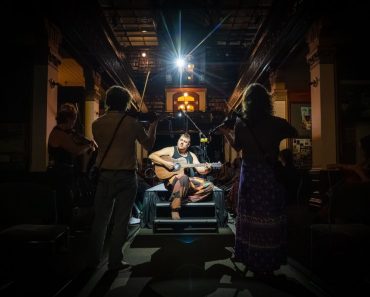
It is also worth recognising that Valletta already has a vibrant live music scene, particularly in the evenings when many establishments host talented local musicians and bands. That is something that should absolutely be celebrated and encouraged.
The point here is not to replace that energy, but to think about the atmosphere we create during the daytime hours as well, when thousands of visitors are walking through the city and experiencing Malta for the first time.
Any broader approach to music in public spaces should also go hand in hand with sensible and adaptable noise regulations. Restaurants and bars should not feel the need to compete with one another for the loudest sound on the street.
Music works best when it complements the surroundings rather than overpowering them. Moderation would allow the character of the city, its architecture, conversations and atmosphere, to remain part of the experience.
Tourists come to Malta to experience Malta. The architecture, the food, the history and the sea all help tell that story. Music should be part of that story too.
Sometimes the smallest details can shape how a place is experienced and remembered. The music playing in the background might seem like a small thing, but it can help give visitors a deeper sense of where they are.
Valletta is one of the Mediterranean’s most beautiful capitals. The soundtrack we give it should reflect the island it represents.

Beppe Lauri has an MSc in Strategic Management and Digital Marketing and has a keen interest in conserving Maltese culture.