
Ongoing tensions between Israel, the United States, and Iran are likely to push up flight and holiday prices this summer

Should you book your holiday now? (Image: Getty)
Ongoing tensions between Israel, the United States, and Iran are likely to push up flight and holiday prices this summer for several reasons.
Airlines and holiday companies are warning travellers that prices are already rising and urging them to book summer holidays soon. But what does all this mean for your holiday, and should you book it now? Here’s the latest travel advice that’s current as of today.
You can also follow our travel reporter, Portia Jones, on TikTok for the latest travel updates.
Flight prices are rising
The conflict is pushing oil prices higher, which makes energy more expensive. Airlines are raising ticket prices because fuel costs are going up, as jet fuel is their biggest expense after labour.
Reuters reports that airlines like Qantas Airways and Air New Zealand are raising fares due to the Middle East conflict. Airlines worldwide are struggling with fuel prices, which have jumped from $85–$90 per barrel to $150–$200 per barrel in recent weeks.
As of April 6, 2026, oil prices are still high, with Brent Crude at about $109–$111 per barrel. The US-Iran conflict is making the situation unstable. Global shipping through the Strait of Hormuz is also affected as President Trump issues serious threats to Iran.
Iran continues to block the Hormuz trade route in the Persian Gulf, and attacks on tankers, refineries, and oil facilities are ongoing.
This key route handles about 20-25% of the world’s seaborne oil trade, so any disruption creates a significant supply-and-demand imbalance and increases global risk.
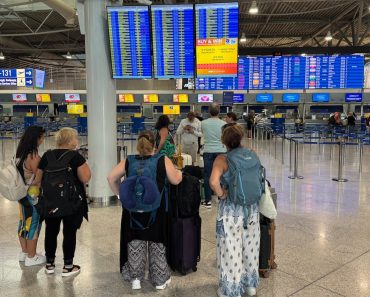
Travellers are already seeing higher prices. Flights from Europe to Asia, which usually cost £350-700, now cost over £1,700 for a return ticket.
Premium long-haul flights are also much more expensive as jet fuel prices rise and airlines avoid Middle Eastern airspace.
However, Ryanair’s CEO, Michael O’Leary, told passengers that higher fuel prices will not affect Ryanair’s ticket prices. “We’re hedged for the next 12 months…so it won’t affect our costs, and it won’t affect our low fares,” he said. To stay updated, sign up for our daily newsletter.
Many airlines are also cutting flights to save money. The Mirror reports that United Airlines is suspending several routes because of rising jet fuel costs during the US-Israeli war with Iran.
The airline will cut 5% of its flights in the second and third quarters of 2026, from a network of 4,000 domestic and 800 international routes.
This follows British Airways’ announcement that flights to Amman, Bahrain, Dubai, and Tel Aviv are cancelled through May 31, and that flights to Doha are cancelled until April 30.
A BA spokesperson said the cancellations are “due to the continuing uncertainty of the situation in the Middle East and airspace instability, and to provide more clarity to our customers”.
Airlines are passing on costs
Along with higher airfares, airlines are also adding surcharges and raising baggage fees. US carriers JetBlue and United Airlines have both announced baggage fee increases, while Lufthansa and Turkish Airlines will add a temporary €10 fuel surcharge per passenger for Europe-bound flights from Turkey starting May 1, 2026.
So far, budget airlines Ryanair and easyJet have not increased baggage costs and say their fares will not be affected right away by the fuel crisis because they have “hedged” fuel for the first half of 2026.
However, Ryanair’s CEO warned that if supply risks continue into June or July, they may cut capacity or raise prices.
According to Which?, several major holiday firms, including On The Beach, Jet2holidays, and British Airways Holidays, have also committed not to add surcharges to existing bookings; other providers, like TUI, have yet to announce any possible surcharges.
Travellers are changing their plans
British tourists planning trips to destinations such as Dubai and Abu Dhabi are advised to review their travel plans. The Foreign, Commonwealth, and Development Office (FCDO) has updated its advice because of the conflict.
The Foreign Office currently warns against travel to the UAE and urges people already in places like Dubai and Qatar to stay away from areas around security or military facilities, and US or Israeli-linked locations.
As a result, many travellers are changing their summer holiday plans and avoiding the UAE and nearby countries, which is pushing up prices for other destinations.
HotelPlanner’s latest data shows that cancellations for trips to the Middle East have doubled since the conflict began. According to HotelPlanner CEO and co-founder Tim Hentschel, far fewer people are travelling to the region.
He added that many Brits are now choosing European holidays closer to home instead of long-haul trips to the Middle East.
“Destinations such as Malta, Portugal, Croatia, and Italy have seen a boost in interest for Easter. Currently, the number of Easter bookings in these destinations is twice the number of bookings for 2025 Easter bookings made by mid-March 2025.”
Airlines like Qantas are also seeing more sales for flights to Europe as travellers change their plans to avoid the Middle East.
Budget airline Ryanair reports a spike in bookings for European flights, especially around Easter. A spokesman said that while bookings to the Middle East have dropped, demand for short-haul flights within Europe has gone up.
“But I don’t think it has any fundamental change or impact on longer-term booking trends into May, June, and July,” they added.
Tour companies like Intrepid Travel are noticing changes in how people book trips. “We’re seeing some booking patterns change over the past couple of weeks due to the Middle East impact on our trips in Jordan and Egypt and due to flight disruptions,” a spokesman for the company said.
They also pointed out that interest in European destinations is rising, especially for Italy and Greece, which are up 32% year-on-year. Central and South America are also up 23% year-on-year.
This higher demand for European and Caribbean destinations can push up prices as more travellers try to book packages, hotels, and resorts. Travel agents are now recommending booking early to avoid significant price changes.
For flight prices, you can use tools like Skyscanner to find the cheapest flights to a destination, and Google Flights to track fares for specific dates or any date to receive email alerts when prices drop significantly.
You can track a specific flight itinerary or an entire route, with tools to view price history and compare current prices to see if they’re high, low, or typical for that route.
Should you book now?
There is a lot of uncertainty with travel right now, as holidaymakers wonder whether to book now or wait to see if prices come down and flight prices stabilise.
If you are planning a summer holiday outside the UK but are not ready to book, I recommend setting up a flight alert to keep track of airfares to your chosen destinations.
If you know where you want to go, booking and paying the balance in full is likely the most effective way to lock in current rates, especially if you are booking with a holiday provider that has promised no extra surcharges.
As people wait until near the busy summer holidays, airlines add new flights to keep up, and ticket prices are likely to rise as the school holidays in July and August begin, and families decide to head to popular tourist hotspots.
Since the ongoing conflict and oil price fluctuation can change travel conditions quickly, booking your flights early is the best way to avoid higher prices caused by both growing demand and rising fuel costs.