MARCH 28TH:
On this day in 1893, Spyros Skouras, the Greek-American motion picture pioneer, was born. Skouras is known as one of the most influential Greek immigrants in American history and one of America’s preeminent citizens during the Cold War period. In an astonishing sixty-year career, he shaped two industries (film and shipping), turned Twentieth CenturyFox into a global film leader, saved Hollywood by introducing the CinemaScope widescreen format, masterminded Century in Los Angeles, and, not least, helped save thousands of Greeks from starvation and disease during World War II. Skouras and his two brothers came to the United States as immigrants in 1910; Spyros kept such a pronounced Greek accent in English that comedian Bob Hope would joke, “Spyros has been here twenty years, but he still sounds as if he’s coming next week.” Former President of the United States Dwight Eisenhower said of Skouras: “I have not only a real affection for Spyros Skouras, I have found him to be a most public-spirited citizen devoted to our country and fully as ready to work for America’s welfare as any native-born citizen of my acquaintance.”
MARCH 29TH:
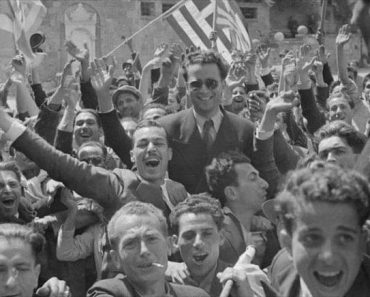
On this day in 1864, Great Britain gave the Ionian islands back to Greece as a gesture marking the accession of a new Greek king, George I, son of Christian IX of Denmark. The islands were later occupied by Italy first and then by Germany during World War II, but were liberated with the rest of Greece in 1944. The presence of other Europeans on the islands at a time when Greece was still under Ottoman rule gave rise to significant cultural activity, which is reflected both in the islands’ architectural traditions and gastronomy as well as the residents’ character traits. Today, the Ionian islands produce timber, fruit, and flax and its inhabitants raise pigs, sheep, and goats. Their exports include currants, wine, cotton, salt, olives, and fish, and the islands are largely self-sufficient in grains. Their harbors are superior to those of the west coast of Greece and more conveniently located for international shipping.
MARCH 31ST:
On this day in 1822, there was a massacre of the Christian population of Chios by soldiers of the Ottoman Empire during the Greek war of independence. Turkish Sultan Mahmud II (1785-1839) gave the order to kill all males over the age of 12, all women over 40, and all children younger than 2. The Turkish soldiers brutally killed thousands of men, raped women, and slaughtered babies with their swords. Less than two thousand people managed to survive the massacre by hiding (half of which eventually died of hunger and illness). It is said that the inhabitants of Chios paid the highest possible price for the Greeks’ rebellion against the Turks. The Massacre of Chios was later depicted by artist Eugène Delacroix and written about by poet Victor Hugo. The revenge of the Massacre came a few months later, in June of 1822, when Konstantinos Kanaris, a native of Chios who had survived, set fire to the Turkish fleet that had landed in the port of Chios, killing 2,000 Turks and destroying all the ships there.