
The Antikythera shipwreck, discovered in 1900, revealed the Antikythera Mechanism and dozens of statues; in 2025, archaeologists recovered for the first time a fragment of the hull of the ancient Greek ship.
In more than 125 years of intermittent archaeological excavationsThe shipwreck of Antikythera has already revealed some of the most extraordinary artifacts in maritime archaeology. From the bottom of the Aegean Sea emerged… Bronze and marble statues, jewelry, navigational instruments, human remains, and the famous Antikythera Mechanism., considered by many researchers to be the first analog computer in history. In 2025, however, an unprecedented discovery once again changed the understanding of the shipwreck. For the first time since the discovery of the archaeological site, archaeologists managed to recover an articulated fragment of the ship’s own hullallowing for a direct study of how the ancient Greeks built merchant ships in the Mediterranean.
This discovery offers new clues about Naval technology in Ancient Greece…trade routes in the Aegean Sea and the very history of the ship that carried one of the most valuable cargoes ever found in an ancient shipwreck.
The shipwreck of Antikythera was discovered by sponge fishermen fleeing a storm in 1900.
The story of the shipwreck began in the spring of 1900, when Dimitrios KondosThe captain of a sponge fishing boat from the Greek island of Symi was sailing through the Aegean Sea towards North Africa. A storm forced the vessel to take shelter near the small island of Antikythera, located between Crete and the Peloponnese. While waiting for the sea to calm down, one of the divers descended to the bottom at about [distance missing]. 45 meters deep He went to look for sponges. What he found seemed impossible.
See also other features
-
A bricklayer teaches how to make homemade paint with joint compound, water, and glue; the simple mixture can be used to paint interior walls for around R$ 80.

-
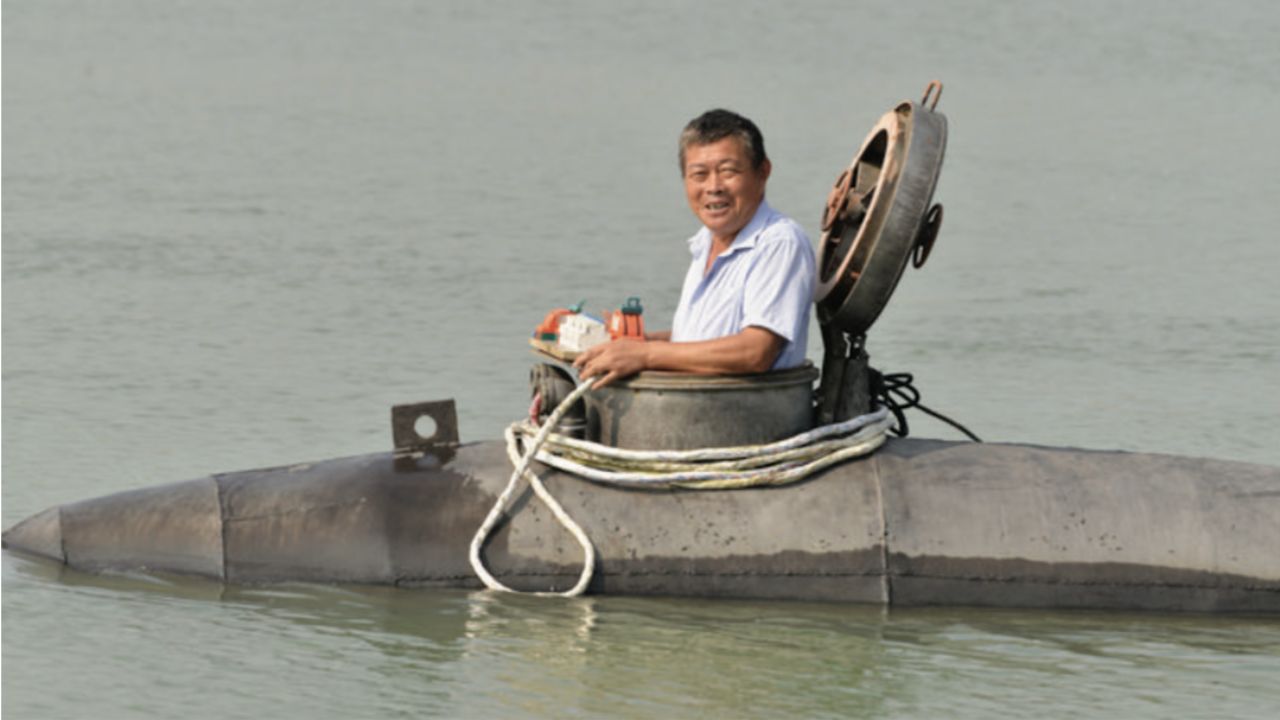
Without a diploma, a Chinese farmer pieced together steel sheets, a battery, and a used motor, spending ten years welding in the early hours of the morning until he launched the Big Black Fish into the river in Anhui province. This homemade 5-ton submarine is capable of diving 8 meters with two passengers on board.

-
A colossal floating structure, 100 meters long and weighing up to 5 tons, travels an incredible 17 km, crosses two oceans at less than 15 km/h, and becomes a port in Antarctica.

-
Archaeologists find a pistol measuring just 6 centimeters that may be the oldest firearm in Europe.




Scattered across the seabed were arms, legs and torsos of marble and bronze statuesThe diver described the scene as “a pile of dead and naked people.” He returned to the surface carrying a bronze arm, which quickly caught the attention of Greek authorities.
This discovery marked the beginning of what would become… one of the most important underwater archaeological sites in the world.
Initial excavations have revealed statues, jewelry, and artifacts from Ancient Greece.
As early as 1900, the Royal Greek Navy sent vessels to investigate the site. The first rescue operations took place between 1900 and 1902, conducted by the sponge fishermen themselves using extremely primitive diving equipment.
The divers used metal helmets and pressurized canvas suitswhich allowed them to remain at the bottom of the sea for only a few minutes before rising to the surface again.
Even with these limitations, the recovered material was extraordinary. Among the artifacts found were:
- bronze and marble statues
- gold and silver jewelry
- amphorae used for transporting wine
- Old coins
- navigation instruments
- finely crafted glass containers
One of the most impressive objects was the Ephebe of Antikythera, a bronze sculpture over 1,90 meters tall dating from the 4th century BC. But the most mysterious find was yet to come.
The Antikythera Mechanism: the first computer in history.
Among the fragments retrieved from the seabed was a mass of corroded bronze that initially went unnoticed. In 1902, the Greek politician and archaeologist… Spyridon Stais He realized that one of the pieces contained metal gears.
It was about Antikythera Mechanism, considered the most sophisticated mechanical device of Antiquity. The mechanism consists of a complex system of interconnected gears capable of calculating:
- positions of the Sun and the Moon
- lunar cycles
- Positions of five planets known in Antiquity
- Solar and lunar eclipse predictions
- the four-year cycle of the Olympic Games
Built around 2nd century BCThe device is so advanced that nothing comparable has reappeared in the Western world since. mais de 1.400 anos…until the emergence of European astronomical clocks in the Middle Ages. For many historians of technology, the mechanism represents… the first known analog computer in human history.
The ship of Antikythera was probably carrying looted Greek art to Rome.
Studies indicate that the ship sank around 60 BCpossibly during a trip to Rome. At the time, the Roman Empire dominated much of the Mediterranean, and transporting people was common. Greek works of art confiscated or acquired as payment for war debts..
Many historians believe the ship was carrying sculptures intended to decorate Roman villas, temples, or public buildings. Had it reached its destination, it is likely that:
- the statues were displayed in Roman theaters or porticoes
- the mechanism was disassembled as recyclable metal.
The shipwreck ended up preserving this extraordinary cargo for over two thousand years.
Modern expeditions to the Antikythera shipwreck began in 1976 with Jacques Cousteau.
After the first excavations at the beginning of the 20th century, the site remained without major investigations for decades until… Jacques-Yves Cousteau He dove into the area in 1976 with the ship Calypso. The expedition found new statues and several smaller artifacts.
From 2012 onwards, modern archaeological campaigns began using much more advanced technologies, including:
- diving systems closed rebreather, which allow for longer dives
- robotic underwater vehicles
- Three-dimensional mapping of the seabed
In 2016, archaeologists found a well-preserved human skeletonopening up the possibility of genetic analysis to identify the origin of the crew members.
Recent archaeological campaigns have revealed new secrets of the shipwreck.
Between 2021 and 2025, the project “Return to Antikythera” The expedition was conducted by the Swiss School of Archaeology in Greece in partnership with the University of Geneva and the Greek Ministry of Culture. During these campaigns, archaeologists removed large rocks that covered parts of the archaeological site.
In 2022, three stone blocks with approximately 8,5 tons each They were moved, revealing new artifacts and additional human remains. Teeth found at the site may allow DNA analysis capable of revealing the geographic origin of the crew.
In 2025, archaeologists recovered part of the ship’s hull for the first time.
Between May 23 and June 20, 2025, a team led by Professor Lorenz Baumer, from the University of Geneva, and by the archaeologist Angeliki Simosi The final season of the project was completed. The major discovery was a fragment of the ship’s hull.

The set includes:
- three outer planks of the hull
- a fragment of internal structural rib
The parts were still there. fitted together, something extremely rare in shipwrecks this old. The fragment measures approximately:
- 0,40 meters wide
- 0,70 meters long
The wood used includes elm and oak, species common in Mediterranean shipbuilding. Preliminary dating indicates approximately 235 BC, suggesting that the ship could have been built more than a century before sinking, undergoing repairs throughout its lifespan.
“Shell-first” naval technique reveals how the Greeks built ships.
The discovery confirmed that the ship was built using a technique known as shell-firstIn this method, the builders first assembled the external structure of the hull, fitting the wooden planks together. Only then were the following installed:
- inner ribs
- structural reinforcements
- support elements
This method was typical of Mediterranean shipbuilding between the 4th and 1st centuries BCUntil now, however, archaeologists had no direct evidence that the ship of Antikythera had been built in this way.
The recovery of the fragment allowed this structural detail to be confirmed for the first time.
Other findings from 2025 reveal details of life on board.
In addition to the hull, the archaeological campaign uncovered other important artifacts. Among them were:
- amphorae from the island of Chios, used to transport wine
- um terracotta mortar, possibly used for preparing food
- fragments of a male marble statue
The base of the statue, along with part of the left leg, was recovered after a large rock was removed. The remainder of the sculpture is still trapped in concretions on the seabed.
Also found were additional wood fragments associated with lead, copper, and tarmaterials used in caulking of old ships, a technique designed to make the hull waterproof.
The Antikythera shipwreck may involve two different ships.
Recent research has also revealed an intriguing detail. In 2024, archaeologists confirmed the presence of a second ship about 200 meters from the main shipwreckThis raises new hypotheses:
- The two ships may have traveled together.
- They may both have sunk in the same storm.
- Or the second one could represent another maritime accident that occurred in the region.

If confirmed, the archaeological site of Antikythera could reveal an even more complex history of maritime trade in the ancient Mediterranean.
The shipwreck of Antikythera remains one of the most important archaeological sites in the world.
More than a century after its discovery, the Antikythera shipwreck continues to yield discoveries capable of transforming our understanding of the ancient world. From the seabed have already emerged:
- hundreds of artifacts
- dozens of sculptures
- human remains
- the first analog computer in history
- and now part of the ship itself
Even after 125 years of excavationsArchaeologists believe that much of the site remains unexplored. The site, which began to be discovered by sponge fishermen fleeing a storm, continues to reveal crucial clues about… Technology, commerce, and engineering of ancient Greek civilization..