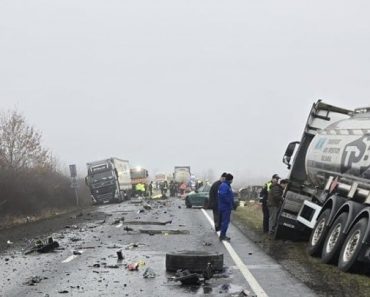


A photograph showing the condemned men being led to the firing squad in Kaisariani.
The newly emerged trove of 12 black-and-white photographs that capture the execution of the 200 Greek patriots by German occupation forces during World War II in Athens are fragments of our history and must be reunited with its main body of evidence. Greek society – with a few sad exceptions – is asking for their acquisition, and the government has rightly mobilized its resources and experts to achieve this goal.
We describe these photos as “evidence,” even before the experts have issued their conclusion on their authenticity, because May Day 1944 may have special significance for us, but it is still only one of the thousands of crimes committed by Nazis in Europe during the Second World War. It would not make any financial sense for someone to go to the trouble of forging and selling fake photos of these specific executions.
The Communist Party of Greece (KKE) is raising a – currently – secondary but interesting issue. Where should these photographs be kept and exhibited once they are returned? The party’s leader, Dimitris Koutsoumpas, wrote to the president of the Parliament on Monday that “the specific archives should be returned to the Museum of National Resistance of the Municipality of Kaisariani, the Municipality of Haidari and the KKE, [so that they remain] open and accessible to the people and the youth.” The member of the central committee of the party, Nikos Rembapis, added: “The KKE proposal also satisfies the need for ‘reunification’ of these documents with the messages, notes and other objects of the executed communists of May Day 1944, which are in the KKE archive.”
We have a better idea. Why doesn’t the KKE hand over “the messages, notes and other objects of the executed communists of May Day 1944, which are in the KKE archive” to the Museum of National Resistance of the Municipality of Kaisariani? Yes, the majority of those executed that day were members of the KKE, but among them were Archeiomarxists and Trotskyists, people whom the party at the time ruthlessly persecuted and in some cases massacred. We are not saying this to reopen the sad history pages of the communist movement, but to note that the common denominator of all those executed was not the KKE, but their longing for freedom.
Therefore, what we need is a large museum of national resistance, which will highlight the significant role of the KKE during the German occupation, note the “national” nature of the Resistance, but above all celebrate the universal value of freedom.
There are several museums dedicated to the resistance against the Nazis. However, given that the first acts of resistance were recorded in Greece, we have the opportunity to build something more inclusive and universal, just as the concept of freedom is universal, instead of a lousy, partisan or limited – in scope – national museum.