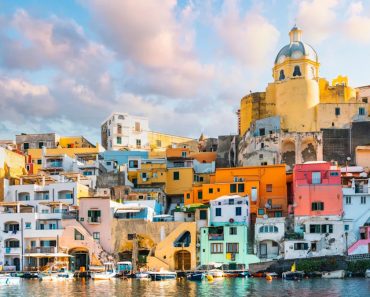
When you think Greek islands, chances are it’s probably Mykonos’ bustling waterfront hugged by an azure Aegean, or Santorini’s whitewashed, cliffside churches with blue domes.
It’s the Greece of Mamma Mia, cave hotels that cost an arm-and-a-leg per night, and overpolished villages where you’re more likely to find a Hermès outlet than chatty yiayias gossiping on their front porches all day.
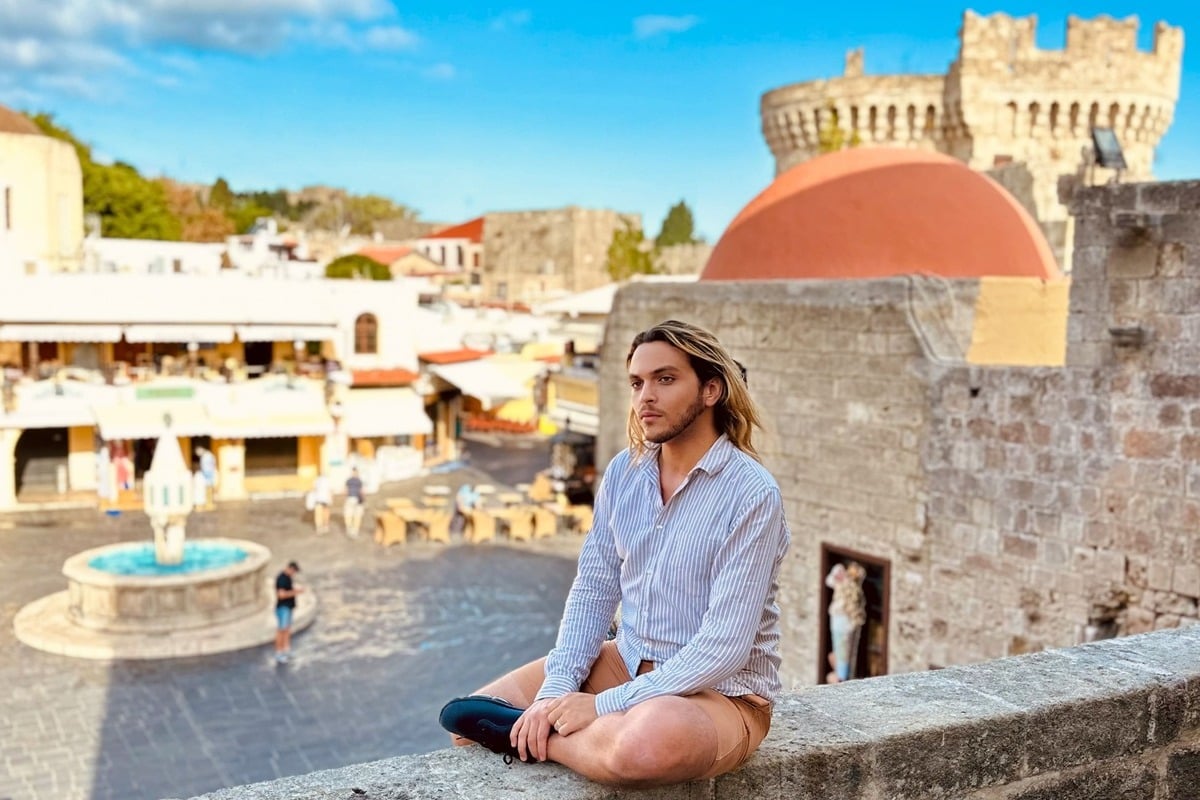
Listen, I’ve been to over 20 Greek islands at this point, from the Italian-influenced Ioanian side, down to the secret gems of the Saronic, the touristy Cyclades, and all the way east to the Dodecanese.
Santorini, Corfu, Paxos, Aegina, Milos, Hydra, you name it.
I’ve splurged on $1,000 caldera-view rooms in Oia, dived from the world-famous cliffs in Sarakiniko Beach, idly watched sunsets over the Byzantine monastery in Folegandros, and went off-path in the Mastic heartland of Turkey-facing Chios, but there’s one island that keeps pulling me back.
Greece Like You Never Imagined It
My Pearl of the Dodecanese, Rhodes is perhaps Greece’s most unsung cultural destination, and a paradisiacal island packed-full of timeless horios (traditional inland villages) and fringed by some of the turquoise-most waters in the entire Mediterranean.
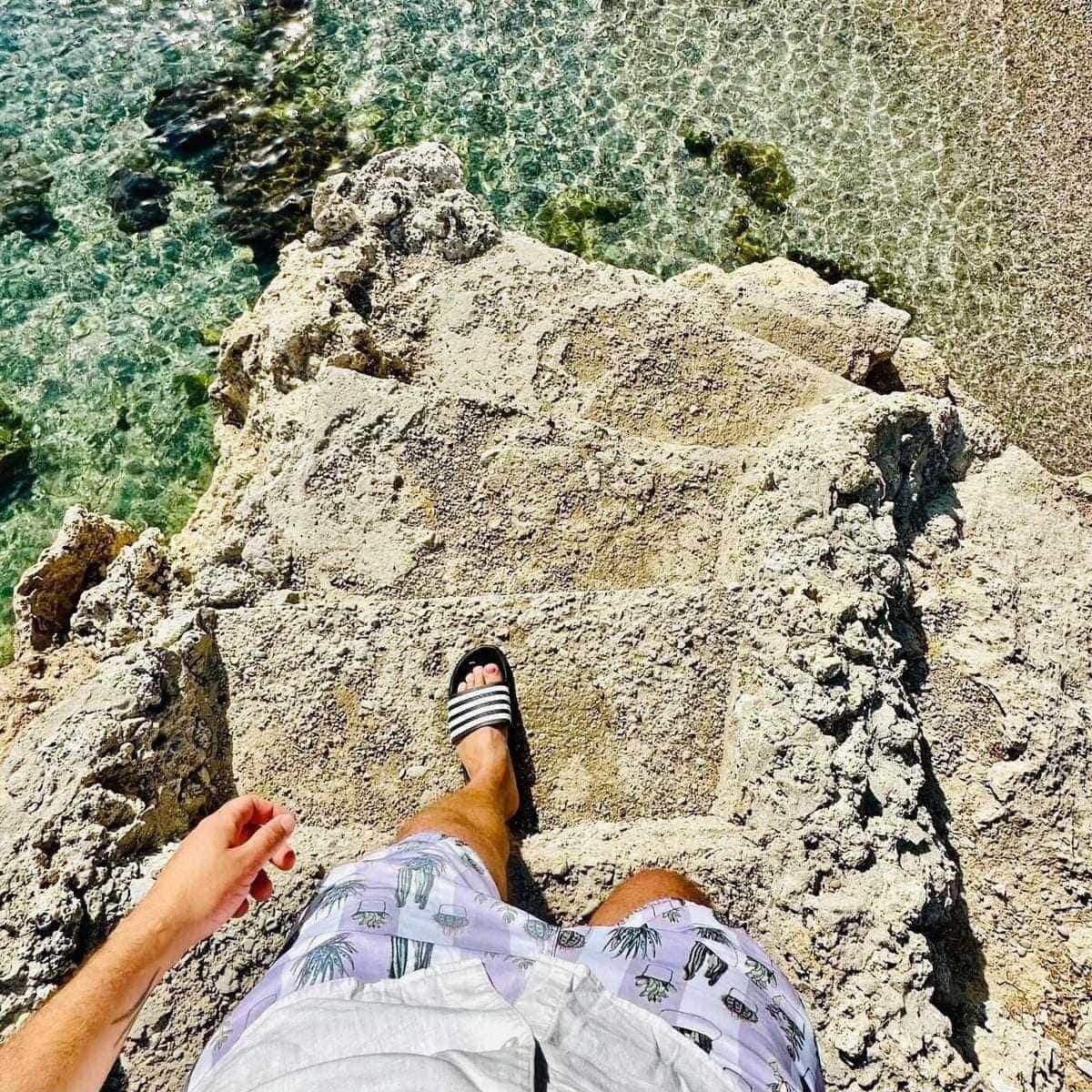
Unlike Santorini, Rhodes ain’t just a weekend getaway. You’re gonna wanna kick back there for at least a week, maybe longer. And just so you know, it’s not exactly some hidden gem. At least, not if you’re European.
It’s actually quite popular, hosting over 3.5 million tourists yearly, mostly from the Northerly countries, placing second in popularity right after Crete. Thing is, if you’re an American, chances are you’ve probably never heard of it.
Not being cheeky or anti-American here. I love y’all. It’s just facts.
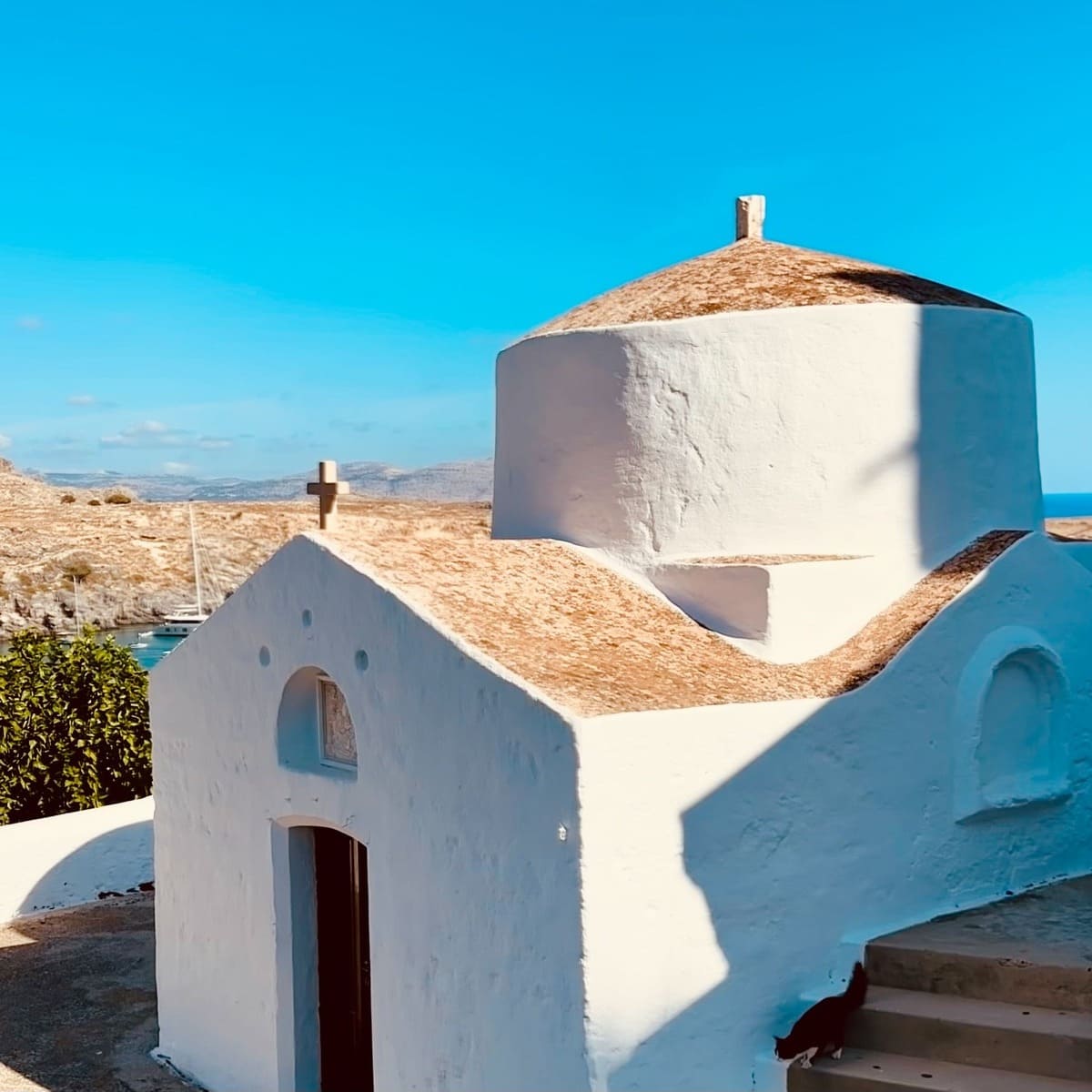
Americans make up only a tiny fraction of Greece’s overall arrivals, around 3–5% of visitors, and needless to say, a majority will touch down in Athens, the capital, and as far as island-hopping goes, it’s of course the Mykonos–Santorini duo that’s on their radar.
Even though, hem, Greece has over 200 islands to pick from, but hey, I digress.
I can’t stop gorgeous influencers flinting about Oia in flying dresses from selling to you the surface-level Greece, but I can tell you why I believe there’s no place better to experience Greek culture than an arguably-offbeat Rhodes:
A Truly Mind-Blowing Medieval Capital
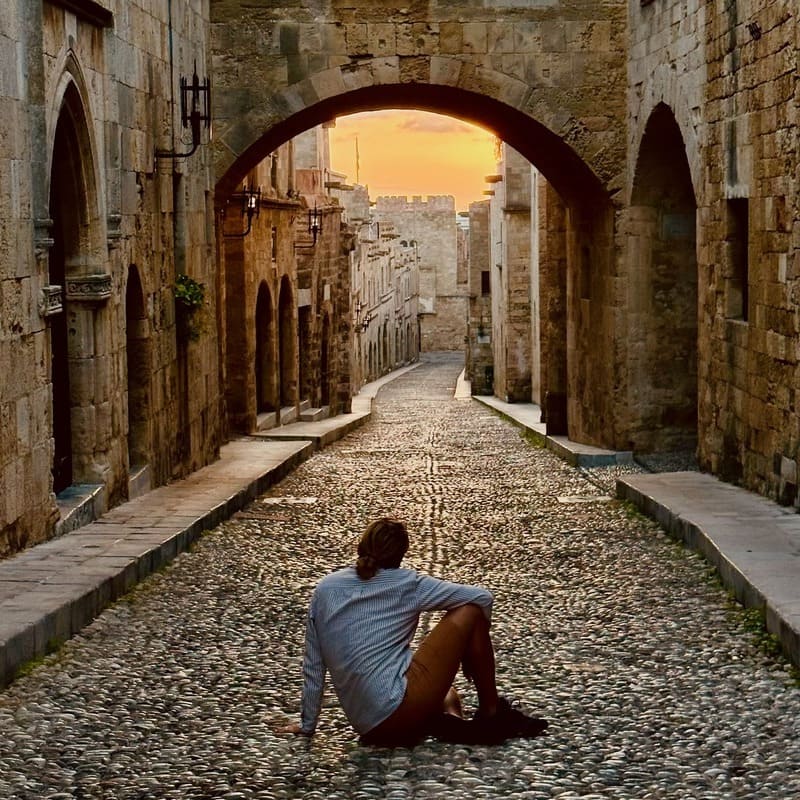
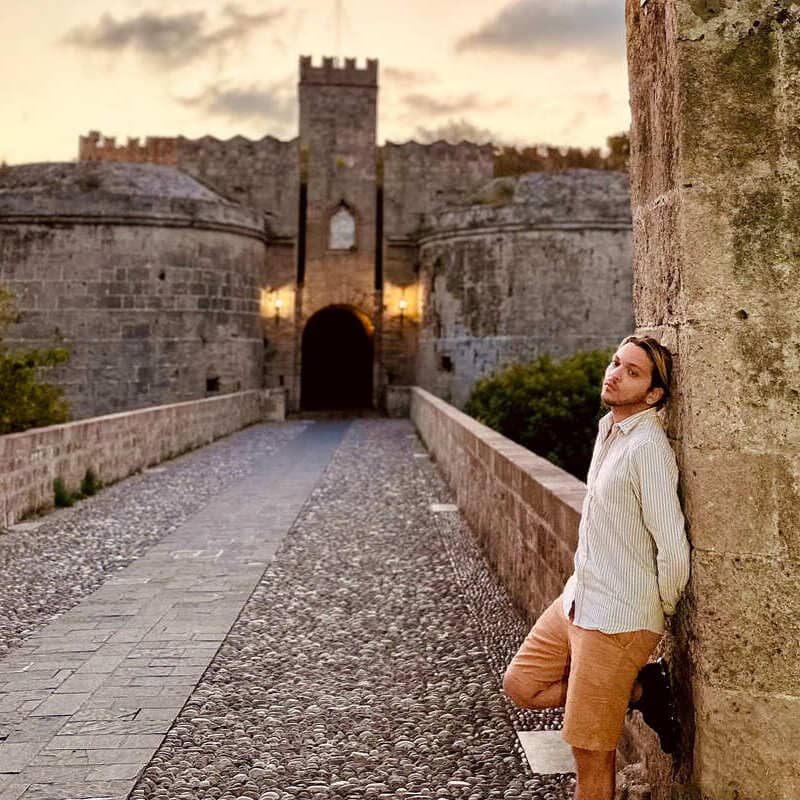
One of the best-preserved, as well as the largest medieval center still inhabited in Europe—it’s no wonder I included it in my top 5 all-time favorite European destinations—Rhodes Town is the kind of storybook location you’d have thought could only exist in period dramas.
It’s been under the control of every civilization you could possibly name, from the Ancient Hellenes, to the Romans, their Byzantine successors, the Ottomans, Napoleonic France, and even the Italians, so it’s truly no wonder it looks incredibly diverse for a Greek city.
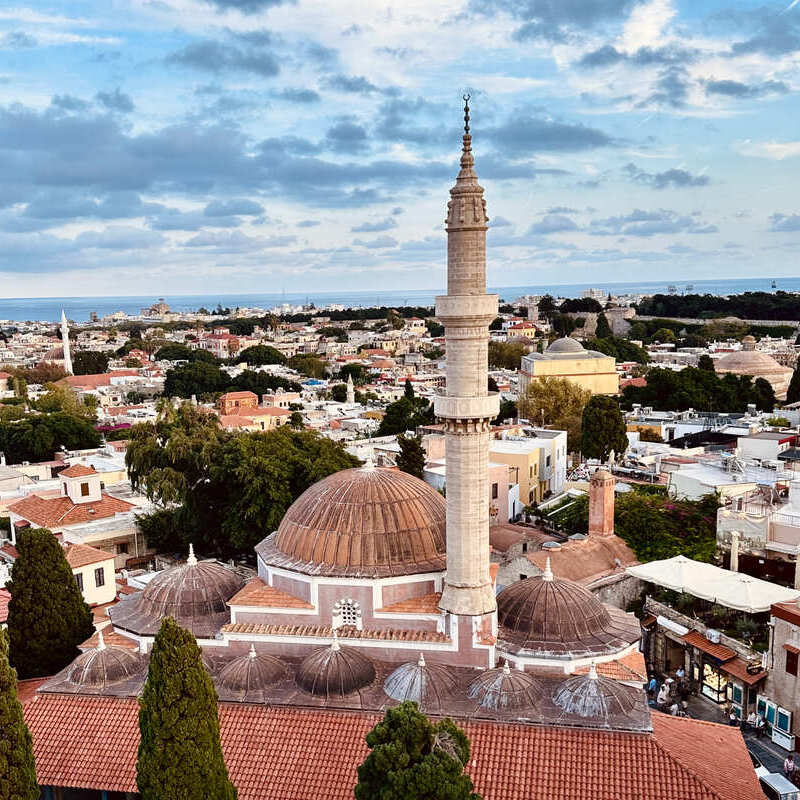
I’m talking a labyrinthine center cut through with winding, cobbled lanes, French-style auberges (built by the French themselves), towering minarets dating back to the Turkish period, and imposing ramparts, city gates, and stone bridges over deep moats.
One building I find particularly fascinating is the Palace of the Grand Master, a rare example of a Western-style medieval fortification this far east in the Mediterranean, looking no different than your average French château.
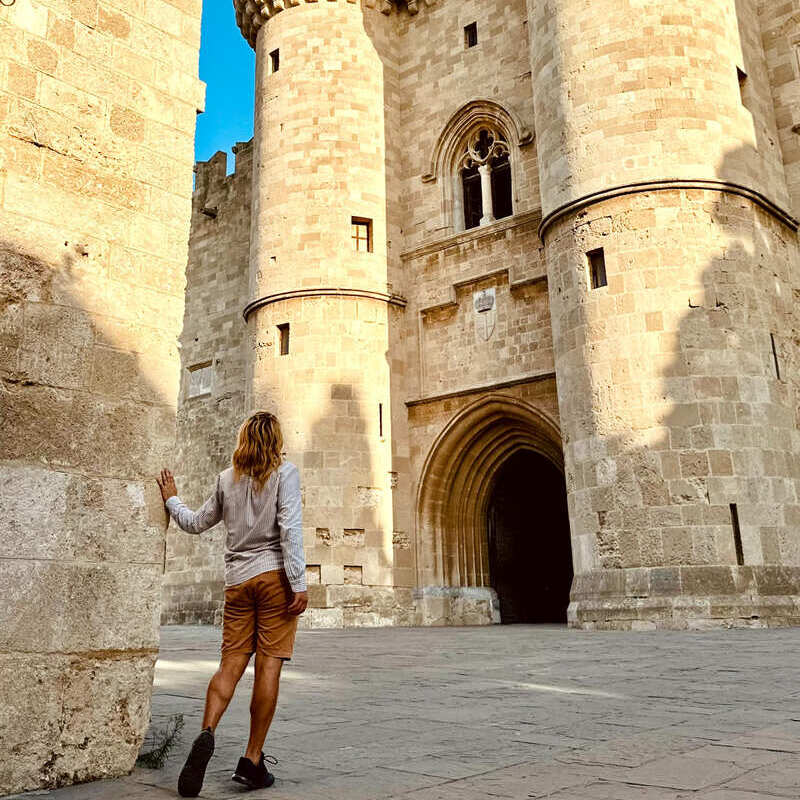
Paved with uneven cobbles and flanked by medieval inns, the Street of the Knights is one of the most beautiful I’ve seen in the whole of the Old Continent, and of course, there’s no Rhodes without its iconic Mandraki Harbor.
It’s believed to be the former site of the Colossus of Rhodes, one of the Seven Wonders of the Ancient World.
The massive statue once stood at the entrance to the harbor, with its feet allegedly spanning the waterway.
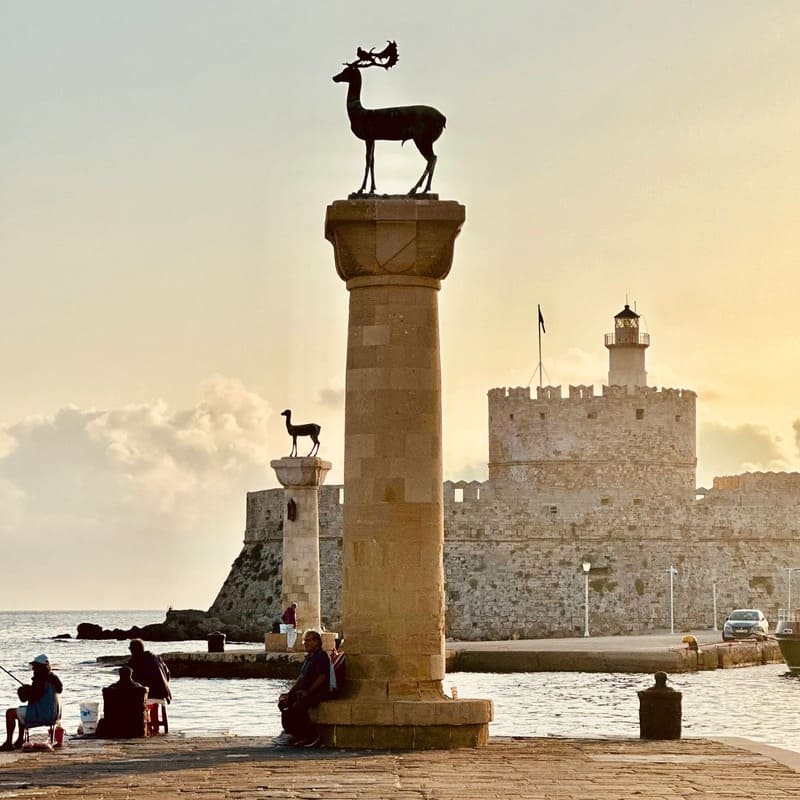
No physical trace of it survives today, but you can walk up to the famous deer statues that mark the supposed spots where the Colossus’s feet would have stood, on opposite sides of the harbor entrance, and take in views of the walled Old Town from across the water.
This Is What The Real Greece Is All About
There’s no Greek island escape without some good old village-hopping. Gotta hit those hourios to find the best mountain cheese and baked lamb, my friends. The best thing about Rhodes is that it’s relatively small, so most smaller settlements are within half-an-hour, or a one hour’s drive away.
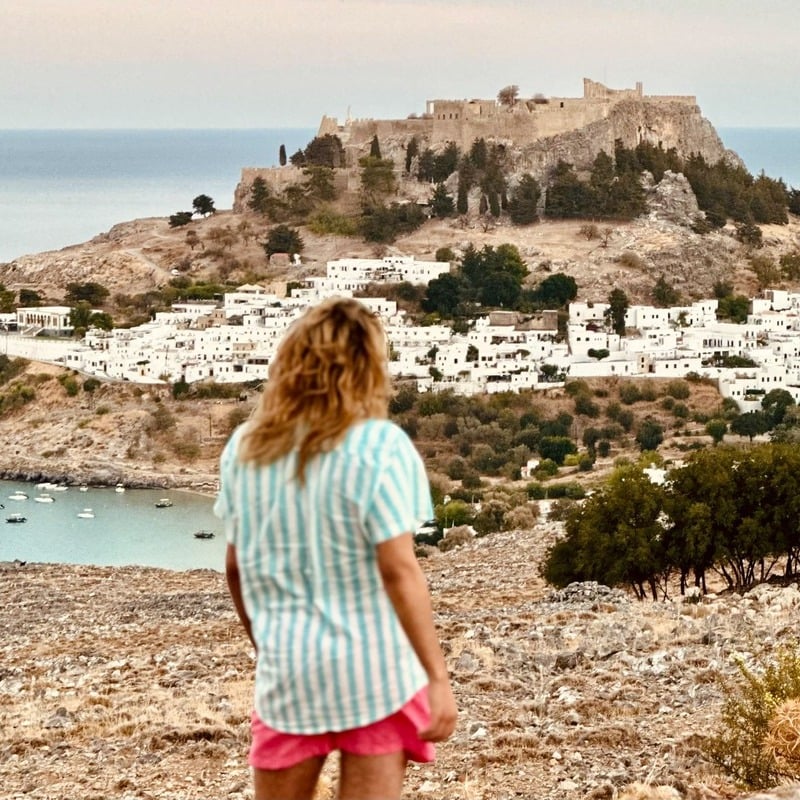
That being said, it’s such a landmark-packed island that you’d need several consecutive yearly visits to cover all bases. Trust me, five Greek summers in, I’m still trying, and I still feel like I’ve barely scratched the surface.
As much as it hurts my heart to keep it this brief—orders from the Editor in Chief—if I were to narrow it down to only three Rhodes villages I think first-time sailors absolutely should not miss out on, those would certainly be:
Lindos
An Ancient Coastal Town At The Foot Of An Acropolis
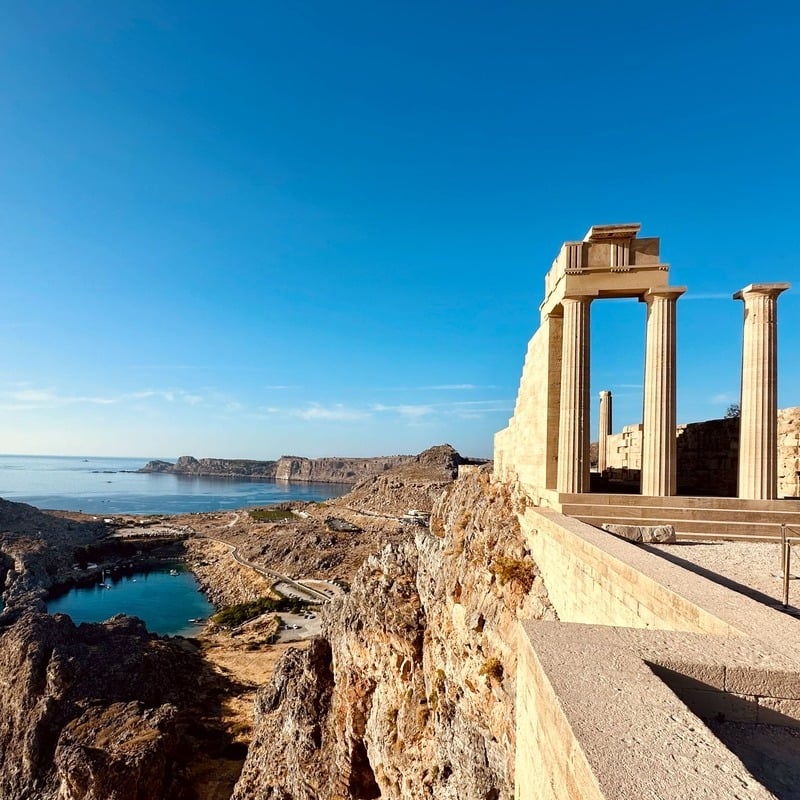
A coastal town popular for its typically-Greek, whitewashed houses—which, surprisingly enough, you don’t come across so easily in the Dodecanese—family-run taverns, and of course, the hilltop acropolis with the partially-preserved Temple of Athenia Lindia.
It has fewer standing columns than the Parthenon, but if I’m being honest, I was even more awestruck by the Lindian acropolis than by its Athens counterpart.
I don’t know, man, there’s just something about the turquoise Aegean at your feet, instead of an uninspiring urban sprawl, and the absence of crowds that just help bring the ancient world to life.
Kattavia
Small Village Dishing Out Authentic Rhodean Food
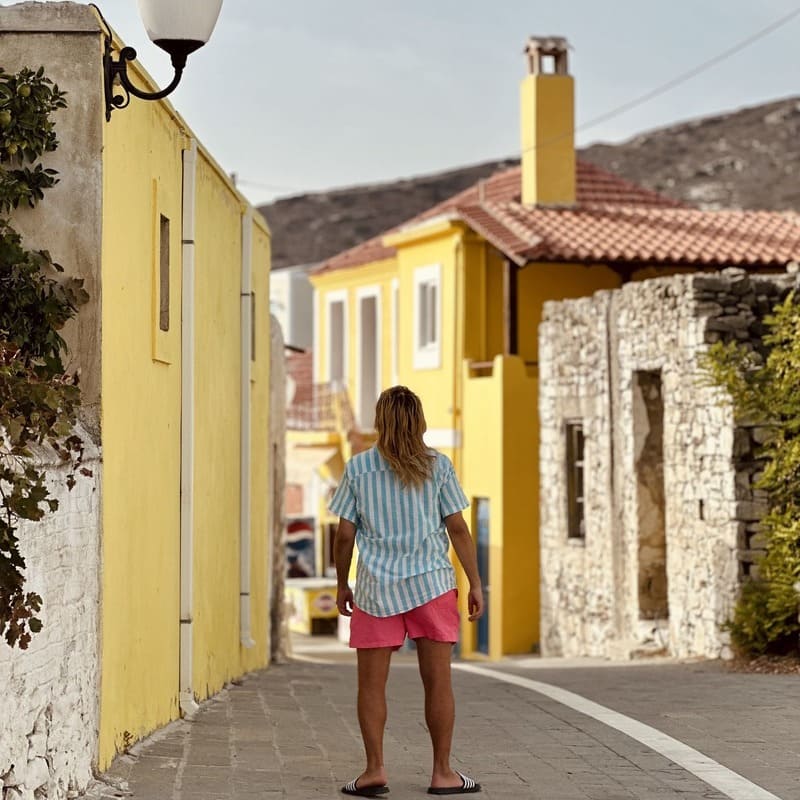
Rural Rhodes at its most unspoiled, this tiny village on the western side of the island is home to an Italian-style campanile, colorful houses, and a couple of yiayia-run tavernas dishing out home-cooked Rhodean food.
People drive all the way from Rhodes Town to check out the neighboring Prasonisi Beach, that narrow strip of sand wedged between the Aegean and the Mediterranean, but I’d happily spend an hour and a half on the road any day just to try Eftihia’s feta with honey and their homemade moussaka.
Embonas
Traditional Wineries And Mountain Cuisine
Nestled amid Rhodes’ lush inland hills, Embonas is that laid-back, untouristy settlement I love escaping to whenever the summer buzz on the coast gets a bit much.
Now, you wouldn’t come to Embonas for sightseeing or ancient monuments (though if you’re driving westbound along the north coast, you’ll likelybe passing a major archaeological zone at Kameiros). People come here for the delicious wine and most importantly, the mountain cuisine.
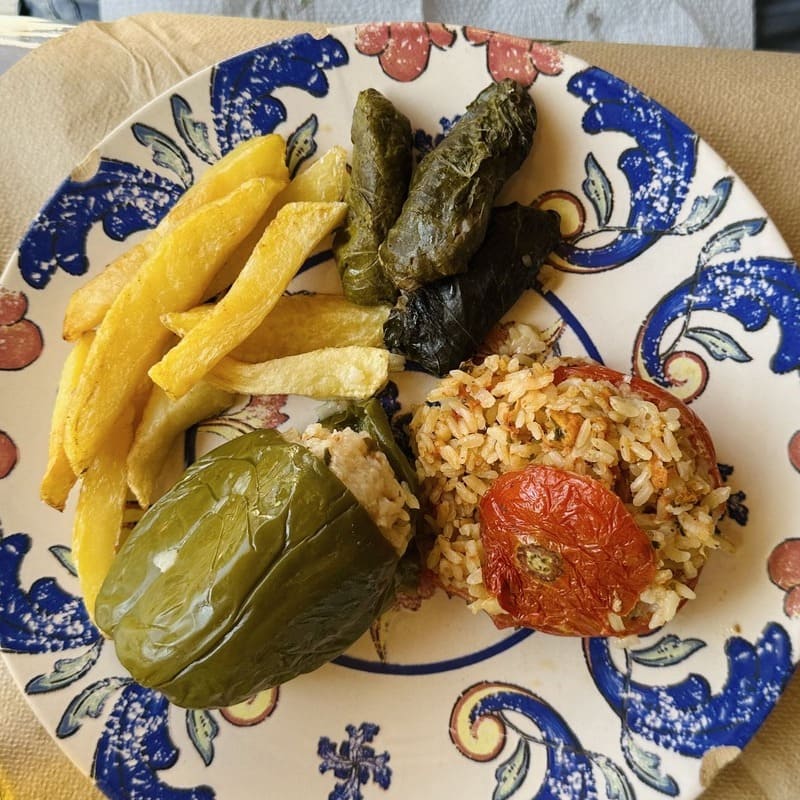
Right in the heart of the village, Maroulakis is hands down one of the best spots in all of Rhodes for classic taverna fare. Honestly, you won’t find tastier gemista (rice‑stuffed peppers) or honey‑drizzled yogurt with almonds anywhere else on the island.
Eh eh eh, before you leave: make sure you swing by Kounaki, a proper Rhodean family-owned winery with a strong reputation for quality reds.
115 Miles Of Pristine coast
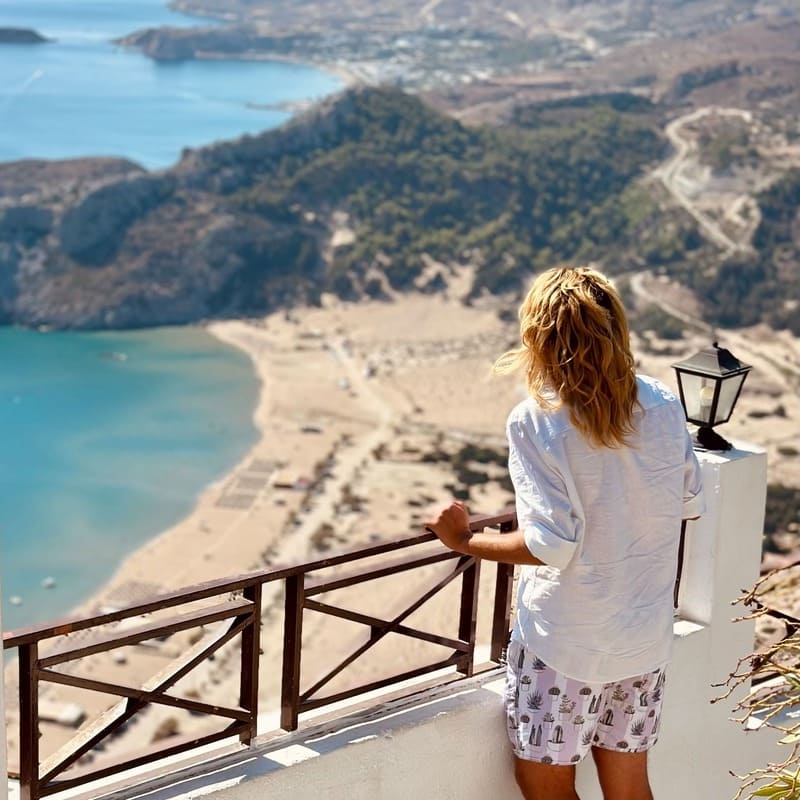
What I love most about Rhodes, besides the traditional villages and incredible food, is how you can hop from beach to beach along its 115‑mile coastline and never feel like you’re fighting for a spot in the sun, or stuck in your own town’s crowded public pool.
Granted, you’d probably want to steer cleer of a a chaotic Faliraki, with its stripper clubs, beach bars, and Babylonian nudist zone. Avoid the equally-overdeveloped Tsambika, unless you want to join the laaads for a riotous weekend stag do.
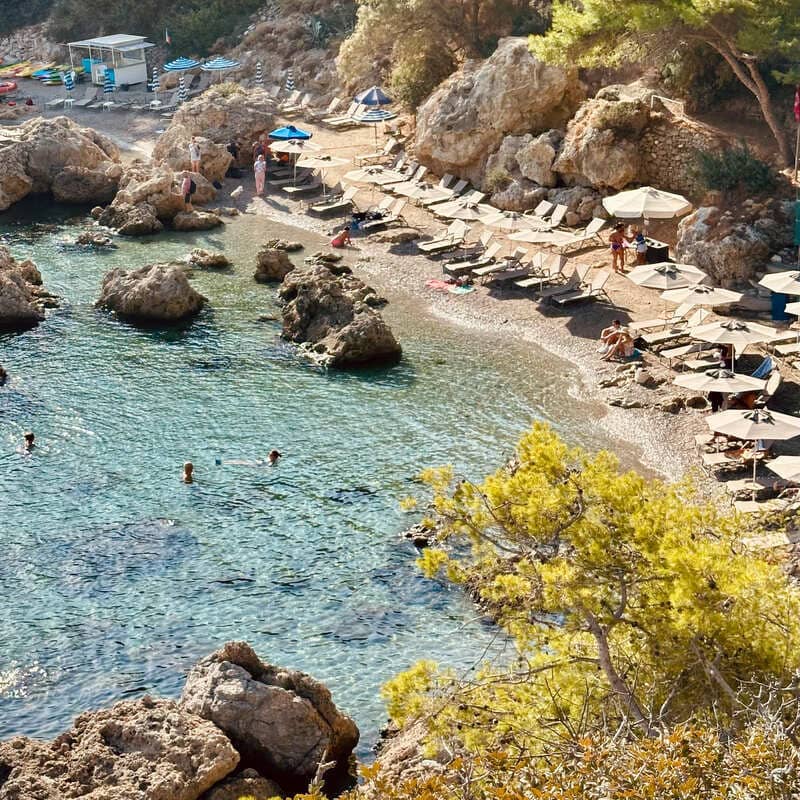
On the other hand, Anthony Quinn Bay is one of the most peaceful beaches I’ve ever had the pleasure of visiting. The public remains primarily local, the beachside bars won’t charge you upwards of $15 for a simple Greek salad, and the waters are crystal-clear and nothing short of stunning.
Near Lindos, the aforementioned acropolis village, Agathi Beach has soft, golden sands, and shallow, swimmable waters.
I always stay in Rhodes Town myself as it’s more convenient for bus connections, and I don’t always have a car available, but whenever I can, I usually prefer coming here than going to the capital’s Elli Beach, where it’s shingly pebbles and agitated seas.
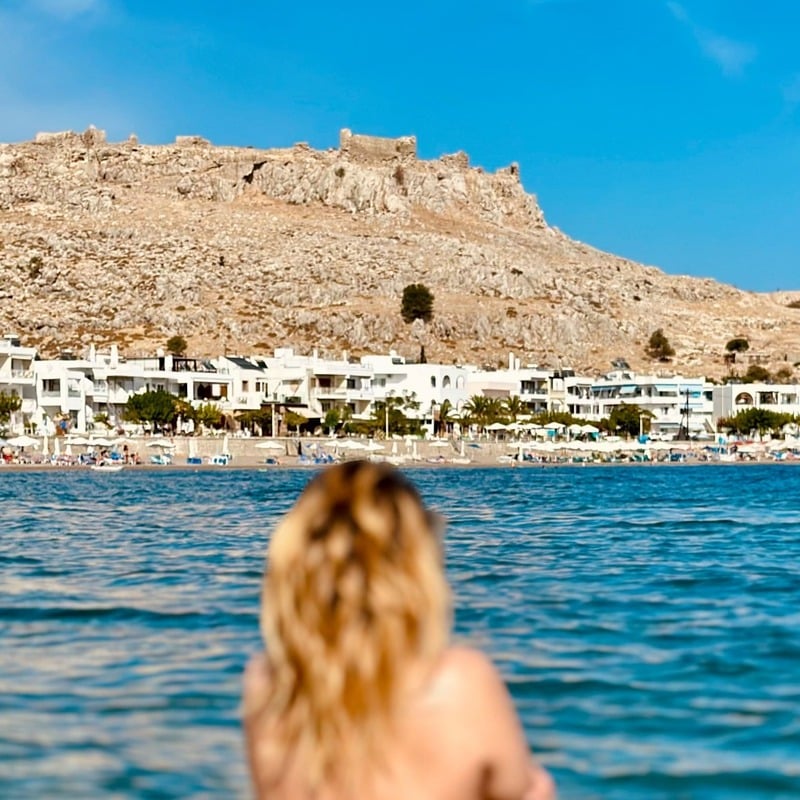
That said, if you’re asking me what’s the one beach in Rhodes I could go back to again and again, and never grow tired of it, I’d have to say Charaki:
Backed by a peaceful coastal town and lovely waterfront tavernas, it’s a parasol-sprinkled stretch of pebbles directly facing yet another ancient acropolis.
Just the perfect mix between Old World charm and coastal relaxation.
Other Must-Sees In Rhodes
Kallithea Springs
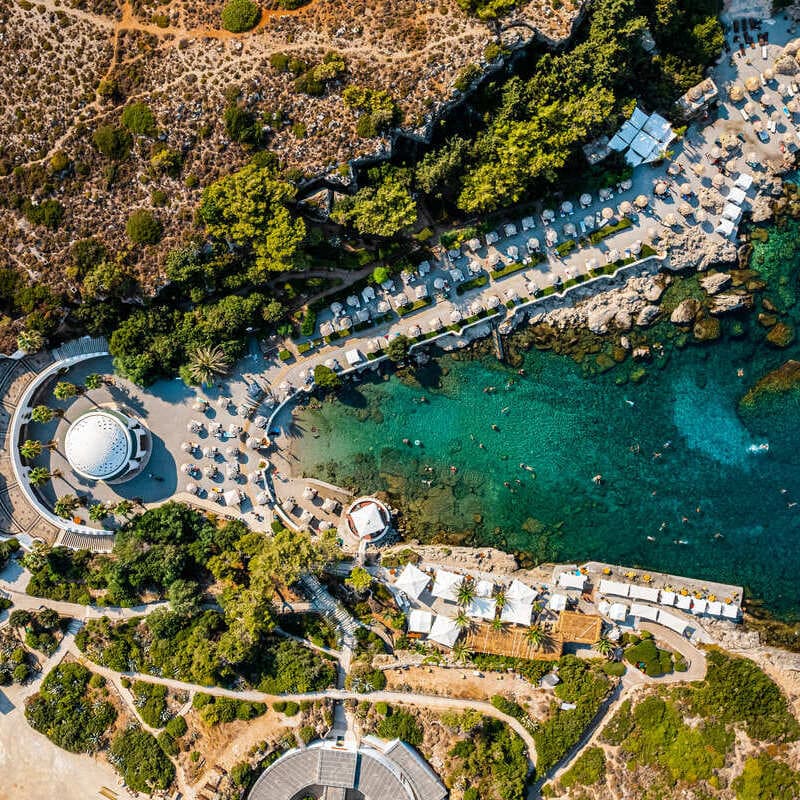
I’m not gonna lie, although I’ve been in the Dodecanese more times than I can count, I’ve never paid the most famous natural spa in the region a visit. Kallithea Springs was built as a sort of seaside retreat for Rhodes’ Italian occupiers during the Mussolini era, except now it attracts dolls from all over Essex.
There’s just something about the busloads of day-trippers coming up from Faliraki, and orange-tanned British girlies that gives me ick. But hey, it is a gorgeous Italianate complex complete with crystalline pools, elegant mosaics, and lush gardens.
I’m good, but if you’re flying all this way from America, you might as well come here and check it out for yourself.
Valley of the Butterflies
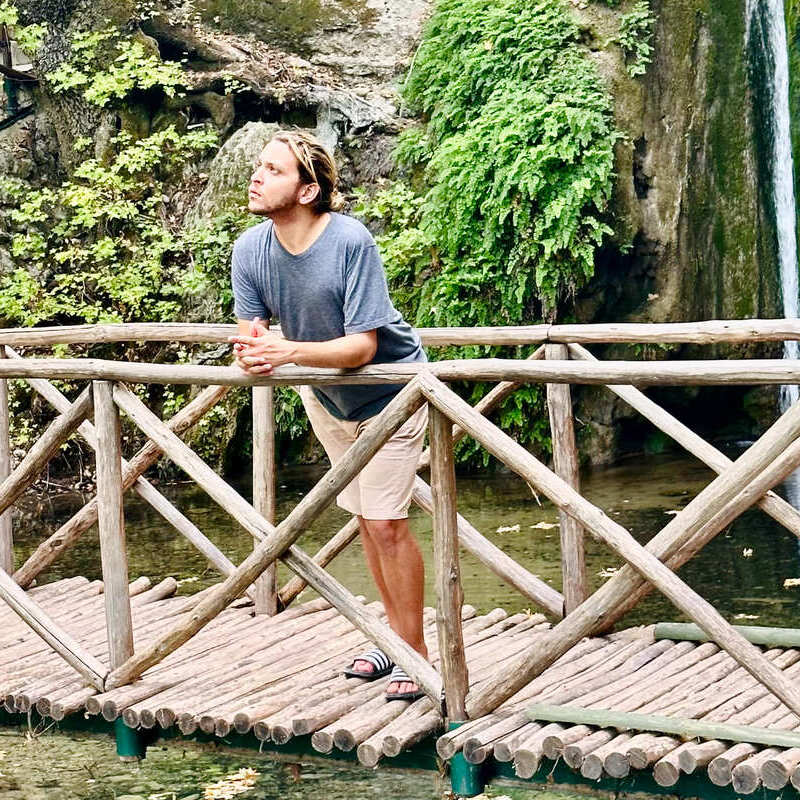
You probably know Greek islands for their aridness and olive-tree-dotted hills, but this inland valley is actually known for its large, arching trees, forming a dense canopy over trickling streams and cascading waterfalls.
This one was a one-off for me as I can’t stand long nature walks personally, however tourist-friendly, and moderately-challenging they may be, but hey, if there’s one place where you can soak up Rhodes’ unusually-verdant landscapes, this is it.
Oh, and in case you’re wondering, the name is due to the thousands of butterflies that flutter around the valley in summer, drawn to its shade and moisture.
Symi

My favorite ‘island day trip’ from Rhodes, Symi is about 25 miles by sea, and the fastest ferry there takes around an hour from Mandraki Harbor.
I’ve only been there once, but seeing those Neoclassical houses along the port, with their pastel colors and red-tile roofs, and that turquoise Agios Nikolaos Bay—a guaranteed stop on most guided boat tours—is a memory that’s stuck with me forever.
If staying overnight on the island, make sure you add Panormitis Monastery to your bucket list. Located on the much-quieter southwest coast, this picturesque sacred site is home to an icon of Archangel Michael, and a postcard-ready bell tower.
Marmaris

Rhodes lies about 18 miles from the Turkish coast—if you’re staying right by Ellis Beach in Rhodes Town, Turkey will be the view you wake up to every day.
I don’t know about you, but I never pass on the chance to combine two countries in a single trip, especially when the nearest Turkish port is the vibrant coastal town of Marmaris, one of the up-and-coming destinations along the Turkish Riviera.
Whenever in Rhodes, I usually visit Marmaris for some early-morning bazaar shopping (inflation aside, the euro-lira rate is still favorable) and a $5 döner kebab, but as a newcomer, I strongly recommend you explore Marmaris Castle and the town’s modern marina.
It’s Just Cheaper
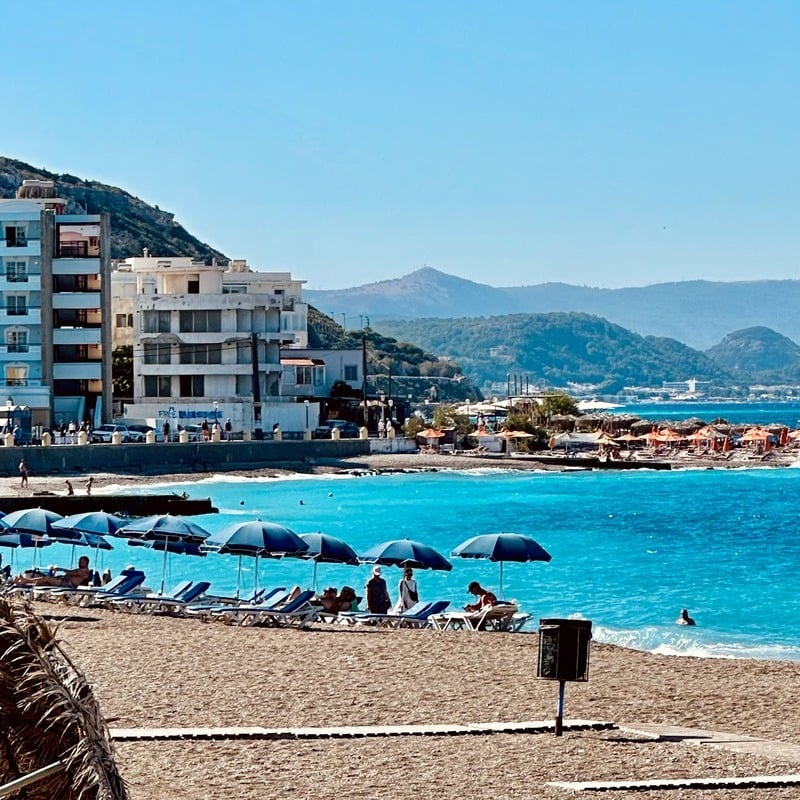
To wrap things up, the affordability factor is definitely one of the main reasons Rhodes keeps topping my Greece travel searches.
To be quite frank, with the exception of perhaps fellow Dodecanese gem Chios or Lesvos, I don’t think I’ve ever spent as little money on a Greek island getaway as I usually do in Rhodes, where hotel rates range from $63 to $94-a-night, and meals in local-frequented tavernas roughly $13–$15.
Let’s just put it this way: if I’m planning on visiting Rhodes in the near future, I make sure I save up around $350–$400 overall for the whole week, excluding accommodation, flights, ferry tickets, and guided activities.
Getting To Rhodes
The easiest way to get to Rhodes is flying to Diagoras International Airport (RHO), which serves the whole island. It hosts flights from pretty much all main European hubs in the summer months, and I’ve snagged tickets from as cheap as $90 round-trip once before.
Alternatively, you may ferry in from other Greek ports, most notably Piraeus, near Athens, but that’s a loooong overnight, or even multiple-day trek I only recommend you embark on if you don’t get seasick easily, and you’re not in a rush to get anywhere.
Ferries are also way more expensive.
Just book those flights, hun. I’m sure the planet will forgive you, and if you’re more eco-conscious than I am, you can always tack on the voluntary carbon-offset fee when you buy your ticket.
Enjoy my second Greek home!

The Travel Off Path Advantage: Your Travel Toolkit
Subscribe To Our Latest Posts
Enter your email address to subscribe to Travel Off Path’s latest breaking travel news, straight to your inbox.