
2025 was a strong year for Greece in terms of visitor arrivals. What do you put that success down to?
Greece offers exactly what people are looking for right now. There is a clear global shift towards slow tourism. Travellers want to properly disconnect, slow down and genuinely experience a destination rather than rush through it. Greece lends itself perfectly to that: the sun, the sea, the culture, the food and the overall calibre of the experience.
People also feel a stronger need to “deflate” than in the past. Travel is no longer seen as a luxury – it’s a necessity for wellbeing. And when you combine that with our climate and lifestyle, it’s easy to understand why Greece continues to perform so well.
Sustainability and slow travel are clearly key themes. How does that translate into your tourism strategy?
Sustainability is central to everything we do. It allows us to involve the entire country in tourism, not just the headline destinations. By focusing on sustainability, we bring local communities, small islands, remote villages and local producers into the tourism ecosystem.
Hotels work with local farmers, wineries and suppliers; visitors experience authentic Greece; and communities benefit directly. Sustainability isn’t new to us; it’s part of Greek culture. Respect for the land, the environment and local life has always been there.

Are there specific campaigns to promote this to agents?
We work primarily business-to-business. Our role is to educate stakeholders about Brand Greece, while our partners activate campaigns in-market.
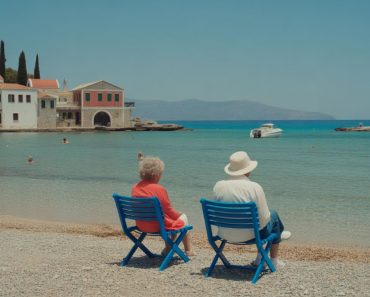
From the UK, 48% of visitors still come for sun-and-sea experiences. What we’re trying to show is that Greece is equally attractive outside peak summer. Shoulder and off-season travel allows visitors to explore more deeply– food, wine, culture, outdoor activities – without the summer crowds.
Which niche areas are you particularly focused on?
Culinary tourism is a big one; you don’t need to visit in summer to experience that. Athletic and active tourism is another key growth area.
For example, Peloponnese is being positioned as a major hiking destination, with 2,500km of mapped trails connecting areas of historical significance, from ancient Greece through to modern history. Along the routes, visitors will find villages, food experiences, wine producers and cultural sites. It’s a fully immersive product.
What about winter travel and events-led tourism?

Events are hugely important. In late October in Rethymno, Crete, we hosted an international six-a-side football tournament with 106 teams from 35 countries. It brought 14,000 people to the destination at the end of the season and filled hotels.
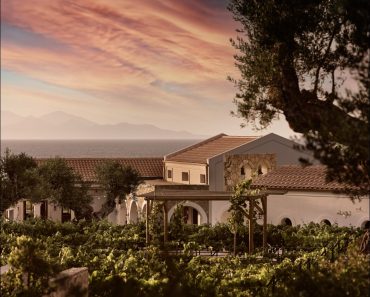
Similarly, Costa Navarino hosted a major international triathlon last year with 1,200 competitors from 60 countries. Every participant brings friends or family, so the impact is significant.
City breaks also play a role. Thessaloniki, for example, has 15 UNESCO monuments, a unique metro system that acts as an underground museum, incredible food and wine, and proximity to sites like the royal Macedonian tombs at Vergina.
Are travellers staying longer or visiting multiple regions?
We need to be honest about the wider context. There are geopolitical pressures and economic constraints in source markets, so people are travelling slightly more cautiously with spending. They may cut back on experiences or dining, but crucially, they are still travelling.
What’s changed is mindset. Travel has become non-negotiable, especially for younger generations. They need it. That’s a powerful shift.

Overtourism is a hot topic elsewhere. How does Greece view it?
The term “overtourism” has become a buzzword. In Greece, tourism is seasonal. Santorini may feel busy when five cruise ships arrive on one day, but the next day it can be quiet.
You don’t hear people talk about overtourism at Disneyland Paris or the Louvre, despite queues lasting hours. What we need is better infrastructure and visitor management, not alarmist labels.
Tourism has actually preserved island communities. Before tourism, many islanders were forced to leave to find work. Tourism allowed people to stay, educate their children and maintain their culture.
How are you addressing concerns around development and pressure on the islands?
Greece has very strict building regulations, particularly in island destinations. You won’t see high-rise developments in places like Mykonos; architecture remains traditional, and environmental protection is taken seriously.
Ultimately, what protects Greece most is culture. People understand that preserving what they have is what sustains tourism long term.

What’s your view on Airbnb and its impact?
It’s not black and white. Many Greek families invested in property as a way to supplement pensions. That’s culturally and economically important.
There are challenges where large-scale investors push locals out, but overall Airbnb is more controlled in Greece than in many other destinations. At the same time, we’re seeing travellers move back towards hotels and all-inclusive options, as people want cost certainty. That presents a strong opportunity for travel agents.
Finally, what support can agents expect this year?
Education is key. We run regular fam trips, training initiatives, social media activity and work closely with airlines to open up new routes and regions.
Summer will always be peak for family travel, but the opportunity lies in shoulder season, retirees, couples and special interest travel. Greece has far more to offer than many agents realise, and we’re here to help them sell it.