
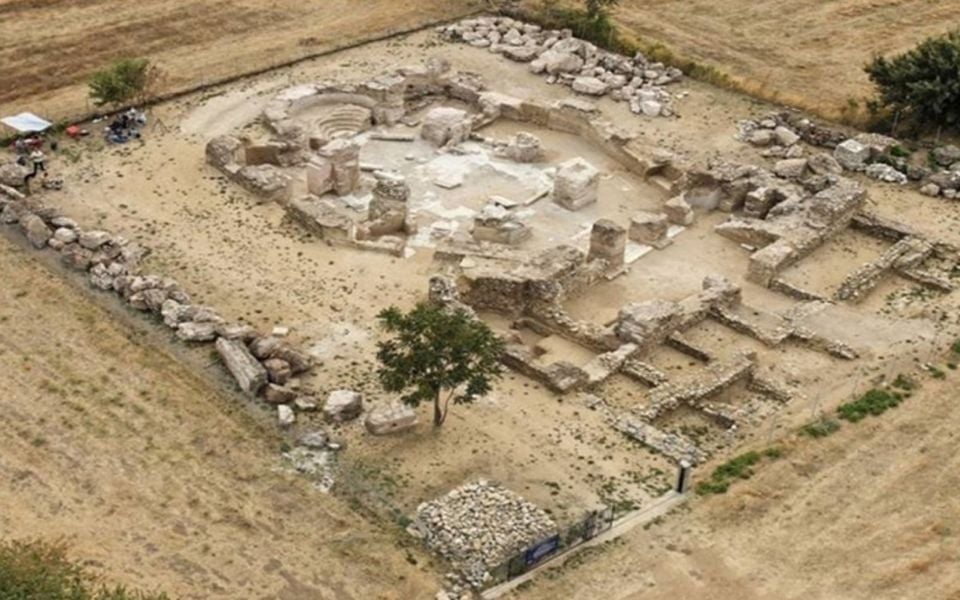
The Ministry of Culture of Greece has initiated the restoration of the church at the archaeological site of Maximianoupolis, a prominent Byzantine city in the Rhodope plain of Thrace.
The €1.5 million ($1.74 million) project, funded by the Recovery and Resilience Facility, targets key structural components—marble iconostasis, north and south arcosolia, and the southwest corner of the narthex—amid concerns over degradation, structural instability, and material loss.
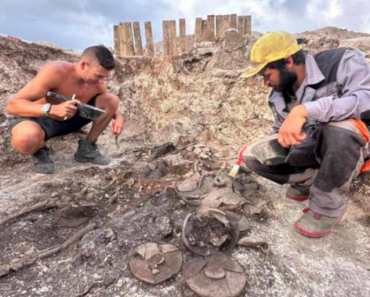
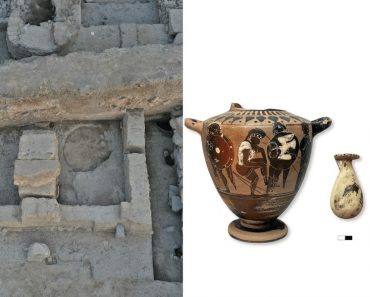
The ornate church, notable for its rare irregular hexagonal shape, dates back to the 11th century. Excavations between 1999 and 2008 uncovered extensive burials, Byzantine glazed ceramics, and elaborate architectural features.
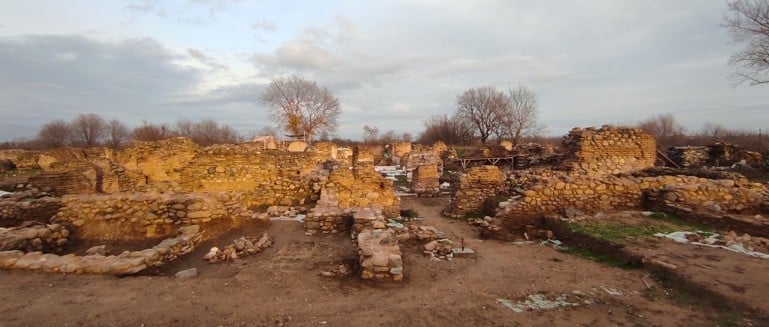
The historical significance of the Byzantine city Maximianoupolis in Greece’s Thrace region
Greece’s Culture Minister Lina Mendoni stated, “The historical significance of Maximianoupolis is indisputable, despite its destruction in the 13th century.”
The excavations at the pericentric temple, in addition to the critical evidence and special characteristics of a great monument, also revealed a developed settlement, which produced rich samples of Byzantine pottery. Restoration encompasses the conservation of frescoes, flooring, and enhanced accessibility.
Maximianoupolis, founded by Emperor Maximian, was a major fortified urban and ecclesiastical center in the region, flourishing from the 4th century AD until its catastrophic destruction during the 13th-century invasion by Tsar Kaloyan of Bulgaria.
It was a crucial urban center situated on the Via Egnatia, the major Roman road connecting Dyrrachium (Albania) to Constantinople, making it a key military and logistical stop at the time.
By the 9th century, the city began being referred to as Mosynopolis. The name likely became the primary one during the Middle Byzantine era. The current restoration aims to preserve this last monumental testament to the city’s Byzantine prominence before its ultimate decline.