
The shift toward authenticity, the avoidance of overtourism, and the extension of the tourist season are shaping the core narrative of Greek destinations ahead of the new year, as reflected through the statements of local government officials to Tornos News. From the northeastern Aegean to the Cyclades, municipalities and local authorities are repositioning their strategies, placing emphasis on experiential travel, genuineness, and targeted promotion in both mature and emerging markets.
Samos: authenticity, accessibility, and opening to new markets
By unfolding the “spectrum” of Samos’ potential, one can clearly observe the growing need of the international travel public to discover regions of Greece that offer genuine hospitality, highlight their history and culture, provide a wide range of options, accessibility, and high-quality, competitive services. These elements form the core narrative of Samos’ promotion to Greek and international visitors seeking authentic holiday experiences.
In this context, as stated to Tornos News by the Deputy Mayor for Tourism of Western Samos, Vangelis Marnezos, targeted tourism promotion actions are being developed through coordinated initiatives and collaborations between the municipalities of Western and Eastern Samos. The aim is both to strengthen the island’s presence in established markets and to open up to new ones, such as the British market. At the same time, recent contacts within the framework of the international WTM exhibition in London confirm the strong interest in destinations that maintain their authentic character and have not been altered by overtourism.
Lipsi: claiming ground beyond the high season
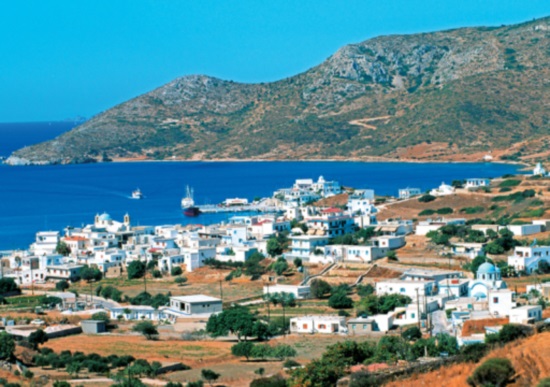
Speaking to Tornos News about the strategy of Lipsi, the island’s mayor, Fotis Mangos, emphasized that “day by day, Lipsi is claiming larger shares outside the high season, with the goal of extending the tourist period.” As he noted, “the travel public is responding to our initiatives and visiting the island of Calypso in order to experience its exotic character, authenticity, and modern tourism services, which are designed not to alter the natural environment.”
Supporting this view, he told Tornos News that “this year’s results are encouraging in this direction,” as “tourist traffic during the current season increased, with September and October closing with arrival increases of 25.07% and 19.1% respectively.” At the same time, as he mentioned, “Lipsi attracts a range of international markets of interest and constitutes a quality option both for travelers and for digital nomads,” while for the new season the focus will be on Greece and abroad, highlighting activities, local products, romance, and natural beauty.

Andros
Andros: beyond the two-month peak
In Andros, as stated to Tornos News by the delegated municipal councilor for tourism, Nikos Moustakas, “this year Andros recorded a record number of arrivals for the period from April to October.” The priority of the municipal authority is to promote the island “as a lush oasis of authenticity just two hours from Athens, offering many different experiences, of excellent quality but not overpriced.”
At the same time, as he emphasized to Tornos News, “the call for holidays that we extend is not limited only to July or August,” reflecting the strategy for the gradual extension of the tourist season and the easing of peak pressure.

Filoti, the largest village of Naxos | Photo: Shutterstock
Naxos and the Small Cyclades: experiential travel and strong figures
In Naxos and the Small Cyclades, as stated to Tornos News by the Deputy Mayor for Tourism, Vangelis Katsaras, “in recent years the need to enrich holidays with experiential activities has emerged as the dominant trend and a key promotional priority.” As he noted, “no one is treated as a mass tourist,” with the island offering ideal balances of relaxation, leisure, recreation, rejuvenation, and spiritual enrichment within a captivating natural environment.
At this point, it should be highlighted that, according to what he told Tornos News, “in 2025 Naxos achieved a new arrivals record, with a 30.9% increase in air arrivals and a 5.8% increase in ferry traffic compared to last year.”
Overall, as emerges from the statements featured in Tornos News, Greek destinations are entering the new tourism year with a clear orientation: less volume, more quality, emphasis on duration and on the authentic experience. After all, this is where the real competitive advantage of Greek tourism is now determined.