
Ancient discoveries often come with a splash of excitement—and sometimes, quite literally so. Imagine the tantalizing thrill among archeologists when they stumbled upon a 2,000-year-old underwater port just off the coast of Asini, Greece. This submerged piece of history is unveiling the secrets of a bustling ancient maritime hub that played an essential role in trade and naval activities.
The Discovery Beneath the Waves
Led by Dr. Panagiota Galiatsatou of the Greek Ministry of Culture, with collaboration from Swedish experts Professor Ann-Louise Schallin and Dr. Niklas Eriksson, this fascinating find provides a fresh lens on ancient Greek naval infrastructure. Although we’re still in the early stages of understanding its precise functions, it’s clear this underwater port, complete with a sprawling stone foundation, embraced the tides of economic and military life in Asini. You can almost visualize the loading docks and storage facilities bustling with energy as ships came and went.
And what’s truly captivating is how this new evidence challenges previous notions about harbor engineering and trade in the ancient world. The findings couldn’t come at a better time, as archaeologists worldwide are diving into the depths of our cultural past—literally—in their efforts to decode the complexities of historical sea trade. According to an insightful report from Nature, underwater archaeology is a rapidly advancing field that turns the tides on our interpretation of history.
A Glimpse into Ancient Asini
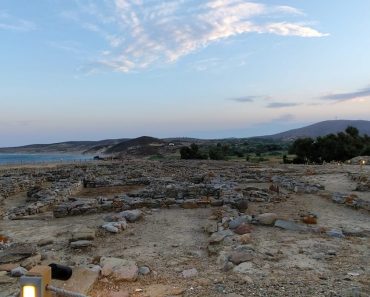
The location of this submerged marvel, near the picturesque village of Tolo on the Peloponnese peninsula, is no stranger to archaeological value. Asini was a significant hub during the Bronze Age and the Classical period. It even makes an appearance in Homer’s “Iliad,” marking its importance as one of the allied cities that contributed to the Greek fleet during the legendary Trojan War. Intriguing, isn’t it?
Previous land excavations had already brought to light Mycenaean fortifications and settlement remains, but the discovery of an underwater port adds a whole new layer of understanding to Asini’s maritime connections. Those hefty stone foundations beneath the sea aren’t just stones—they’re whispers of a complex infrastructure that was pivotal for sea trade and military activities.
Unraveling the Mysteries
Archaeologists are currently in a race against time, striving to map the site and unveil its broader implications for understanding Mediterranean trade networks. With the help of manual sediment removal and modern underwater surveying techniques, excavations are uncovering more of the story with each passing day. It’s a delicate dance with history where every artifact turned over might be a piece leading to Asini’s lost glory.
Crucially, dating the site’s features could reveal whether this port predates the 2,000-year mark, possibly pointing to even earlier maritime advancements from the Mycenaean era. On the other hand, aligning the site with Hellenistic or early Roman usage would highlight a continuity of trade and naval significance. The British Museum has fascinating insights into the spread of early Roman ports that link directly with such findings.
Asini: A Trade Hub Reborn
The importance of this ancient port stretches beyond its physical remains. It underlines the pivotal role of regional trade centers that maintained economic ebb and flow in the vast Mediterranean basin. Unlike the grander and well-documented ports of Athens or Corinth, smaller ports like Asini were the lifelines keeping trade goods, cultural exchange, and ideas circulating through the network of city-states.
Considering its favorable location with easy access to major sea routes, Asini was more than just a local stopover; it was likely an active player in regional commerce, weaving connections with other prominent marine and land routes. With such a rich tapestry of history being slowly unfurled, one can’t help but feel the echoes of the past resonating in the present.
What’s next for this underwater relic? Researchers believe that as excavations continue and more artifacts are analyzed, we will keep piecing together the puzzle of Asini’s storied port. Such endeavors are bound to enrich our understanding of ancient maritime networks and, perhaps, reshape how we see the Greek city-states’ management of ports and trade routes.
Dive further into these ancient mysteries, and feel the allure of history unfolding beneath the sea. If you found this journey through time as fascinating as I did, why not share this discovery with fellow history buffs? Let’s keep the conversation—and the exploration—alive!