
*Watch my videos copyright & ad free – say NO to over edited videos
Watch them in full without copyright issues: https://www.patreon.com/thehonestvocalcoach
•Products I use as a singer & Youtuber
https://www.amazon.co.uk/shop/honestvocalcoach/list/3JYLD3WSVJAXB?ref_=cm_sw_r_cp_ud_aipsflist_aipsfhonestvocalcoach_8F7BCXB629Q310DH4FZY
*Georgina’s Vlog Channel: https://www.youtube.com/c/HonestVocalCoachVlog
*Have your voice critiqued by me: https://honestvocalcoach.co.uk/critique-reaction/
*Free Breathing For Singers Course:
https://honestvocalcoach.thinkific.com/courses/breathing-for-singers
*Foundations of Singing – FULL Singing Course https://honestvocalcoach.thinkific.com/courses/foundations-of-singing
*Request a Reaction: https://spiritpsychiccrystalhealing.com/pages/request-a-reaction
*Cameo – Personal Messages, Happy Birthdays etc
https://www.cameo.com/honestvocalcoach?utm_campaign=profile_share
*Crystals & Psychic Shop:
https://spiritpsychiccrystalhealing.com
*Instagram: https://www.instagram.com/spiritpsychiccrystalhealing/
*My linktree: https://linktr.ee/honestvocalcoach
*Honest Vocal Coach Website: http://www.honestvocalcoach.co.uk
*Spirit Psychic & Crystal Healing Website: https://spiritpsychiccrystalhealing.com/
#honestvocalcoach #vocalcoachreacts
**FAIR USE**
Copyright Disclaimer under section 107 of the Copyright Act 1976, allowance is made for “fair use” for purposes such as criticism, comment, news reporting, teaching, scholarship, education and research.
source






I watched your reaction carefully, and as someone deeply familiar with vocal techniques and stylistic traditions, I cannot agree with your critique. It’s quite clear that you are not acquainted with the specifics of the Balkan vocal idiom – a unique blend of ornamentation, microtonal inflections, dynamic contrasts, and timbre coloration that defines the region’s singing style.
Claudia Astromata is not aiming for a sterile, “perfectly clean” vocal line, as Western pedagogy often demands. She deliberately employs portamento, subtle glissandi, intentional shifts between registers, and dramatic dynamic shaping. These are not flaws but aesthetic choices, deeply rooted in the vocal traditions of Bulgaria, Greece, and the wider Balkans.
To judge such a performance only by Western classical or pop standards is like criticizing a flamenco singer for too much vibrato, or a jazz vocalist for bending time and phrasing. In this tradition, the priorities are different: authenticity, emotional resonance, and vocal freedom are valued above clinical intonation.
That’s why I found your remarks one-sided. In this kind of music, the so-called “imperfections” are exactly what make the voice alive, expressive, and unforgettable. Claudia’s singing is full of character, identity, and cultural depth – qualities that cannot be measured by an external standard.
Greetings from Bulgaria 🇧🇬
Hello, a fan of Greek songs in Eurovision here just to recommendation I don’t care where she sings. I love her so much but if you will watch the grand final performance, then I think you’ll see what you had hoped from this Greek entry
🇬🇷🇬🇷love ❤️
Honest Vocal Coach :
Sie haben ein Problem mit sich selbst. Definitiv ist Klavdia um Meilen besser als irgendjemand
Mmmmm to be honnest the 6th place in the final was a Great answer to your prediction of disaparence as you said. Next time be more objective. If the song was not from Greece but from Ukraine , baltics or Scandinavia it will be in the 1st plac. That song for Greek people was the best song ever
Class
I love this song, my fave
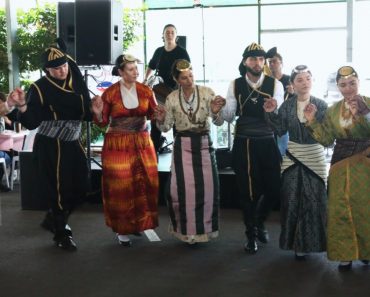
There are 15 Traditional genres in Greece per geographical region of Joy or Sorrow. Clavdia interprets Asteromata in the Epirus genre.
Mrs. Vocal Coates, because you asked for comments on Claudia's song, I am doing it. It contains in the musical Harmony the Traditional form of the geographical region of Epirus and in the Rhythmic part the Dance style. The Greek lyrics and the meaning of each word are appropriately colored to characterize pain or joy accordingly. That's why he sours you on (ne ne neee } with disparaging grimaces. A little tact is needed in something that (is new to you) (πρωτόγνωρο) one word while in English it takes three words to be understood. The breathing and the rendering of words are due to the pronunciation of vowels and diphthongs being different and this is the climatic conditions. A is A and not Ie. E= Hee and not e hellas. In the warm Mediterranean we open our mouths on vowels while in the north the mouth barely opens due to the cold. I think that's enough, please reconsider.
You should have thoroughly studied the musical genre that Klavdia is expressing. It is called 'moiroloi' (lament), and it is delivered exactly in this manner. If Klavdia's performance unsettles you, you are more than welcome to limit yourself to the solo by the pink dressed representative of the UK entry.
For the Musical theme Asteromata… At the beginning of the song Asteromata begins without musical instruments for 40'' seconds Acapella. The melody is the traditional one of Epirus (Epirotiko). The rhythmic part is in the modern dance style. The words are poetry and difficult to understand in their Depth (they have Historical memories) for translation from Greek to other Languages. The cherry on the Musical work is the Interpretation of Claudia and the flawless Voice. A Greek Gift to Europe.!!!
My lady, first learn about the culture of civilizations, there are other music and songs that do not put vocals above all, but also put the emotion and pain of a civilization. Thank you Claudia, you are a winner in our hearts and Eurovision should honor you for going to sing.
But I am Greek, I will not die, I was a ruler in the world above.
Κυρία μου μάθετε πρώτα για την κουλτούρα τον πολιτισμών, υπάρχουν και άλλες μουσικές και τραγούδια που δεν βάζουν τα φωνητικά πάνω από όλα, αλλά βάζουν και το συναίσθημα και τον πόνο ενός πολιτισμού. Ευχαριστούμε Κλαυδία είσαι νικήτρια στις καρδίες μας και η Eurovision πρέπει να σε τιμήσει που πήγες να τραγουδήσεις.
Μα εγώ είμαι Έλληνας δεν θα πεθάνω υπήρξα άρχοντας στον κόσμο επάνω
@HonestVocalCoach
"Asteromáta" ("Starry Eyes") is a powerful song that honors the memory of the Pontic Greek Genocide, when over 350,000 Pontic Greeks were killed by Ottoman and Turkish nationalist forces between 1914 and 1923.
The title refers to “eyes like stars,” symbolizing the souls of those lost and the light of memory that still shines today.
The song speaks of pain, exile, and lost homelands, but also of strength, identity, and the importance of remembrance.
It is a tribute to a people who suffered deeply, and a call to never forget their story.
6 th place now is ok ?
i think the nasality comes from the region, pontus region in general sing like that, with that kind of cry in their voice 🙂 im from turkey but my grandma is a pontus rum, so i felt everything in this song. 12 points from turkey and much love to my greek sisters and brothers ❤
You don't know Greek music at all. Maybe just critique what you know.
Hmm, AGAIN, you REALLY don't have a clue what you're talking about… 🤦♂
The song is about the 1.5 million Greeks butchered by the turks in Pontos and Asia Minor-Ionia, between 1914 and 1922, i.e the genocide committed by turkey. Maybe now, things make more sense about the power of this admittedly beautiful song.
This song is absolutely beautiful. I wonder if people just don't know how to sit with sublt beauty. Too many need too much fanfare. Her vocals and the melody to this are aboslutely stunning and I cry every time I hear it.
My Star, My Star…
(Lyrics: Arcade | Performed by: Klavdia)
**My star, my shining star…
Sweet mother, do not cry for me.
Even if they dress you all in black,
This pale and faded body of mine—
Not even flames can conquer it.
The swallows born of fire
May soar above the seas,
But never shall they forget
The soil where roots ran deep.
My starlit one, so small,
Lean close—let me kiss you.
Let my lips be soothed
Upon your sacred tears.
My starlit one, so small,
Come—let me hold you.
Let my forgotten wings
At last come to rest.
Haa, haa, haa, ah—
Ah, my star, my precious jewel, ooh…
Sweet mother, do not cry.
My life is but a vessel
In search of its return.
The wind is now my sail.
My starlit one, so small,
Come—let me hold you.
Let my forgotten wings
At last come to rest.
Haa, haa, haa, ah—
Ah, my star, my precious jewel…
My star.**
Interpretation: A Daughter's Farewell
The lyrics of “Asteromata” evoke, with aching tenderness, the sorrowful parting of a daughter from her mother.
The mother, left behind, bids her child farewell—one who is destined to journey far—using loving, luminous names: “My star,” “My starlit one,” “My precious jewel.” Her cries, born from the depths of her soul, rise skyward in mournful exclamations:
“Haa, haa, haa, ah—Ah! My star, my precious jewel!”
She pleads with her to lean in, to let her weary wings find solace in her arms, to offer one final kiss—and in that kiss, to cool the fire that scorches her lips and burns her heart.
The daughter, in turn, calls back to her: “Sweet mother, do not cry.”
She urges her not to grieve—even if mourners have dressed her in black. Though her daughter’s body will soon fade from view, becoming more distant and dim with each passing moment, the flames she is destined to encounter will not consume her.
Through this, the poet reveals profound truths:
– The parting is not by choice; it is forced. It is a violent uprooting.
– The journey ahead is treacherous—a path of fire.
– Yet the daughter assures her mother: she will survive. The flames shall not defeat her.
She likens herself to a swallow, compelled to fly through a blazing sky across wild seas. And still, she promises:
Swallows never forget the land where they were born.
The soil where they once belonged, the ground that once held their roots—no storm can make them forget it.
“My life is a ship,” she tells her, “and its sail longs for a wind that will carry it home—to you. To the harbor of your arms.”
Who Are the Mother and the Daughter?
This poem is rich with symbolism.
At first glance, the mother is the land of Ionia, and the daughter is the uprooted Greek soul of Asia Minor.
The daughter is also the Caryatids, taken from the Parthenon and still held captive in London. Their mother is Greece—and we still await their return.
The daughter could be any daughter, and the mother, any mother.
Each of us carries within us a personal version of this eternal separation.
A Poet’s Worth, A Voice that Soars
Worthy is the poet who rendered this farewell with such depth, meaning, and sorrow.
And worthy too is this remarkable young singer, who, through her heavenly voice and the immense power of her soul, gave wings to these words—lifting them high into the heavens, where they now echo across the universe, and into the soul of every Greek, and beyond.
Asteromata Klavdia, we thank you.
its ΜΙΡΟΛΟΊ (MIROLOI)… find out what this is about and you understand
Υοu were wrong anyway-this song was a winner from the very beginning mrs coach but you were not ready for such a masterpiece !
Bravissima Klavdia, good song voix incroyable
You have no idea of the song and the talent in the voice . Results proved you wrong !
A great song and performance!A storytelling about Pontiak genocide from Turks.Thank you Klavdia!!!
The perfomance on the semi final is pure epic edition. If you read the meaning of the words, and the story behind the song, you will realize what an epic perfomance that was. Pure art, no bullshit!
Klavdia is a Pontic-Greek. The song is about a mother's loss of her daughter during Greek- Armenian – Assyrian genocide by the Ottomans. Her style of singing is very typical Eastern mediterenean/ Anatolian that's why you don't get it. Visit us soon to get an idea. Much love from Greece!
love it
Music for the soul. Very traditional and Balkan in its roots, especially that flattening at the end of the verse. It won't win, but I don't think Greeks have felt this proud about a song in decades ❤
All due respect, you cannot appreciate the beauty of this song without headphones. 😊
We really don't care about the position, we just love the song. It speaks to our most primordial national feelings.