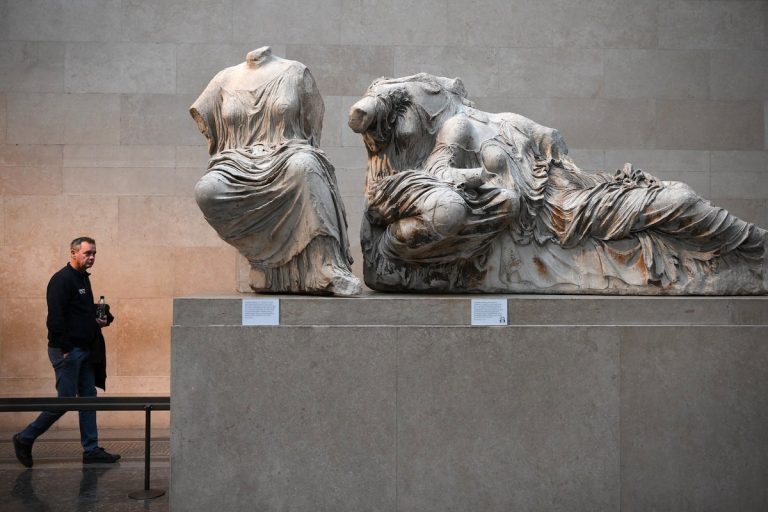
From the Acropolis to the National Archaeological Museum and many more, Greece is home to some of the most famous and significant collections in history, documenting antiquity, archaeology and history across the ages.
But there is one glaring hole in the country’s relentless examination of its own past: a contemporary museum documenting the 20th century, among the most traumatic in Greece’s long history.
Some experts warn that absence could prove the truth of the old axiom: those who don’t know history are doomed to repeat it, especially when it comes to the far-right.
“There is still a generational trauma that often leads to polarisation and the instrumentalisation of history, especially in political discourse,” said Dimitris Kamouzis, a researcher at the Centre for Asia Minor Studies in Athens.
“This is very worrying, especially in our time, with the rise of the far right and nationalist parties in Europe … who want to appropriate history,” he told AFP.
Every year, Greeks proudly celebrate the day Athens rejected an ultimatum from fascist Italy on October 28, 1940, marking the country’s entry into World War II on the side of the Allies.
It is an anniversary as cherished as March 25, 1821, the day celebrated as the outbreak of Greece’s revolution against centuries of Ottoman rule.
But because Communists mounted the most effective resistance in the Second World War against Greece’s Nazi occupiers, the issue remains sensitive in a country where the Communist KKE party was outlawed for decades.
Since its legalisation in 1974, the KKE party has traditionally been Greece’s third strongest for over 40 years.
State collections such as the War Museum in Athens usually gloss over the uncomfortable fact that most of the resistance was Communist-led.
And the four-year civil war that followed Greece’s liberation in 1944 left fissures that still exist today.
Greece only formally recognised its national resistance irrespective of political affiliation in 1982.
History ‘phobia’
“This shows a recurring phobia toward contemporary history,” notes Menelaos Haralabidis, a historian of the 1941-1944 Nazi occupation and the resistance.
“The events of the last decades are still sensitive topics,” adds Kamouzis.
Traumatic aspects of Greek history, such as collaborationism during the Axis occupation, or Greece’s defeat to Turkey during the 1922 Asia Minor campaign, are still taboo issues for many, decades on.
“These are traumatic events,” said Elli Lemonidou, a professor of modern history at the University of Patras. “They have not been fully represented in cinema, in other media, or in public discourse.”
Small museums, usually set up by local authorities where Nazi atrocities took place, try to make up the shortfall.
Such institutions “make a commendable effort to preserve documents, but they cannot fill the void left by a metropolitan museum”, Haralabidis said.
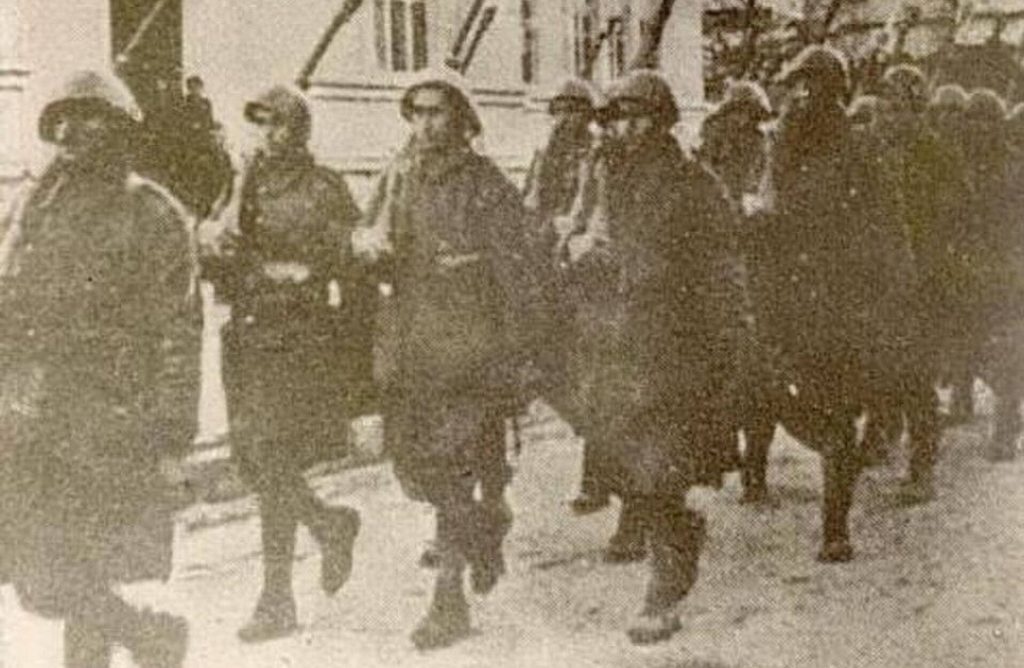
Earlier this year, an unexpected trove of World War II photographs showing the last moments of 200 men executed by German soldiers in Athens in 1944 surfaced in an online auction.
The Greek culture ministry ended up purchasing the rare images from the Belgian collector selling them after the find stirred great emotion.
“It takes political will to move forward. We can’t keep sweeping history under the rug,” Haralabidis said.
Source: Agence France-Presse
Story via the original publisher. Read the original article