More than 210 monuments and 70 Christian and Muslim cemeteries across Cyprus have benefited from conservation, protection, and restoration efforts since 2008 through the work of the Bicommunal Technical Committee on Cultural Heritage, according to its Greek Cypriot Co-Chair, Sotos Ktoris.
Speaking at an event organized by the Cyprus Academy of Sciences, Letters and Arts in Nicosia, Ktoris emphasized that safeguarding cultural heritage is not only a responsibility toward history but also an important means of building trust and promoting reconciliation between Greek Cypriots and Turkish Cypriots.
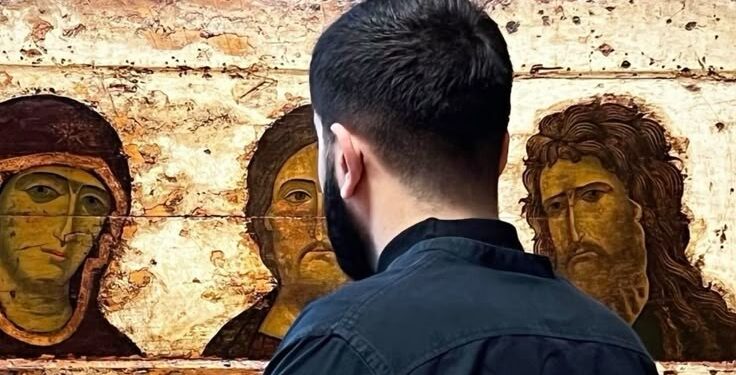
He explained that the Committee’s restoration projects cover churches, monasteries, mosques, archaeological sites, and historical landmarks throughout the island.
Among the most notable projects are the Monastery of Apostle Andrew, the Church of Panagia in Lysi, Panagia Apsinthiotissa, Panagia Kanakaria, and Othello’s Tower in Famagusta.
Ktoris highlighted the close cooperation between Greek Cypriot and Turkish Cypriot professionals working together to preserve the island’s shared cultural heritage. Their efforts are supported technically by the United Nations Development Programme (UNDP), with financial contributions primarily from the European Union.
Particular emphasis was placed on the restoration of more than 70 Christian and Muslim cemeteries, which Ktoris described as a meaningful confidence-building measure and a practical acknowledgment of the memory and history of both communities.
He also referred to the digital documentation of dozens of monuments through three-dimensional mapping and virtual tours, aimed at preserving historical memory and making cultural heritage accessible to future generations.
Despite the progress achieved, Ktoris acknowledged that restoration needs remain substantial while available resources are limited. Nevertheless, he stressed that every completed project represents another step toward reconciliation.
Concluding his remarks, he called for continued efforts to safeguard Cyprus’ shared cultural heritage and urged both communities “not to accept the current division as the inevitable future of Cyprus.”
Sources: Cyprus News Agency (CNA), Cyprus Times
Story via the original publisher. Read the original article