- Marietta Karpathiou moved from painting into fashion design, having already been telling stories through the clothes worn by her faceless protagonists.
- Through Greek brand ’ergon, she engages with Greek memory and reinterprets folklore through her own approach, which she calls “Metafolkloric”.
- The designer describes how success stopped meaning recognition from others and came to mean being able to recognise herself in her creations.
- She talks about ’ergon’s new store at STOA and the need to keep Greek craftsmanship alive, hoping to preserve diversity, tranquillity and a sense of play.
Before designing the first garment to go into production, Marietta Karpathiou had already begun telling stories through clothing. In the paintings she made as a student, the protagonists almost always appeared without faces. Their character was revealed by their clothes: the details, how they related to the body, and what they could suggest about the person wearing them. Her move from painting to fashion was a natural continuation of this impulse. And ’ergon, the Greek brand she founded, became the place where her personal vision took on texture, volume and movement.
At its heart is an ongoing dialogue with Greek memory. The designer is interested in the emotions a woven textile can evoke, the contradictions concealed by a particular era, and the women who sought greater freedom and expressed that struggle in the way they dressed. Her relationship with folklore took time and required reappraisal. She had to redesign it to discover what connected her to it. She calls this approach Metafolkloric, giving her own interpretation of tradition room to evolve.
In our conversation, Marietta Karpathiou explains how her personal measure of success has changed: from winning recognition from others to finding satisfaction in recognising herself in what she creates. She talks about the woman who evolves alongside her, ’ergon’s new store at STOA, and the continuity Greek craftsmanship needs in order to stay alive. Above all, she reveals what she wants to preserve through her work and over time: diversity, tranquillity and the light-hearted sense of play she hopes her clothes will carry into the next generation.
What was your first experience of fashion as a creative practice? Do you remember when you first thought you wanted to design clothes?
I remember painting my first pictures on subjects of my own choosing when I was a student. The clothes worn by my protagonists played a central role. They were almost always faceless, with close-up views of details of their bodies and clothes. The garment gave the protagonist their character and represented what I wanted them to stand for, while the face could have belonged to any of us.
Of course I remember the first garment I designed to go into production. It didn’t feel like a change of direction. The impulse was already there in my painting.
What did living and studying in Rome give you? Did it also change the way you saw Greece itself?
In Rome, I felt the power of timelessness: a strong, enduring aesthetic shaped by a blend of cultures, tradition, religion, the new and the old. A city that finds balance in its contrasts.
It remains the city where I found my independence: my choices and, most importantly, my own mistakes. My education taught me to respect and recognise the value of what does not suit me. Through that, I learned to discover something new that feels right for me.
Yes, I saw Greece differently too. I recognised things I had taken for granted and freed myself from guilt about other things that had oppressed me.
What do you consider a significant milestone for ’ergon, even if it never became known to the public?
There are many. From the decision to start the business in Mykonos during the crisis to the decision to create my own fabric. And also the loss of my closest collaborator and friend, George. It was a devastating loss for me. A lot changed in 2022–23. That was when I took full control of ’ergon and assumed full responsibility for it. Until then, I had followed certain rules others had set for its development, but I never stopped asserting my own way of seeing things.
I decided that unless it evolved in keeping with the way I live, my aesthetic sensibility and what I want from my personal life, it would never become something unique. I’m still working on it, and I hope I’ll keep striving for that for ever.
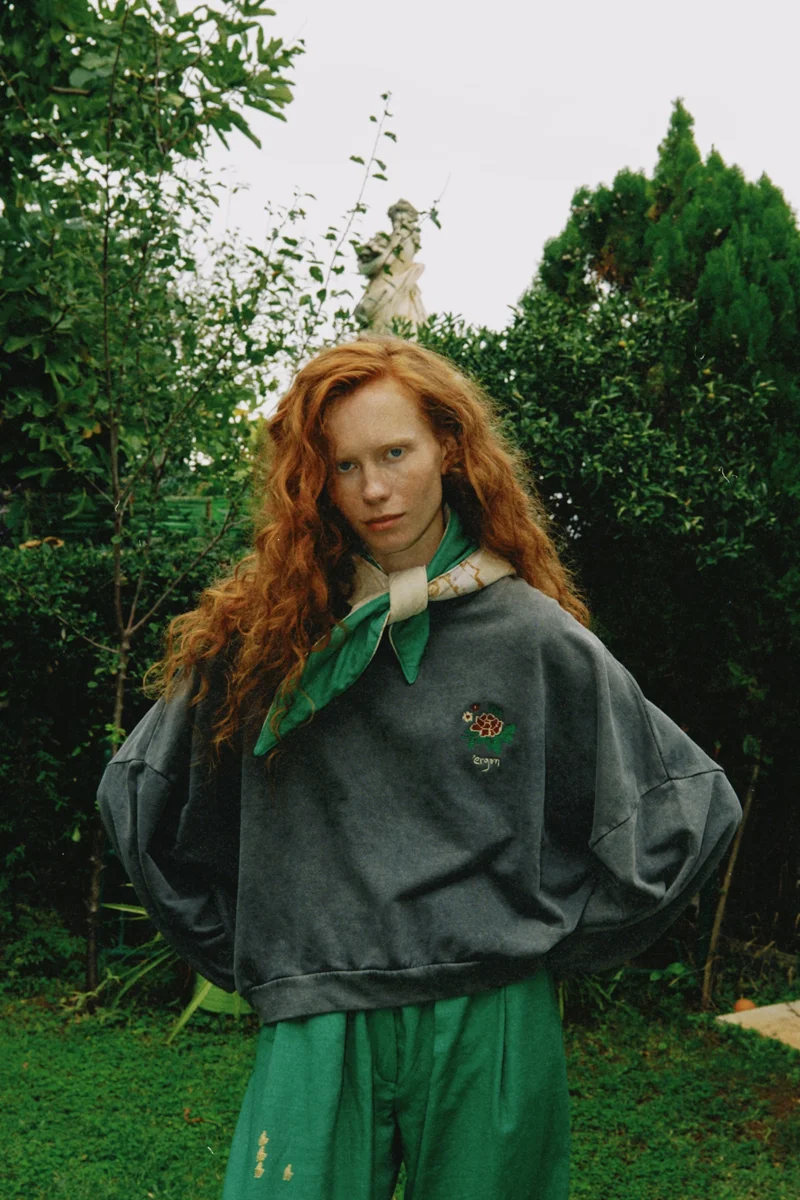
What have you reconsidered most since you started: the meaning of success, the image of the woman you design for, or your own priorities?
The meaning of success, more than anything. At first, it was about recognition, other people saying “well done”. Now what matters to me is whether I can see myself in what I’ve made. Whether it satisfies me, whether it comes close to what I had envisioned.
The way I design is personal to me. The woman I design for evolves alongside me. I haven’t rethought her; we’ve moved forward together. From time to time, I return to that first woman and see that she is more relaxed. She doesn’t always want to impress. She simply wants to feel at ease in her uniqueness. My priorities are now somewhere along those lines too: quietly finding that satisfaction and tranquillity through creating. I don’t want all the noise.
What makes a garment recognisable as ’ergon, even when its label isn’t visible?
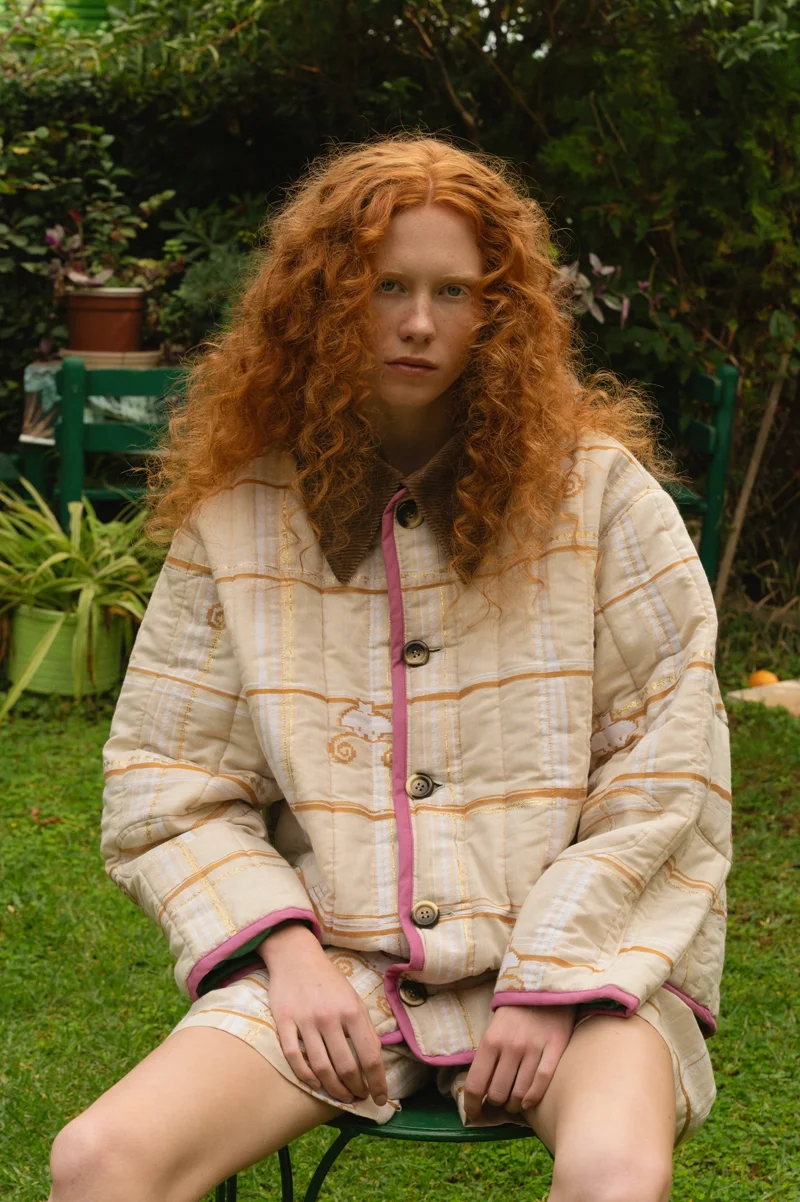
Its fabric. Its identity as both a design canvas and a woven textile. I think we’ve managed to make an ’ergon garment almost instantly recognisable. Not because it has a recurring pattern, but because there’s a story that continues to be written by the same person.
When you look back at Greek tradition, what interests you most: the image, the technique or the story behind an object?
The feeling it awakens in me. The rest follows naturally. I didn’t always love folklore or woven textiles. I had to redesign them to find my connection with them. I called it Metafolkloric. To me, it is an era burdened by guilt, given another chance to be told.
Which lesser-known aspect of Greek dress or craftsmanship would you like the public to discover?
Greek women 50 to 60 years ago. The women who tried, through both mistakes and successes, to leave a society steeped in oppression and guilt and connect with the wider Western world. I’m interested in these women, and in how all that effort was reflected in their clothes and their attitude to life..
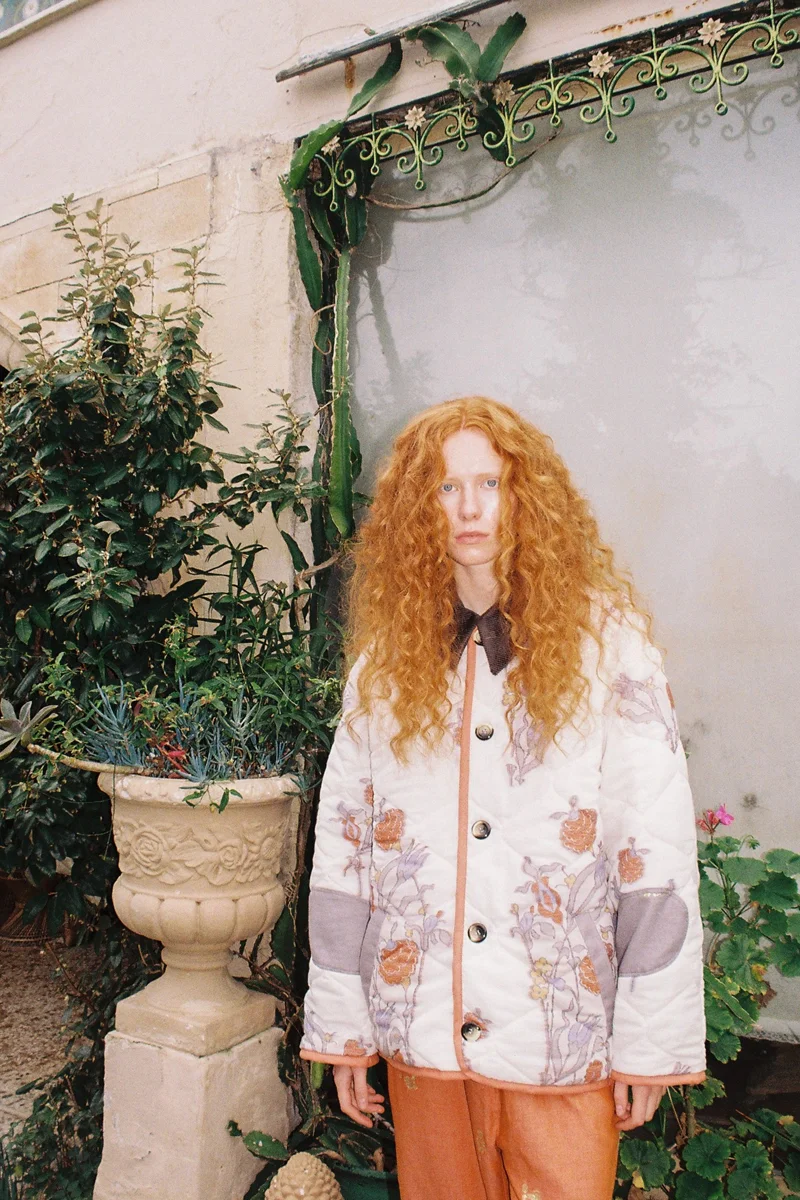
What is the biggest challenge today when working with small workshops, and what do they need in order to continue their work?
We often find it difficult to communicate our tight deadlines and how carefully made something needs to be in order to be sold, from construction to finishing. We learn from them, and they learn from us. We find ways to understand one another. Little by little, we are developing a dialogue of our own. This work needs continuity if they are to be able to carry on. The shortage of materials in Greece also makes things difficult for us and limits the possibilities for new products. Many ideas remain on paper or in our imagination because they cannot be completed.
.Why did you choose STOA for the new store? What did you recognise in the space that made you feel it was connected to ’ergon?
It is very close to what ’ergon is. It has deep roots in our history and culture, yet at the same time it is something new. It brings together contemporary Greek creators from different fields, while also continuing the work of unique institutions such as the Karolos Koun Art Theatre. Something new that became old, and something old that always remains new. That moves me. The area itself also expresses, within just a few blocks, the whole of Greece’s urban memory. I felt that ’ergon belonged there.
If a woman keeps an ’ergon garment to pass on to the next generation one day, what would you like it to carry with it, beyond her own story?
A spirit of individuality. And a light-hearted, childlike quality that balances the seriousness of age. It’s something I want to hold on to as I grow older too: the desire to play.
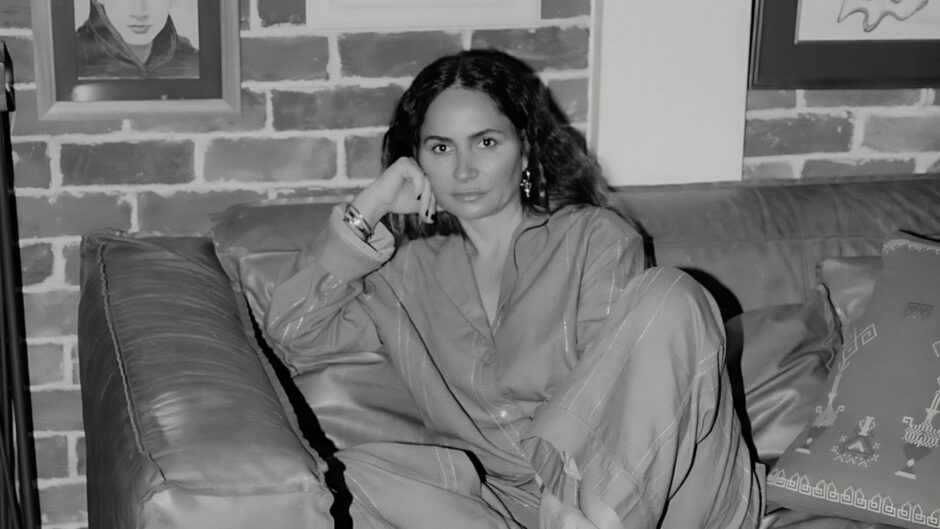
Source: missbloom.gr
Story via the original publisher. Read the original article