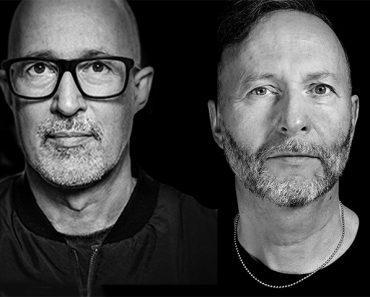

His favorite song was, and remains, “Gela Pouli Mou” by popular Greek brother duo Haris and Panos Katsimihas. He and his friends from junior high and high school used to play it during live performances with the band they had formed, called Orion, after the famous hunter from Greek mythology. He was the drummer. He fell in love with the song the very first time he heard it; not just for the music, but for the lyrics, especially the verse “nothing has changed, and nothing is the way it used to be,” which, over the years, became the group’s motto.
‘It’s a story that feels almost like something out of a novel, and it’s rooted in exactly what I just mentioned: empathy and solidarity’
Indeed, in the life of Dr Odise Cenaj, nothing is the way it used to be. He arrived in Greece in 1997, at the age of 12, with his parents, who were Albanian immigrants. They settled in Nea Michaniona, a small town near Thessaloniki. In 2004, he left again – this time for the United States. Today, he works as a pathologist and teaches at NYU Langone Health, one of the major academic medical centers in the US. He lives in New York with his wife, Blerta, and their two children: a 7-year-old daughter and a 3-year-old son. And yet, nothing has changed.
“My best friends are still in Thessaloniki,” he tells Kathimerini. “Thodoris, Stratos, Manos, Elisavet. I haven’t formed any real, strong friendships here, not like the ones built during one’s school years,” he says, as we eat seafood meze at a Greek restaurant in Astoria, Queens.
Around this time in 2003, Odise, an honors student at the Nea Michaniona High School, was looking forward to carrying the Greek flag in the annual parade for the national holiday of October 28, an honor reserved for top students. His hopes were dashed by racist backlash from other students, the parents’ association and local far-right circles, who objected to his ethnic background. This was the second time he had been the target of racism. Three years earlier, when he was set once again to be the flag-bearer for his middle school, Odise chose to waive his right to defuse the tension. “For the good of the community, and so that my classmates wouldn’t be upset,” as he put it at the time. Our conversation inevitably begins with that experience, which left a deep mark on his adolescence.
What was it like for a teenager to hear the chant, “You’ll never be Greek, Albanian?”
It was a difficult situation, painful, I won’t deny that. At first, I was very angry. But as time went on, and I received an overwhelming wave of support from all over Greece, from people who didn’t even know me, that anger subsided. Besides, only a few people attacked me with such hostility; they just made a lot of noise.
So, you don’t harbor any bitterness?
No. In fact, as time passed, I realized that what I went through back then, in connection with those two parades, actually made me stronger; it was a valuable lesson. I still carry that lesson, and I try to apply it in various situations. Let them shout, let them even scream. Close your ears and keep moving in the direction you’ve chosen. Don’t give them the satisfaction of defeating you by forcing you to retreat or change course.
What do you remember most vividly about Nea Michaniona?
Our life was modest and frugal. Both my father and mother worked in a net-making workshop to help us get by. Yet, I look back on that time with nostalgia. When we arrived there in 1997 from the city of Shkoder, in northwestern Albania, all our neighbors welcomed us warmly and opened their homes to us. I will never forget that. To me, this is the true face of Greece: one of empathy and solidarity.

How did you end up in the US?
It’s a story that feels almost like something out of a novel, and it’s rooted in exactly what I just mentioned: empathy and solidarity. A few days after the 2003 parade, in which I hadn’t taken part due to the backlash, a stranger knocked on our door. My parents, my grandmother and I welcomed him in. It was Dr Stelios Papadopoulos, who had been born and raised in the Charilaou neighborhood, and was a leading figure in the US biotechnology sector, to which he had immigrated in the late 1960s, as we would later learn. He told us that he himself had experienced something similar when, for political reasons during the turbulent period of the Apostasia [a major constitutional crisis of 1965], he had been denied the opportunity to march with the flag, despite being a top-performing student at the legendary 5th Boys’ Gymnasium. He expressed his willingness to help me.
How did your parents react? Did they trust him?
It’s strange, but yes, immediately. Although the whole experience felt somewhat surreal, as if Santa Claus himself had stopped by our house, even though it wasn’t Christmas, he won us over right away. Under his guidance, I applied to various American universities, and at the end of my final year of high school, even though I had been admitted to the Department of Mechanical Engineering at the Aristotle University of Thessaloniki, I left for the US. The support from Fondation Sante was pivotal, and I remain forever grateful to both Dr Papadopoulos and Fulla Chapple [executive director of Fondation Sante]. I graduated from Boston College, where I studied physics, and went on to pursue medical studies at Harvard Medical School, where I also completed my PhD. Once again, I crossed paths with fellow Greeks: Dr Spyros Artavanis-Tsakonas, professor of cell biology; and my mentor, Dr Iannis Aifantis, currently the chair of the Department of Pathology at the NYU Grossman School of Medicine in New York.
What fascinates you about pathology? Why did you choose it?
Even as a student, I was fascinated by the microscope. Artavanis-Tsakonas, in whose laboratory I trained, used to tease me: “Pull yourself away from that microscope, you’ll go blind!” (laughs). Anatomic pathology combines keen observation with analytical thinking, transforming morphology into clinically decisive information. It allows us to identify the mechanisms underlying a disease by examining microscopic changes in tissues. I am captivated by the idea that behind every cell lies a story that must be interpreted correctly, because that interpretation can alter a patient’s path and even save their life.
What have you come to appreciate about the US?
Although it is difficult here to form deep, meaningful connections with people, unlike in countries such as Albania or Greece, where community bonds are much stronger, there is a prevailing sense of meritocracy. While instances of nepotism and backdoor dealings do exist, I believe they are exceptions within a system where, as a general rule, those who work hard have the opportunity to be rewarded and to succeed.
Do you offer any advice to your students that goes beyond academic or scientific matters?
Many of them are immigrants themselves, bringing with them the distinct cultures and values of their home countries. I tell them not to measure their own stature against others, not to get caught up in comparisons, but rather to remain focused on their goals and stay the course. It is important that they look ahead, work consistently, and never let the voices, or, in my own experience, the outright shouts, of others dictate the limits of what they can achieve.
Where are your parents today?
A few years after I left Greece, they followed me to the US. They obtained visas and green cards through the official immigrant visa lottery program. For the past few years, they have been living in Florida with my younger sisters. My father is retired now, while my mother still works. They, too, feel a longing for Greece. “Our grandchildren simply must learn Greek!” they say every time we speak. I hope I can pull it off, because my in-laws insist on Albanian, so it’s become a daily family tug-of-war! (laughs)
Have you ever wondered what your life would be like if you hadn’t received that visit from Dr Papadopoulos?
Most likely, I would be working as a mechanical engineer in Thessaloniki, which, to me, is the most beautiful city in the world. Honestly, I miss it dearly. It was there, in front of the White Tower, that I proposed to Blerta. She is the guiding star of my life. Unfortunately, since the Covid-19 pandemic, we haven’t had the chance to return.
Is there a vision of the future that makes you smile?
Blerta and I, retired and in good health; our children having forged their own personal and professional paths, whether in the US or wherever else they might choose, and the two of us living somewhere in Thessaloniki, by the sea. Perhaps even in Nea Michaniona – why not?