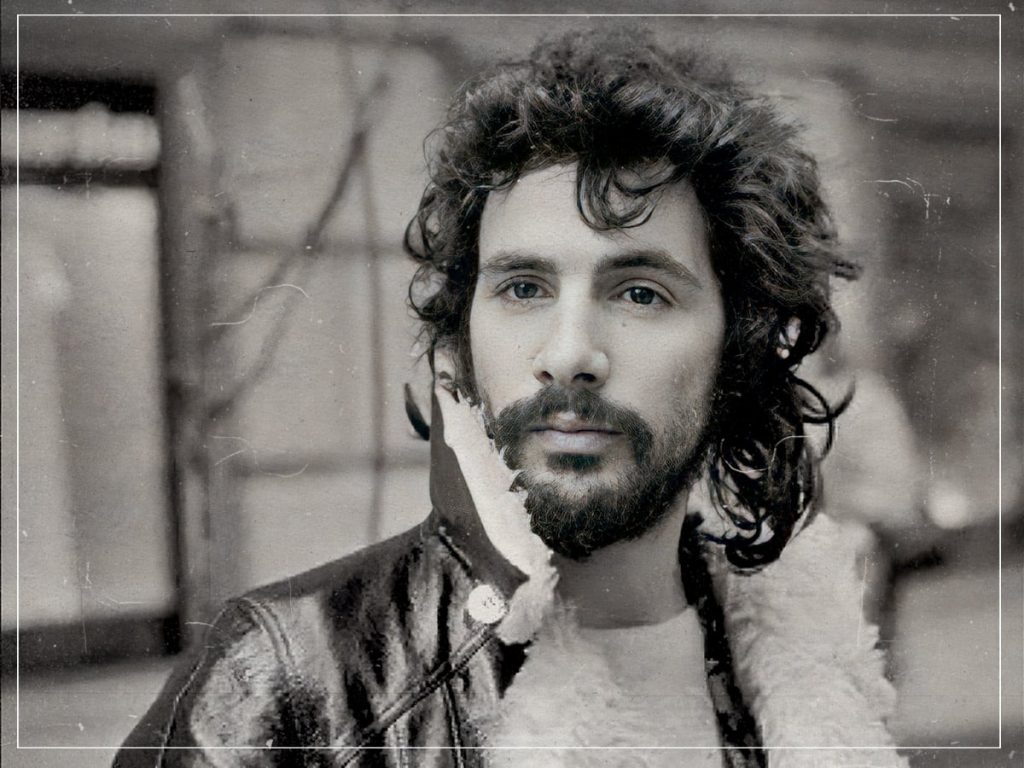

Credit: Far Out / IMDB
An early instance of Yusuf/Cat Stevens‘, also known as Yusuf Islam, intrigue with spirituality came about while he was on holiday in Marrakesh, Morocco.
He had heard the sound of the adhān, the Islamic ritual call to prayer, and someone described it to him as “music for God”. This came about as a shocking revelation for Stevens, who was born Steven Demetre Georgiou in Soho, London, to a Swedish mother and Greek Cypriot father. His mother was a Baptist, while his father was Greek Orthodox, though he would attend a Roman Catholic primary school.
“I thought, music for God?” Stevens later recalled, “I’d never heard that before. I’d heard of music for money, music for fame, music for personal power, but music for God?!”
This would prove to be a guiding principle as he emerged as a musician in the mid-1960s. He had changed his name to Cat Stevens as a teenager and quickly found fame with his 1967 debut album Matthew and Son, but as this newfound celebrity became a part of his life, he began to ponder its deeper meaning, and a spiritual search ensued.
In 1975, when swimming in the Pacific Ocean, off the coast of Malibu, California, a sudden undercurrent pulled him away from the shore. He began to feel as though he had lost control of his limbs, unable to get himself back to land. “I felt as if I had no power,” Stevens would recall, speaking on San Francisco’s KQED Forum public radio talk show in 1999. “After I was swimming for about half an hour, I couldn’t get back to shore. At that point, quite simply, there was no one to help me. As they say, you’ll never find an atheist on a sinking ship.”
It was then, at what felt to be the final moments of his life, on the verge of drowning, that he called out an invocation, one that he has recounted in the years since: “Oh God, if you save me, I’ll work for you”. What came after was nothing short, in Stevens’ mind, of a miracle. “And at that moment a wave, however big it was, came from behind me and pushed me forward,” he explained, “and suddenly, I had all the energy I needed. I was back on land and safe.”
What had begun as a personal spiritual quest years before transformed into a lifelong devotion for him, as the near-death experience awoke a new intensity within him. “Some people would say, well, it was a coincidence,” Stevens considered. “But for me, it was life and death. It was a miracle”.
The musician began to consult and study various forms of spirituality, referring to “Zen and I Ching, numerology, tarot cards and astrology,” as he once listed, and turned to his old Bible, but none of these sources satisfied his quest for a deeper meaning. This search dated back to 1969, when Stevens was battling tuberculosis and was stuck in his hospital in Sussex for three months, when he began to read Buddhist literature.
The solution to his quest would come to him, finally, when his brother, David, brought home a gift from his visit to Jerusalem: a translation of the Qur’an, a text that, in Stevens’ words, he “would never have picked up” for himself, as he explained on the BBC’s Desert Island Discs in 2020, as he “was more aligned to my father’s Greek Orthodox beliefs”. The Qur’an “became the gateway”, and his life would alter course for good.
Stevens converted to Islam formally on December 23rd, 1977, at London’s Regent’s Park Mosque, and the following year, he would change his name to Yusuf Islam. Of his conversion, he would later say, “I had found the spiritual home I’d been seeking for most of my life”.

Story via the original publisher. Read the original article