

A 1914 expedition that took the future Lawrence of Arabia to Byzantine ruins in the Negev Desert was also a covert British military mission, according to new historical research. The study reveals how his investigation of ancient farming systems later influenced debates over agriculture, settlement and political control in the region.
University of Birmingham historian Daniel Reynolds says the mission, conducted with archaeologist Leonard Woolley in January and February 1914, was publicly presented as a survey backed by the Palestine Exploration Fund. But the British War Office also funded and authorized it amid growing tensions with the Ottoman Empire over access to the Suez Canal.
The research, published in Transactions of the Royal Historical Society, recounts how the pair surveyed Auja Hafir and Subeita. They documented ruined churches, fortifications, stone terraces, and waterworks they took as evidence that people once farmed the dry landscape. Their findings appeared in “The Wilderness of Zin” in 1915.
How Lawrence of Arabia interpreted Byzantine ruins in the Negev
The connection between Lawrence of Arabia and the Byzantine ruins was more than a passing archaeological interest. Reynolds argues that British observers used the region’s early Christian past to portray imperial rule as productive and later Ottoman and Bedouin societies as responsible for decline.

Lawrence and Woolley challenged an earlier theory that climate change had made farming impossible. They maintained conditions had remained broadly stable, writing that “the Negev could be made as fertile as it ever was in Byzantine times.” Their report treated the loss of ancient agricultural systems as a failure of human management.
The study also documents Ottoman development in the area, including a railway station, garrison, and hospital at Auja Hafir. David Ben-Gurion and Yitzhak Ben-Zvi drew on related survey findings in a 1918 book arguing for a Jewish state. The Zin report gained greater attention among British officials after it was republished in 1936.
Ancient discoveries inspired new efforts to farm the desert
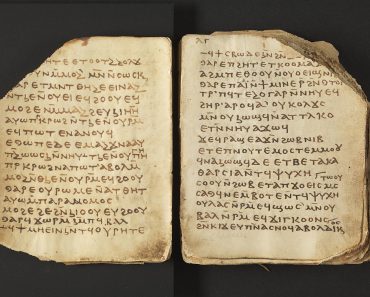
American archaeologist Harris Dunscombe Colt led excavations in the 1930s that uncovered around 195 published papyrus texts at Nessana, including sixth- and seventh-century records of agricultural sales. The documents reinforced interest in the settlements’ farming history and informed later investigations.
In the 1950s, botanist Michael Evenari drew on that research to test ancient-style farming methods at experimental farms at Shivta and Avdat. Supported partly by the Israeli government, the experiments aimed to revive crops and water-management techniques linked to the Byzantine period.
Reynolds concludes that archaeology did more than uncover the past. European accounts of the Negev’s ruins helped shape arguments over its future, including plans for settlement after Israel’s establishment in 1948, while reinforcing damaging portrayals of the region’s Arab populations.