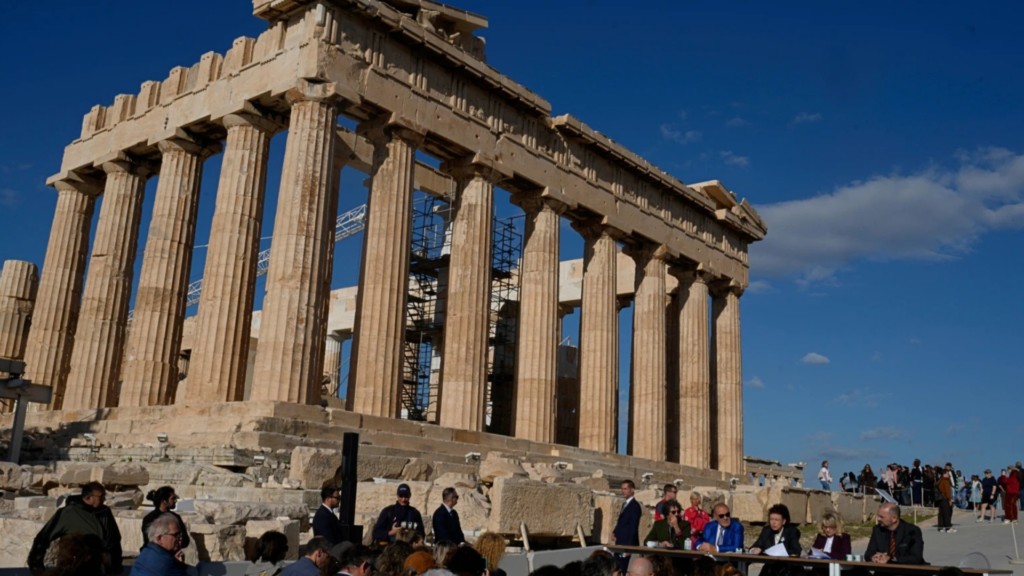
Greece’s oldest modern-era museum has reopened on the Acropolis in Athens following a seven-year restoration, bringing new exhibitions and interactive technology to the historic site.
The Old Acropolis Museum, which first opened in 1874, welcomed visitors again on Monday, November 23, after being closed to the public since 2007.
The €6.2 million restoration was funded through public money and private donations, according to Culture Minister Lina Mendoni.
The renovated museum will feature ancient artefacts that have never previously been displayed, alongside digital presentations exploring the Acropolis monuments’ 2,500-year history.
Visitors will also be able to watch conservation specialists at work through a dedicated viewing gallery, where Ministry of Culture technicians will restore ancient objects in public view.
Originally built to house archaeological discoveries from the Acropolis, the museum became an administrative building after its sculptures and other major collections were transferred to the New Acropolis Museum, which opened at the foot of the hill in 2009.
Mendoni said the decision to restore the historic building and return it to its original purpose reflected its importance to Greece’s archaeological heritage.

Prime Minister Kyriakos Mitsotakis attended the reopening ceremony, describing it as another milestone for the country’s cultural heritage.
He also used the occasion to renew Greece’s call for the return of the Parthenon Sculptures currently held by the British Museum in London.
“The rightful home of these priceless masterpieces is here, beneath the Attic light and in direct proximity to the temple to which they belong,” Mitsotakis said.
He reiterated that Greece would not accept an arrangement recognising British ownership of the sculptures or treating their return as a loan.
The Acropolis remains Greece’s most visited archaeological site, attracting more than 4.6 million visitors in 2025.
Source: APNews
Story via the original publisher. Read the original article