The City of Melbourne has formally apologised to Melbourne’s North Macedonian community over its decision to prohibit the display of the Star of Kutlesh flag during the 2026 Moomba Parade, following an independent review that found shortcomings in the council’s decision-making processes.
The apology, issued on 16 November, was accompanied by an invitation for the community to return to the 2027 parade, including permission to display the flag bearing the 16-ray sun symbol known in Greece as the Sun of Vergina.
The decision has reignited a longstanding dispute over the symbol’s historical and cultural ownership, with Greek Macedonian organisations questioning why the council reached its decision without consulting representatives of their community.
At the centre of the controversy is a symbol associated with ancient Macedonia, whose use by the former Yugoslav Republic of Macedonia became a major diplomatic dispute with Greece during the 1990s.
For Greek Macedonians, the Sun of Vergina represents an important part of their historical and cultural heritage. For sections of the North Macedonian diaspora, the same design, referred to as the Star of Kutlesh, is also used as an expression of cultural identity.
The City of Melbourne’s decision has brought these competing interpretations into the public arena, raising questions about cultural expression, historical sensitivities and the consistent application of rules governing Melbourne’s largest multicultural parade.
Independent review prompts apology
In its letter addressed to members of the Macedonian Australian community, the City of Melbourne acknowledged that its handling of the 2026 flag restrictions had fallen short of community expectations.
“On behalf of the City of Melbourne, I sincerely apologise for how we handled the decision on cultural flags during the 2026 Moomba Parade,” the letter stated.
Following complaints about the decision, the council commissioned an independent review by Kristen Hilton Advisory, founded by former Victorian Equal Opportunity and Human Rights Commissioner Kristen Hilton.
The review found that although council staff had acted in good faith and with community safety in mind, the decision-making processes had been inadequate.
It also identified a significant and unintended negative impact on the North Macedonian community, leaving performers, families and community leaders feeling that their cultural identity and heritage had not been properly understood or respected.
“When people feel excluded, we must listen, learn and do better,” the council acknowledged.
The City accepted all nine recommendations, including improvements to human rights considerations, staff training, complaints management, parade policies and the handling of requests to display cultural or national symbols.
In the letter signed by Sara Quon, General Manager of Business Economy and Activation, the council confirmed that work was already underway to implement the recommendations ahead of Moomba 2027.
“We welcome the Macedonian Australian community’s participation in the 2027 Moomba Parade – including the display of the Star of Kutlesh flag,” the letter stated.
The council also committed to consulting Kristen Hilton Advisory on changes to its policies and establishing an internal working group to oversee implementation of the remaining recommendations over the following 12 months.
North Macedonian organisations welcome decision
The council’s apology was welcomed by organisations representing Melbourne’s North Macedonian community, which described the outcome as a recognition of their right to cultural expression.
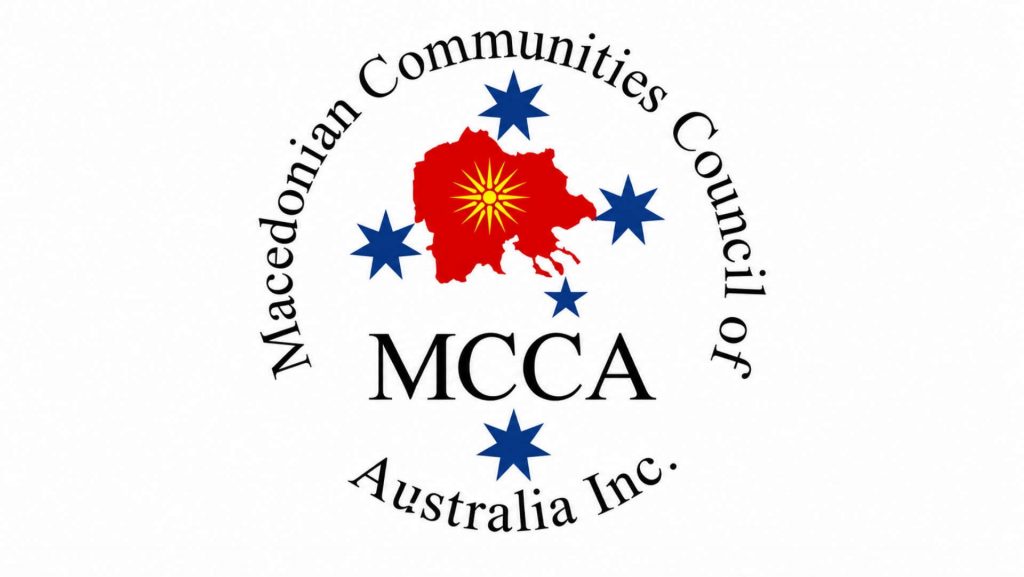
In a joint statement issued on 16 November, FOMKUD Victoria, the Macedonian Communities Council of Australia and other community representatives recalled that approximately 80 young participants had been unable to take part in the 2026 parade after the council prohibited the flag’s display.
According to the statement, the children had spent months rehearsing and preparing traditional costumes for the event.
“When the parade went ahead without them, many young people and their families felt disappointed, excluded and deeply hurt,” the organisations said.
They thanked the council for undertaking the review and accepting its recommendations, describing the outcome as the result of constructive dialogue.
“We are particularly pleased to accept the City’s invitation to return to the Moomba Parade in 2027, including displaying our Star of Kutlesh flag,” the statement said.
The organisations acknowledged the involvement of Councillor Connie Boglis OAM, acting in a personal capacity, alongside other community representatives who had worked with the council and independent reviewer.
Greek Macedonians question lack of consultation
The decision has drawn objections from the Pan-Macedonian Association of Melbourne and Victoria, which argues that the council failed to consult Greek Macedonians before reaching its decision.
In a statement titled “City of Melbourne did not consult the Macedonians”, the association challenged the council’s approach to consultation, saying that representatives of the Greek Macedonian community had been excluded from discussions concerning a symbol central to their heritage.
Association president Peter Stefanidis expressed concern that a festival intended to celebrate multicultural harmony could instead become a source of division.
The association maintains that the Sun of Vergina cannot be considered simply another cultural emblem without acknowledging its historical connection to ancient Greek Macedonia.
Greek community representatives contacted by Neos Kosmos acknowledged the right of people from North Macedonia to participate in the Moomba Parade and celebrate their heritage, while questioning whether the council had adequately considered the concerns of Greek Macedonians.
The disagreement is not solely about participation in the parade, but about the historical significance of the symbol and whether all affected communities have been treated equally.
The historical significance of the Sun of Vergina
The Sun of Vergina became internationally associated with ancient Macedonia following the 1977 discovery of a golden larnax bearing the 16-ray symbol in the royal tombs at Vergina, Greece.
The tomb is traditionally attributed to Philip II, father of Alexander the Great, although aspects of its identification have been debated by scholars.
The symbol subsequently became closely associated with Greek Macedonian heritage.
Its adoption on the national flag of the then Republic of Macedonia in 1992 triggered a diplomatic dispute with Greece. The country replaced the flag in 1995 following an interim agreement between the two governments.
The 2018 Prespa Agreement, which established the name Republic of North Macedonia, also included provisions concerning the use of symbols associated with ancient Greek history and civilisation.
Under Article 8, North Macedonia undertook to review the status of monuments, public buildings and infrastructure referring to ancient Hellenic history and civilisation, and to remove the Sun of Vergina from public use in its territory.
These provisions form part of the historical and diplomatic context behind objections to the symbol’s display at Moomba.
However, the City of Melbourne’s decision concerns participation in a local cultural parade under Victorian human rights and event-management frameworks, rather than a determination of historical ownership or territorial claims.
MANASIS seeks equal treatment for Greek participants
The controversy has also prompted the MANASIS School of Greek Dance and Culture to seek clarification about the rules that will apply to Greek cultural groups at Moomba 2027.
The school has a longstanding association with the festival, having represented Melbourne’s Greek community during the 1980s and 1990s.
In 2025, MANASIS returned to Moomba following an extended absence of organised Greek participation, displaying the Sun of Vergina as a symbol of Greek Macedonian cultural identity.
According to the school’s account, when the City of Melbourne instructed participants in 2026 to display only national flags, MANASIS complied with the requirement.
The council’s subsequent decision to welcome the Star of Kutlesh flag at the 2027 parade has therefore raised questions about whether the same conditions will apply to Greek participants wishing to display the Sun of Vergina.
MANASIS is seeking formal clarification on whether Greek cultural groups will also be permitted to display the symbol in recognition of its significance to Greek Macedonia.
Its position places the issue of equal treatment at the centre of the debate: if the council now permits cultural symbols beyond national flags, Greek organisations want assurances that the policy will be applied consistently.
The school’s concerns also highlight a broader question about how Melbourne’s multicultural institutions should manage symbols that carry different historical and political meanings for different communities.
A test of multicultural inclusion
The City of Melbourne maintains that its revised approach is intended to ensure that all communities can celebrate their cultural identity while feeling respected and included.
“Moomba is Melbourne’s festival. It belongs to the many communities that make up our city,” the council stated.
It has also emphasised that cultural expression must remain consistent with the Victorian Charter of Human Rights and Responsibilities.
For the North Macedonian organisations, the council’s apology represents an opportunity to return to the parade after the disappointment of 2026.
For Greek Macedonian organisations, however, the decision has left important questions unanswered, particularly concerning consultation, historical sensitivities and the consistent application of cultural flag policies.
The forthcoming Moomba Parade will therefore be an important test of how the council translates its commitment to inclusion into practice.
The central question remains whether Melbourne’s multicultural celebrations can accommodate different expressions of cultural identity while ensuring that the historical concerns and rights of all participating communities receive equal consideration.
Story via the original publisher. Read the original article