
Batteries in Bulgaria allow cheap midday energy production to be utilized when demand and prices are higher.
Greece is increasingly supplying Bulgaria with electricity during the day, only to receive power back in the evening, as battery storage transforms cross-border energy flows and helps reduce price fluctuations, according to a European Commission analysis.
In August, Bulgarian imports from Greece reached up to 750 megawatts around midday, while exports in the opposite direction climbed to about 700 MW around 8 pm. The reversal reflects Bulgaria’s growing ability to store cheaper daytime solar electricity and release it when demand and prices rise.
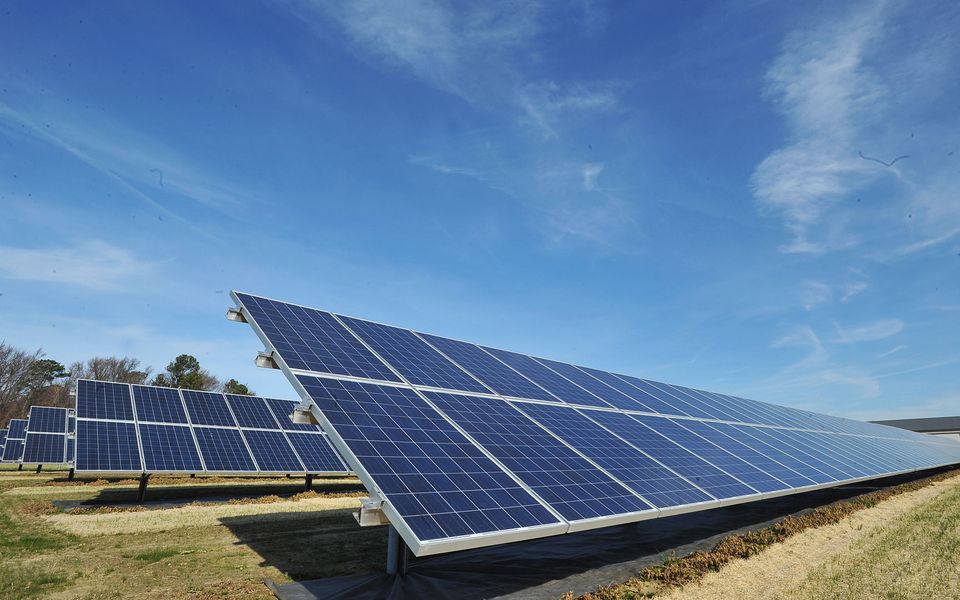
The shift has been driven by rapid growth in solar generation and battery infrastructure. Solar’s share of Bulgaria’s electricity production increased from 4% in 2021 to 21% in 2026, while installed photovoltaic capacity rose from 1.3 gigawatts to 7.2 GW.
The European Union’s Recovery and Resilience Facility supported half the increase in solar capacity through a 3.2-GW program combining renewable energy installations with storage systems.
Investments backed by the fund helped Bulgaria’s installed battery capacity exceed 16 gigawatt-hours.
During peak periods, batteries can supply up to 30% of total electricity generation, the Commission said.
The impact is also visible in prices. Evening electricity prices in August 2024 were 150% higher than the daily average. By August 2026, the difference had narrowed to 40%.
The Commission estimated that peak prices could have been up to €150 per megawatt-hour higher if price fluctuations had followed the 2024 pattern, while cautioning that the comparison was hypothetical.
Bulgaria also modernized its transmission network, simplified permitting and grid connection procedures, strengthened links with Greece and Romania, and opened its balancing market in 2025. The upgraded network can accommodate 5.4 GW of additional renewable capacity.
The benefits extend beyond Greece. In August, when output at Romania’s Cernavoda nuclear plant was reduced, Bulgaria exported approximately 1 GW more electricity to Romania during peak hours than two years earlier.
Greece is also moving to expand storage. Its energy ministry said 831 applications, representing 12,319 MW, were submitted for grid connection terms under a call covering battery projects of up to 4,700 MW.
Story via the original publisher. Read the original article