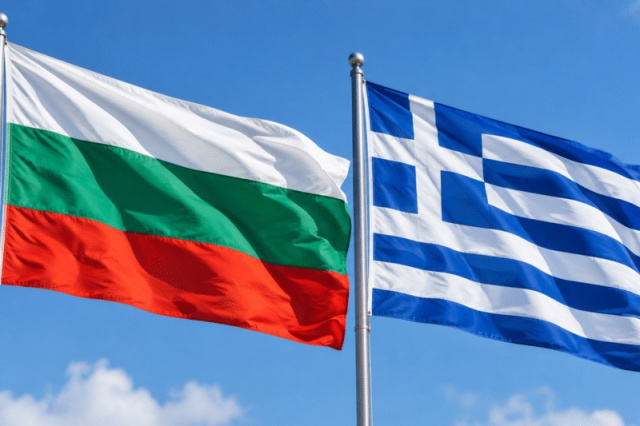
Greece will continue seeking the return of additional ecclesiastical treasures from Bulgaria, Greek Deputy Foreign Minister Alexandra Papadopoulou said in response to a parliamentary question from independent MP Nikolaos Vrettos about the exchange of religious artifacts between the two countries, BGNES reported.
“The Ministry of Foreign Affairs remains consistently and steadfastly committed to the return of these sacred relics. We will continue to work methodically, seriously, and persistently, utilizing all available diplomatic and institutional avenues,” Papadopoulou said.
She described the recovery of ecclesiastical objects taken by Bulgarian military forces during the First and Second World Wars as an issue of exceptional importance to Greece and a major priority rooted in the shared history of the two countries.
According to Papadopoulou, communication between Athens and Sofia over the return of artifacts from the Eikosifinissa Monastery in Drama and the Monastery of Saint John the Forerunner in Serres has never been interrupted. The matter has featured in every round of bilateral contacts, including discussions at the highest political level.
She said Greece had consistently pursued an outcome that would restore historical justice while reflecting the particular character of the well-established relations between the two countries.
Papadopoulou attributed the Memorandum of Understanding and the reciprocal transfer of cultural property between the two countries’ culture ministries to sustained efforts by the Greek government and the improvement in bilateral relations. These developments, she said, had provided the political conditions necessary to reach an agreement.
“It serves as a model for successful dialogue and mutual understanding between the two states. Our country and Bulgaria cooperate in numerous areas, and this cooperation is continuously developing at all levels,” the Deputy Minister said.
She voiced confidence that the partnership would also lead to the recovery of further religious treasures, recalling the Greek Prime Minister’s position at the ceremony marking the transfer of the ecclesiastical artifacts.
“We are transforming the difficult moments of the past into bridges for future cooperation,” Papadopoulou said.
During the parliamentary discussion, independent MP Nikolaos Vrettos challenged the government to provide evidence supporting its characterization of the exchange of religious artifacts with Bulgaria as a major historical achievement.
He said serious concerns had been voiced not only by Theologos, Metropolitan of Serres and Drama, in a letter addressed to Culture Minister Lina Mendoni, but also by the Ecumenical Patriarchate, academic organizations, and opposition parties.
Vrettos pointed out that the Memorandum of Understanding and the protocol concluded by the two countries had not yet been made public. He questioned whether the documents imposed an explicit and legally binding commitment on Bulgaria to return the remaining ecclesiastical artifacts and manuscripts, what deadline applied, what was meant by the term “first phase,” and which legal provisions governed the process.
The MP called for Parliament to receive all documentation concerning the exchange and Greece‘s claims, accusing the government of conducting “secret diplomacy.”
He also argued that the consequences of the agreement went beyond cultural diplomacy, pointing out that “cultural heritage associated with the remains of Tsar Samuel in Bulgaria is a subject of dispute between Bulgaria and the Republic of North Macedonia.”
Responding to the criticism, Papadopoulou said Bulgaria‘s responsibility to return the religious treasures was based on Article 126 of the 2019 Treaty of Delhi.
“This is a unilateral, legally binding, and unconditional obligation. For decades, however, attempts to implement it hit a brick wall. Today, through the Memorandum of Understanding and the relevant protocols, we have achieved something that is natural, yet until recently seemed impossible: the return of the first 53 relics,” the Greek Deputy Foreign Minister said.
She stressed that the transfer of the 53 items represented only the initial stage rather than the completion of the process. Papadopoulou maintained that Greece‘s legal and diplomatic position remained fully intact and strong, arguing that “the Bulgarian side is, for the first time, effectively acknowledging its legal obligation by returning these items.”
She assured lawmakers that the Foreign Ministry would continue pursuing the return of more ecclesiastical treasures through all available diplomatic and institutional channels.
Story via the original publisher. Read the original article