
It most definitely was not a good year for Eurovision
By Alper Ali Riza
What to say about Eurovision 2026 in Vienna other than that Dara won it for Bulgaria with ‘Bangaranga’, a catchy memorable name for an unmemorable song?
‘Bangaranga’ means noisy celebratory chaos. Its Cypriot equivalent is ‘sharabatak’ in popular use a few years ago last century — not anymore as such words have a short shelf life. ‘Bangaranga’ and ‘sharabatak’ are not strictly onomatopoeic, rather they sound what they mean without being imitative; buzz imitates the sound it conveys but ‘shambolic’ sounds what it means.
It looks as though ‘bangaranga’ catches the spirit of our times perfectly. Eurovision 2026 was not a happy year for the competition either: Spain, Ireland, the Netherlands, Slovenia and Iceland boycotted Eurovision 2026 in protest about Israel’s participation.
They refused to take part because they felt that Israel’s attacks on Gaza, Iran and Lebanon should have disqualified it like Russia’s attack on Ukraine in 2022 disqualified Russia.
As for the merits of Israel’s entry itself, if the popular vote is anything to go by ‘Michelle’ by Noam Bettan was awarded 220 points, pushing it to first place for a while before it was overtaken by ‘bangaranga’ with 320 points. Bettan’s ‘Michelle’ is not as musically memorable as the Beatles ‘Michelle’ of 1965 and way too soulful for my taste, but at least it is manifestly a song.
It is important to remind people that the name of the competition is Eurovision Song Contest and you would think entries must be songs. The classical definition of a song is “a short musical composition with words (lyrics), structured around a melody, designed to be sung by a human voice”.
The musical test for any popular song is whether it is memorable – can you hum the tune of any of the songs you heard last Saturday? If like me you can’t remember the tunes of any of the songs of Eurovision, Vienna 2026 was not a good year.
There was a time last century in the English-speaking world when many songs were memorable. Songs likethe Beatles’ ‘Let It Be,’ the Rolling Stones’ ‘Satisfaction’, John Lennon’s ‘Imagine’, Demis Roussos’ ‘Someday Somewhere’ and Frank Sinatra’s ‘Strangers in the Night’ is a random selection of some catchy tunes from yesteryear that every generation, apart from Millennials (Y) (born 1981-1996) and Generation Z (born 1997-2012), would instantly recognise as melodious.
In the Greek world during the golden era of the great composers, Manos Hadjidakis, Mikis Theodorakis and Stavros Xarhakos, in the last half of the 20th century, every Greek song was a hit – I exaggerate but you get the point.
My current favourite is Gia Ena Tango by Haris Alexiou (1997), an imaginative tango piece with a Spanish twist, erotic lyrics and a mellifluous tune sang in Greek enunciated at its most phonetically musical. The song is controversial because it is thought by some as a betrayal of her rembetiko (the blues of the rayah) repertoire – but come on guys it is a great tune!!
So we know what good songs sound like and although it is difficult for national broadcasters to generate catchy tunes capable of appealing to millions of people across the whole of Europe over a single TV show, it is not difficult for the European Broadcasting Union (EBU) to insist on songs comprising memorable lyrics structured around a melody.
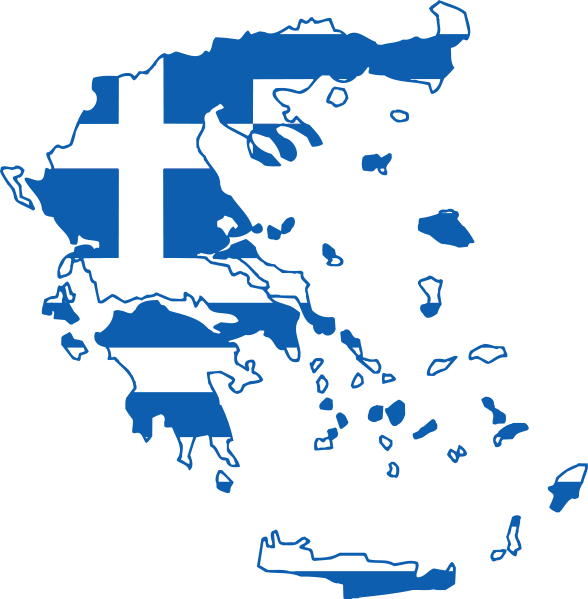
Greece’s entry this year was an eccentric performance but, like the UK, its song was lost in performative gimmicks. If you want a contest of spectacles where the staging, costumes and visuals compete, fine! Except that what you get is not a song contest. Either the EBU declares Eurovision is no longer a song contest or it reasserts the primacy of song in the contest.
Greece and Cyprus awarded each other the maximum 12 points – surprise! surprise! – as did some East European and Nordic countries to one another. As the late Terry Wogan said of politically inspired bloc voting: “there’s a definite Baltic bloc and a Balkan bloc and they’ve been joined in recent years by a Russian bloc. I’ve said it so many times it has become a cliché. We won the Cold War but we lost the Eurovision.”
The UK is not part of a bloc and Brexit has not helped its popularity in Europe, but truth to tell the real reason the UK does so badly is the low quality of the songs the BBC churns out every year – it is all very well to laugh it off as badinage, but it matters to UK soft power, and the BBC owes its licence payers quality songs that do not embarrass Britain.
In some circles the UK’s bad performance in the Eurovision Song Contest is blamed on Wogan who poked fun at the contest over many years. He mocked many entries he did not like and Eurovision’s voting patterns which were often based on politics rather than musical or artistic merit. On the other hand, Wogan gave up presenting Eurovision in 2009 and died in 2016. In any case all you have to do is watch and listen to the UK’s 2026 entry for a minute and you will know why it only received one point.
The TV celebrity host Graham Norton, who took over presenting Eurovision from Terry Wogan in 2008, is also quick witted with a similar dry humour to that of his fellow Irishman and manages to capture the foibles of Eurovision with gusto.
If only the UK’s Eurovision entries matched the quality of its presenters, the BBC would win it hands down every year. Only Graham Norton could come up with the ironic self-deprecating “at least they can’t take our point away from us” – the single point awarded to UK by the Ukraine jury – after the popular tele-vote gave UK nil points.
Alper Ali Riza is a king’s counsel in the UK and a former part time judge